
Beyond the Single Thread: Using Sales Workflow Automation to Map the 2025 B2B Buying Committee

The Single-Thread Trap: Why Your 'Champion' Is Killing Your Deal
Single-threading is the fastest way to kill a promising deal.
We've all been there. You have an absolute banger of a discovery call with a manager. They admit the pain is massive. They're nodding, laughing, and practically asking where to sign.
You hang up and tell your VP, "This one is in the bag."
But it's not. You're actually trapped.
Because that manager probably doesn't have the budget to sign a napkin, let alone a six-figure contract. In this economy, relying on a single "champion" is professionally negligent.
If your one contact gets promoted or laid off, your deal is dead. To survive, you need a high-performance sales workflow automation strategy. You have to stop being a "rep" and start being an orchestrator who maps the whole B2B buying committee.
The Sales Workflow Automation Spike
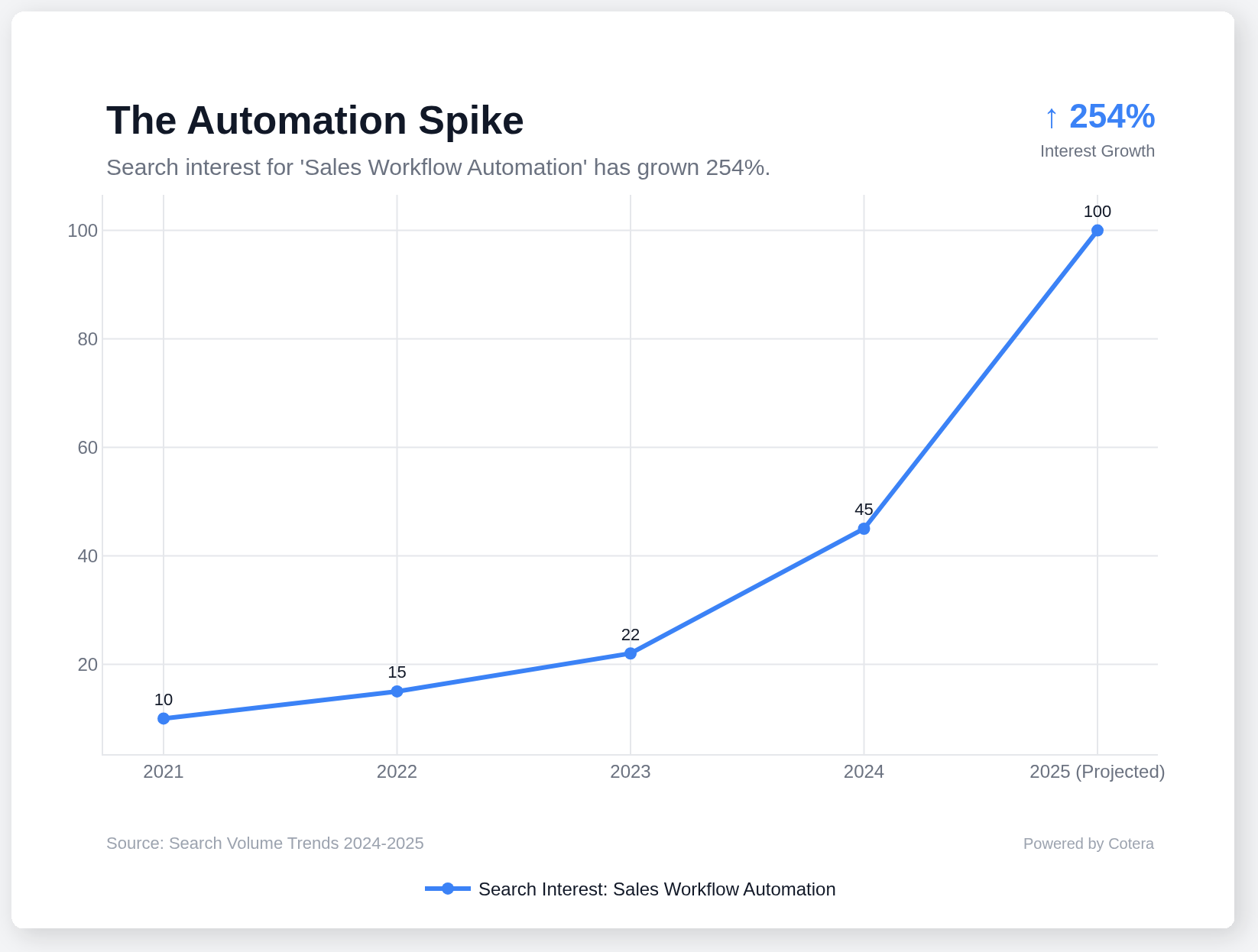
The industry is finally waking up. Look at the momentum in the chart below.
Search interest for sales workflow automation has gone vertical, exploding by over 254% in the last few years.
Why the rush? Because B2B buying groups are now massive. The average enterprise deal involves 6 to 10 stakeholders. If you're only talking to one, you're missing 90% of the room.
You're essentially hoping your manager-level contact is a better salesperson than you are. You're asking them to go pitch the C-suite for you.
Spoiler alert: They won't do it. Most of the time, they won't even try. If you aren't automating the way you map these committees, you're just gambling with your commission.
The 42% Win Rate Boost
Check the numbers. Research from LinkedIn and Gong shows that multi-threaded opportunities close at 2-3x the rate of single-threaded ones.
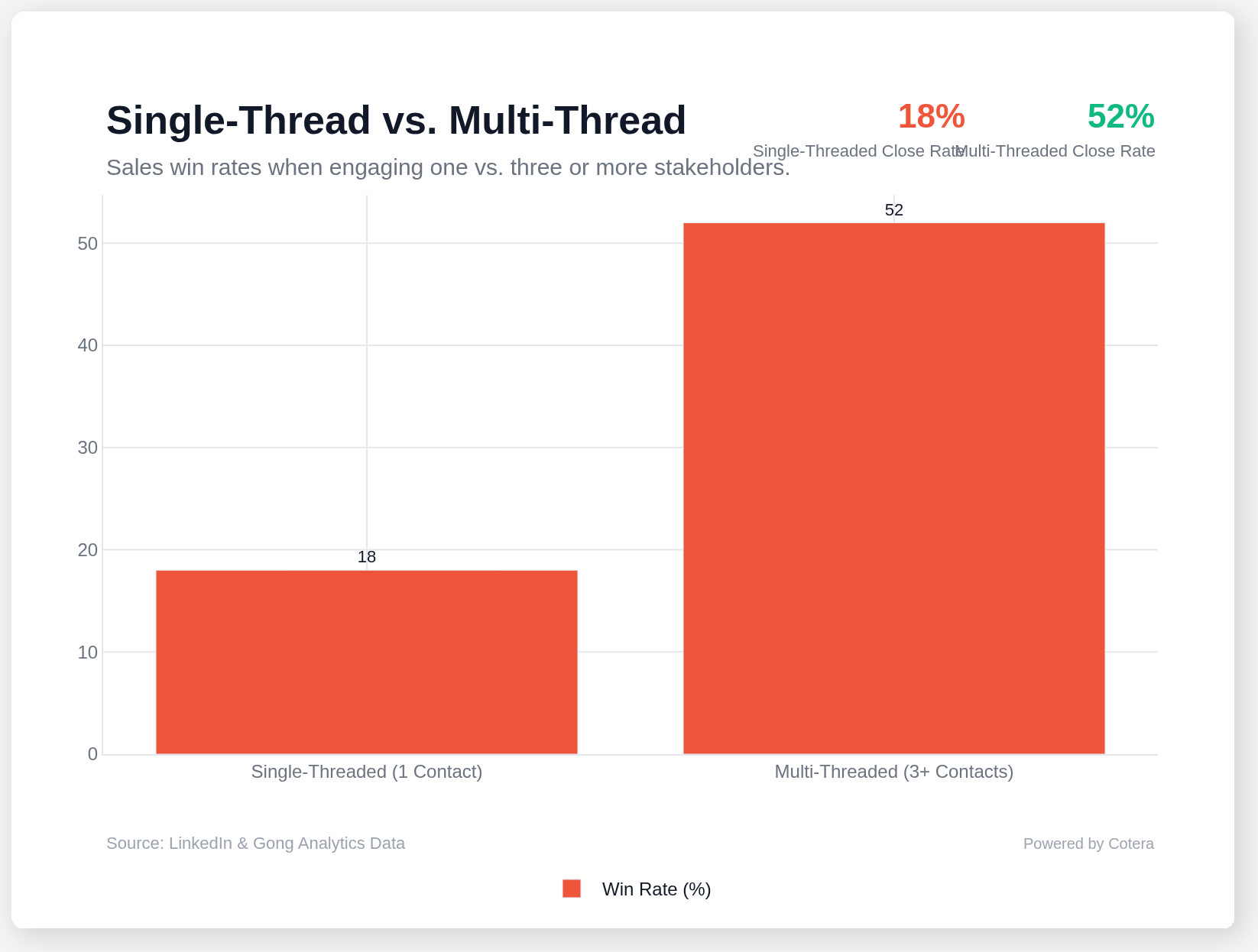
By engaging three or more people, you can lift your sales win rate by 42%. Yet, only 9% of reps are actually multi-threading effectively. The other 91% are just crossing their fingers.
If you want to be in that top 9%, you need a workflow to identify B2B decision makers and get them in the loop. It's not about working harder. It's about mapping the money.
Step 1: Stakeholder Signals in Transcripts
The best data is hidden in your call transcripts. If you're using tools like Gong or Grain, stop just looking for "interest." Start looking for entity extraction.
Listen for roles or departments. When your contact says, "I'll have to check with the Ops team," or "Legal needs to see security docs," they're giving you a treasure map.
Use those transcripts to find the pain points each department cares about. Ops cares about efficiency. Legal cares about risk. The VP of Finance cares about ROI. If you don't know who these people are by name within 24 hours of that call, you're already losing the deal.
Step 2: Use AI for Sales Prospecting to Map the Org
Once you have the keywords, fire up your AI for sales prospecting stack. Don't guess who the "Ops person" is.
Use Apollo to filter the org by the keywords you heard on the call. If the pain point was "data silo issues," search for that phrase in job titles within that specific company.
Who is the "Director of Data Orchestration"? Who is the "Head of Revenue Operations"? These people effectively handle the budget for the problem you're solving.
By using LinkedIn with enrichment software, you can build a complete profile of the B2B buying committee. You can see what they post and how they're connected to your original contact. This is precision mapping, not guesswork. This is how you identify B2B decision makers with 2025 tech.
Step 3: Multi-Channel Orchestration
Finding the name is only half the battle. Reaching them without blowing up your existing relationship is the real game.
The trick is transparency. Don't go behind their back. Use a multi-channel approach. Reach out to the new stakeholder on LinkedIn and say:
"I was speaking with [Contact Name] about the data silo issues your team is facing. They mentioned your focus on orchestration, so I wanted to share a specific case study that might help your workflow."
This builds trust, not tension. It's sales workflow automation that orchestrates a consensus across the company. It makes your deal resilient to contact churn.
The Budget Holder is the Only 'Decision Maker' That Matters
At the end of the day, you can have ten "champions," but if none of them have budget authority, you have a fan club—not a deal.
Multi-threading gets you into the inbox of the person who owns the P&L. When you identify the people who control the budget related to the pain points, you move the conversation from "This is a cool tool" to "This is a business necessity."
This is exactly what we specialize in at Cotera. We don't just give you names; we visualize the account-level value and stakeholder influence. We help you see exactly where to invest your time so you stop being a "single-threaded rep."
If you want to win in 2025, you have to stop selling to people and start selling to organizations. Stop being a rep. Start being an orchestrator.
Try These Agents
- Find Decision Maker — Identify the budget holders and key stakeholders in any account
- Leadership Priorities Finder — Discover what executives care about from public signals
- LinkedIn Outreach Builder — Craft personalized multi-thread outreach
- Multi-Threading Orchestrator — Automate stakeholder mapping across deals
- Champion Tracker — Track champion movement and deal risk