
Your NPS Score Is Fine. Your Brand Sentiment Isn't.
Let me describe a scenario that happens to at least one company every single week.
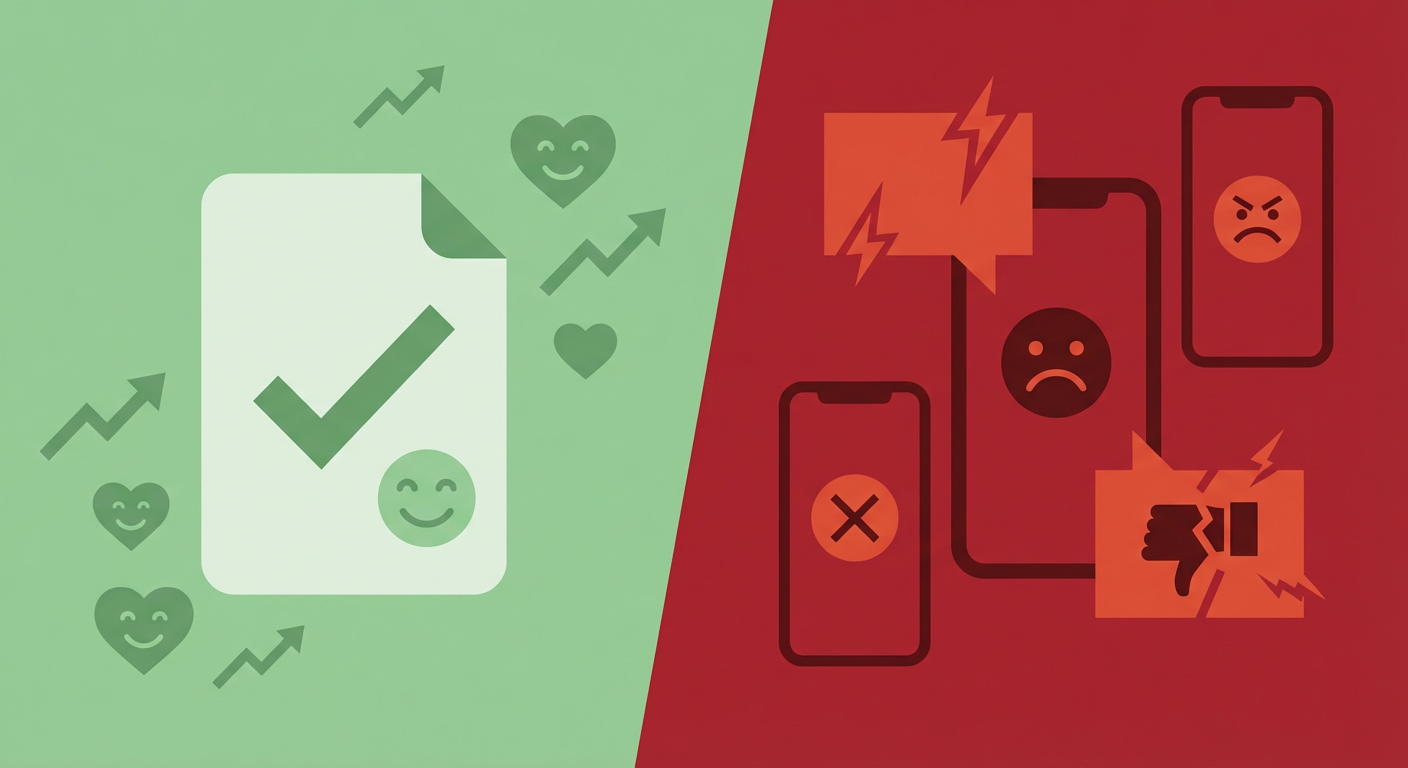
Marketing sends out the quarterly NPS survey. Score comes back at 42. Decent. Everyone nods at the all-hands. "Customers love us." The CMO drops it in the board deck. Product keeps shipping what they were already shipping.
Here's what nobody in that room knows: on Reddit, a thread called "Why I'm ditching [your product]" is sitting at 847 upvotes with 200 increasingly savage comments. Some influencer on Twitter just published a thread about how your latest release bricked their entire workflow — it's got 3,000 retweets and counting. And on TikTok, a video roasting your onboarding has quietly racked up 50,000 views.
The NPS looks healthy. The actual brand? It's rotting from the outside in. No survey is going to catch that.
The Sentiment Gap
I keep seeing the same disconnect. What customers tell you and what they tell each other are basically two different realities. The gap between those two is what I call the Sentiment Gap — and it's gotten worse every year since social media ate the internet.
Think about who actually fills out your NPS survey. Response rates hover around 10-30%. And it's a biased sample — your biggest cheerleaders and your most furious detractors. The huge middle chunk, the customers who are "fine for now" but quietly browsing alternatives? They never open that email. They're venting in a subreddit instead. Or leaving a Trustpilot review you'll never see. Or complaining in a Slack community you don't even know exists.
Run the numbers and it gets ugly fast. Ten thousand customers, 15% response rate — you're steering the ship based on 1,500 voices while 8,500 others form opinions about your brand in rooms you haven't entered.
It's like evaluating a restaurant by interviewing the three people who bothered to fill out the comment card, while ignoring the hundred who just never came back.
Brand Sentiment Is a Leading Indicator
Here's why this matters beyond hurt feelings: sentiment shifts before revenue does.
When people start griping about the same thing in multiple places — sluggish support, a confusing UI overhaul, pricing that stopped making sense — you've got a three-to-six month window before your churn numbers catch up. The retention dashboard won't flash red for a while. But the decision to leave? That happened weeks ago over a Reddit rant and a group chat you'll never read. They just haven't hit the cancel button yet.
The companies that catch problems early are the ones measuring brand sentiment across the platforms where people are actually honest. Not the platforms where you're asking them to be honest. The ones where honesty is the default because there's no incentive to be polite.
Reddit is the clearest case. Someone posts "is [your product] still worth it?" in a subreddit, and the answers are raw. No one in that thread has any reason to be diplomatic. Watch what happens when the consensus drifts from "absolutely" to "depends on your use case" to "honestly we bailed for [competitor] last quarter." That progression is a trendline worth more than any survey — and your NPS won't register it for months.
The Six-Platform Problem
OK, so you're bought in on looking beyond surveys. Great. Now the logistical nightmare kicks in: your brand lives on six-plus platforms and each one operates on totally different rules.
Twitter is fast and reactive — someone tags you in a complaint and it snowballs in hours. Reddit moves slower but cuts deeper — a well-argued teardown post lives forever and ranks in Google. TikTok is wild — a 30-second roast video can reach more people than your entire paid campaign. Then you've got your Trustpilot reviews, your Google Maps ratings, your Instagram comments. All different formats, different audiences, different vibes.
No one is checking all of these. Be honest. Your team probably has one person who "monitors social," which really means they scroll Twitter twice a day and google the company name once a week. That's not brand sentiment analysis. It's barely keeping the lights on.
So you end up with enormous blind spots. Something ugly is brewing on Reddit but nobody on your team uses Reddit. TikTok content is going sideways but "that's not our demographic." By the time the conversation migrates to a channel you actually watch, it's already a full-blown narrative. You're playing defense when you should have been listening three weeks ago.
What Real Brand Sentiment Analysis Looks Like
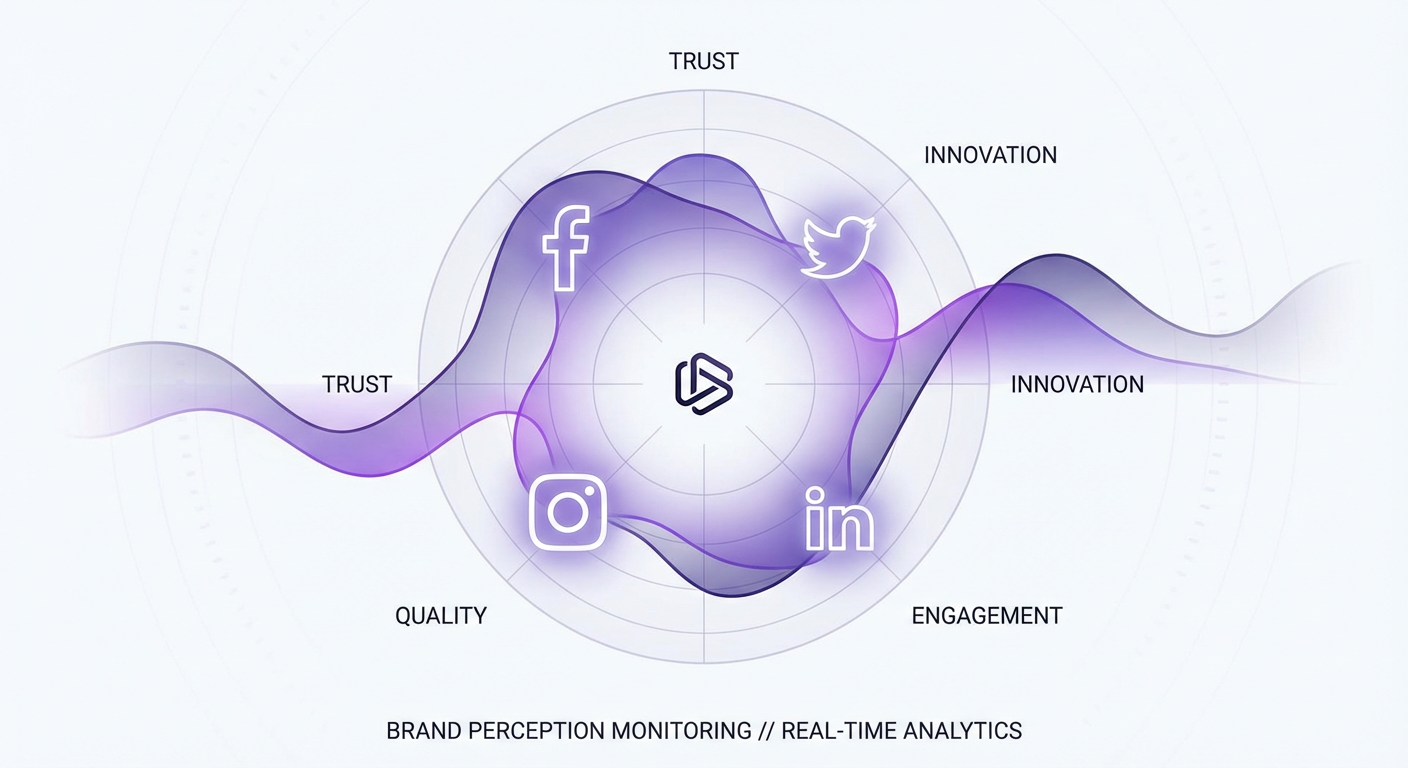
Actual brand sentiment analysis isn't checking platforms one at a time. It's getting a unified picture — pulling data from every relevant source and comparing them against each other.
Do this right and you'll immediately see things that single-platform monitoring hides from you. Real example: your Twitter sentiment might look fantastic because your social team crushes engagement, while over on Reddit, power users are torching you over a pricing change from last month. Two platforms, two completely opposite stories about the same brand. Check just Twitter and you're delusional. Check just Reddit and you're panicking. You need the full picture to know what's actually happening.
This is the kind of cross-platform social media sentiment analysis that used to require a team of analysts and a six-figure Brandwatch contract. Now an AI agent can pull mentions from Twitter, Reddit threads and comments, TikTok videos, Trustpilot reviews, Google Maps reviews, and Instagram engagement — then deliver a unified sentiment breakdown with themes, scores, and specific quotes.
What you get back isn't some useless aggregate score. It's a platform-by-platform breakdown — here's where you're loved, here's where you're hated, and here are the exact topics fueling each reaction.
When to Worry (and When Not To)
Not every negative mention is a crisis. One angry tweet doesn't mean your brand is in trouble. The skill in measuring brand sentiment is knowing when noise becomes signal.
The pattern to watch for is convergence. When the same complaint appears independently on multiple platforms within a short window, that's signal. If three Reddit threads, a Trustpilot review, and a Twitter thread all mention the same issue in the same week and none of them are referencing each other — that's a real problem surfacing organically. That's the kind of signal you need to monitor continuously rather than check quarterly.
The other pattern to watch is sentiment shift on a specific topic. Your overall brand sentiment might be stable, but if sentiment around your "pricing" or "support" specifically is trending down over the past month, that's an early warning. It means something changed — maybe a competitor dropped their price, maybe you had a rough patch with support response times — and it's going to compound if you don't address it.
Most brand tracking tools give you an aggregate number that hides these nuances. The whole point of AI-powered sentiment analysis is getting granular enough to actually act on what you find.
The "So What?"
Quarterly NPS surveys and the occasional Twitter check — if that's still your brand sentiment strategy, you're operating on stale data in a market that moves in days, not quarters. You're listening to the 15% who respond to surveys and completely ignoring the 85% who are publicly telling each other what they think of you.
The Sentiment Gap isn't closing. It's accelerating as conversations scatter across Reddit, TikTok, Discord, and private communities that didn't exist five years ago. The brands that win are the ones measuring sentiment where people actually talk — not where you politely ask them to.
Your customers are already telling the internet what they think about you. You just need to start listening in all the places they're talking.
Try These Agents
- Sentiment Analysis Tool — Unified sentiment analysis across Trustpilot, Google Maps, Twitter, Reddit, TikTok, and Instagram
- Brand Monitoring Agent — Track brand mentions across Twitter, Reddit, news, and reviews with Slack alerts
- Social Listening Alerts — Monitor brand mentions and get alerts when people talk about you
- Review Monitoring & Analysis — Monitor reviews across Google Maps, Trustpilot, G2, and app stores