
Lead Management Automation: Stop Letting Deals Die in Your CRM

Last month I sat through a pipeline review with a sales team of twelve. Their CRM said they had $2.4M in active pipeline. The VP of Sales — a guy named Marcus, been doing this for fifteen years — pulled up the board and started walking through deals. Third one in: a $180K opportunity marked "Verbal Commit, closing this week." The AE responsible, Sarah, went quiet. Turns out the champion at that account had left the company six weeks ago. Nobody updated the record. The deal was dead. Had been dead. But the CRM didn't know that, and neither did Marcus, until he asked Sarah point-blank in front of the whole room.
By the time we finished the review, $900K of that $2.4M pipeline was fiction. Deals with no activity in 60+ days still sitting in "Negotiation." Contacts who'd gone dark marked as "Engaged." One opportunity had a close date of November 2025. It was January. Nobody had touched it. The CRM wasn't a source of truth. It was a graveyard with good lighting.
This is what happens when lead management runs on manual data entry and good intentions. People don't update their CRM because updating your CRM doesn't close deals. It's busywork that competes with actual selling. So the data rots. And then your pipeline reviews become theater — everyone performing confidence about numbers that haven't been real in weeks.
Your Pipeline Is Lying to You
Here's the thing nobody wants to say out loud: most CRM data is wrong. Not a little wrong. Fundamentally, structurally wrong.
A study by Salesforce (ironic, yes) found that sales reps spend about 28% of their week actually selling. The rest goes to admin work, meetings, and — theoretically — updating CRM records. In practice, the CRM updates get skipped. The rep finishes a call, writes some notes on a Post-it, tells themselves they'll log it later, and then gets pulled into another call. The Post-it disappears. The record stays stale.
The downstream damage is real:
- Forecasts built on garbage. Your board deck says you'll close $1.8M this quarter. Half of those deals haven't had a meaningful conversation in three weeks. You're going to miss, and you won't see it coming until week 10.
- Dead leads clogging your pipe. Deals that should've been marked "Closed Lost" months ago sit in active stages, making everything look healthier than it is. Your pipeline coverage ratio is a lie.
- Duplicate work everywhere. Marketing runs a re-engagement campaign targeting accounts that sales already closed. Sales reaches out to a lead that support is already handling an escalation for. Nobody knows what's happening because the CRM is six conversations behind reality.
- Reps gaming the system. If the CRM is already inaccurate, there's no incentive to fix it. Reps learn to sandbag, inflate, or simply ignore fields that don't affect their commission. The data gets worse. The cycle continues.
Lead management automation doesn't fix bad salespeople. But it fixes the systems that make even good salespeople look like they don't care about data hygiene.
What to Actually Automate in Lead Management
When people say "lead management automation," they usually mean one of two things: either a Zapier integration that sends a Slack message when a form is submitted, or a $200K Salesforce implementation that takes nine months and requires a full-time admin. Both miss the point.
The stuff worth automating in lead management is the boring, repetitive, high-stakes-but-low-effort work that humans reliably skip:
Stage validation. A deal sitting in "Discovery" for 45 days with no logged activity isn't in discovery. It's dead, or it's been mislabeled. Automated lead management means flagging deals whose stage doesn't match their activity pattern. If the last touchpoint was seven weeks ago, something's wrong — whether or not the rep admits it.
Data completeness checks. Every deal should have certain fields populated: decision maker identified, budget confirmed, timeline established, next steps documented. When these fields are empty, it's usually not because the rep doesn't know — it's because entering the data feels like homework. Automation that audits for missing fields and pings the rep beats hoping they'll remember.
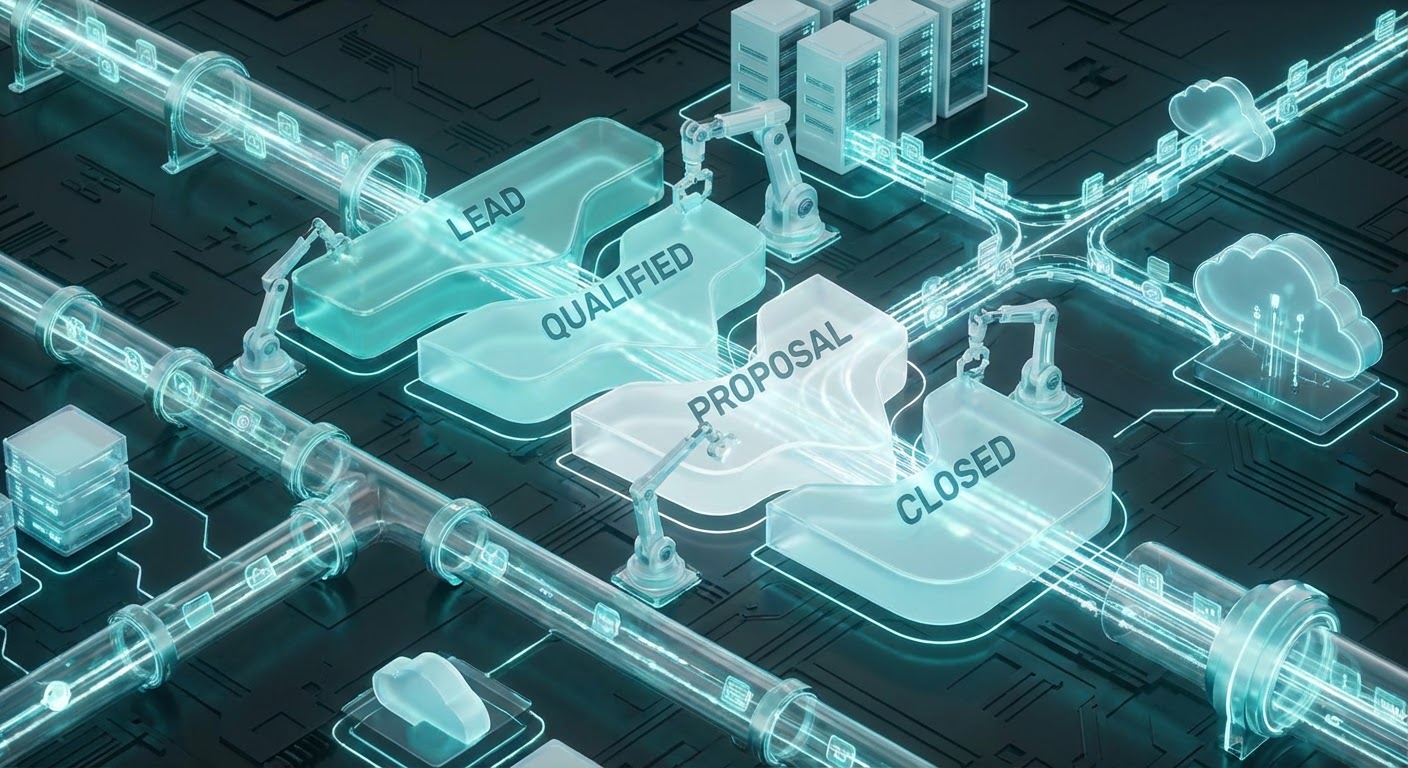
Lead routing and reassignment. An SDR qualifies a lead and passes it to an AE. But which AE? Based on what? Territory? Workload? Product fit? Manual routing is slow and political. Automated routing based on rules — geography, deal size, industry vertical — means the lead gets to the right person in minutes instead of sitting in a queue while two managers argue about whose team should take it.
Activity-based alerts. A deal worth $200K just went 14 days without any logged activity. That should trigger a notification — to the rep, to the manager, maybe to both. Not an angry one. Just a "hey, this deal needs attention" nudge. The kind of thing a really attentive manager would catch in a pipeline review, except it happens automatically and in real time rather than once a week when it might already be too late.
Automated enrichment updates. Your champion changed jobs? Their company just announced layoffs? The org restructured and your buyer's team got merged? These events happen constantly, and they change whether a deal is alive or dead. Lead automation that pulls in external signals — job changes, news, org chart shifts — keeps the CRM reflecting reality instead of a snapshot from three months ago.
The Handoff Problem
The place where leads go to die isn't the top of the funnel. It's the handoff.
SDR qualifies a lead. Marks it as "Sales Qualified" in the CRM. Sends a Slack message to the AE: "Hey, got a good one, company XYZ, they're interested in the platform." The AE is in back-to-back meetings. Sees the Slack three hours later. Responds: "Cool, send me the details." The SDR sends a paragraph of notes. The AE skims it, doesn't log into the CRM to check the record, and waits until tomorrow to follow up.
By tomorrow, the prospect has already talked to a competitor. The momentum from the discovery call is gone. The lead that was "hot" 24 hours ago is now "warm" and cooling fast.
This happens constantly. The handoff between SDR and AE is where probably 20-30% of qualified leads lose their energy. Not because anyone screwed up. Because the process depends on humans remembering to do admin tasks during the busiest parts of their day.
Automated lead management fixes the handoff by making it systematic instead of conversational. When a lead is marked qualified, the system should immediately: assign the right AE based on routing rules, create a follow-up task with a deadline, populate the AE's view with all qualification notes and context, and alert the AE with everything they need to act in one place. No Slack message required. No details falling through cracks. The CRM becomes the handoff mechanism instead of a place people update after the handoff already happened informally.
Building a System That Keeps Itself Clean
The goal of lead management automation isn't to remove humans from the loop. It's to stop relying on humans for the parts they're worst at: data entry, status updates, and remembering to check on things.
A self-cleaning pipeline works like this. Deals that go stale get flagged automatically — not closed, just flagged, so the rep can confirm whether the deal is actually dead or just slow. Fields that stay empty for too long get surfaced in a daily digest. Stage durations that exceed the average by 2x get highlighted. And every week, an automated audit runs through the whole pipeline and produces a report: here's what changed, here's what didn't change but should have, and here's what looks suspicious.
The math on this is compelling. A manual pipeline review for a 12-person sales team takes the VP of Sales about 4 hours per week when done properly — 20 minutes per rep, plus prep time. An automated audit that pre-flags issues cuts that to 90 minutes, because the VP walks into the meeting already knowing which deals to dig into. That's 2.5 hours per week saved on one meeting. Over a quarter, it's 30+ hours — almost a full work week.
Why Use an Agent
This is exactly what AI agents are built for. Not the strategic judgment calls — those stay with humans. The monitoring, auditing, and flag-raising that should happen continuously but realistically only happens when someone remembers.
The HubSpot Deal Pipeline Reviewer runs through your entire HubSpot pipeline and flags the problems a good VP of Sales would catch in a review: stale deals, missing fields, stages that don't match activity patterns, close dates that have already passed. Instead of spending four hours manually reviewing each rep's pipe, you get a pre-built report of everything that needs attention. Run it weekly and your pipeline reviews go from detective work to decision-making.
If you're running Attio, the Attio Deal Pipeline Tracker does the same — tracking stage movements, flagging deals that haven't progressed, and surfacing pipeline trends you'd otherwise miss until the end-of-quarter scramble. It's the difference between finding out a deal went cold in week 12 and catching it in week 3 when you can still do something about it.
For Pipedrive teams, the Pipedrive Deal Pipeline Tracker monitors your deals for stuck opportunities, dirty data, and pipeline imbalances. It flags the specific deals that need intervention rather than making you scroll through every record to find the problems yourself.
The common thread: these agents do the work that humans skip. Not the selling — the system maintenance. The CRM hygiene. The "did anyone actually update this record" check that nobody has time for but everybody suffers without.
The Short Version
Your CRM is only as good as the data in it, and humans are terrible at keeping that data current. Lead management automation isn't about replacing salespeople — it's about handling the admin work that salespeople rationally skip because it doesn't directly close deals. Automate stage validation, field audits, routing, alerts, and enrichment. Fix the handoff between teams by making it systematic instead of informal. Run automated pipeline audits so your reviews are based on reality, not whatever the rep remembered to type in last Thursday. The deals in your CRM are either real or they're not. Automation helps you figure out which is which before the quarter ends.
Try These Agents
- HubSpot Deal Pipeline Reviewer — Audit your HubSpot pipeline for stale deals, missing fields, and stage accuracy
- Attio Deal Pipeline Tracker — Track and manage your Attio deal pipeline with automated stage updates
- Pipedrive Deal Pipeline Tracker — Monitor Pipedrive deals, flag stuck opportunities, and keep pipeline data clean