
How to Do a Competitor PPC Analysis
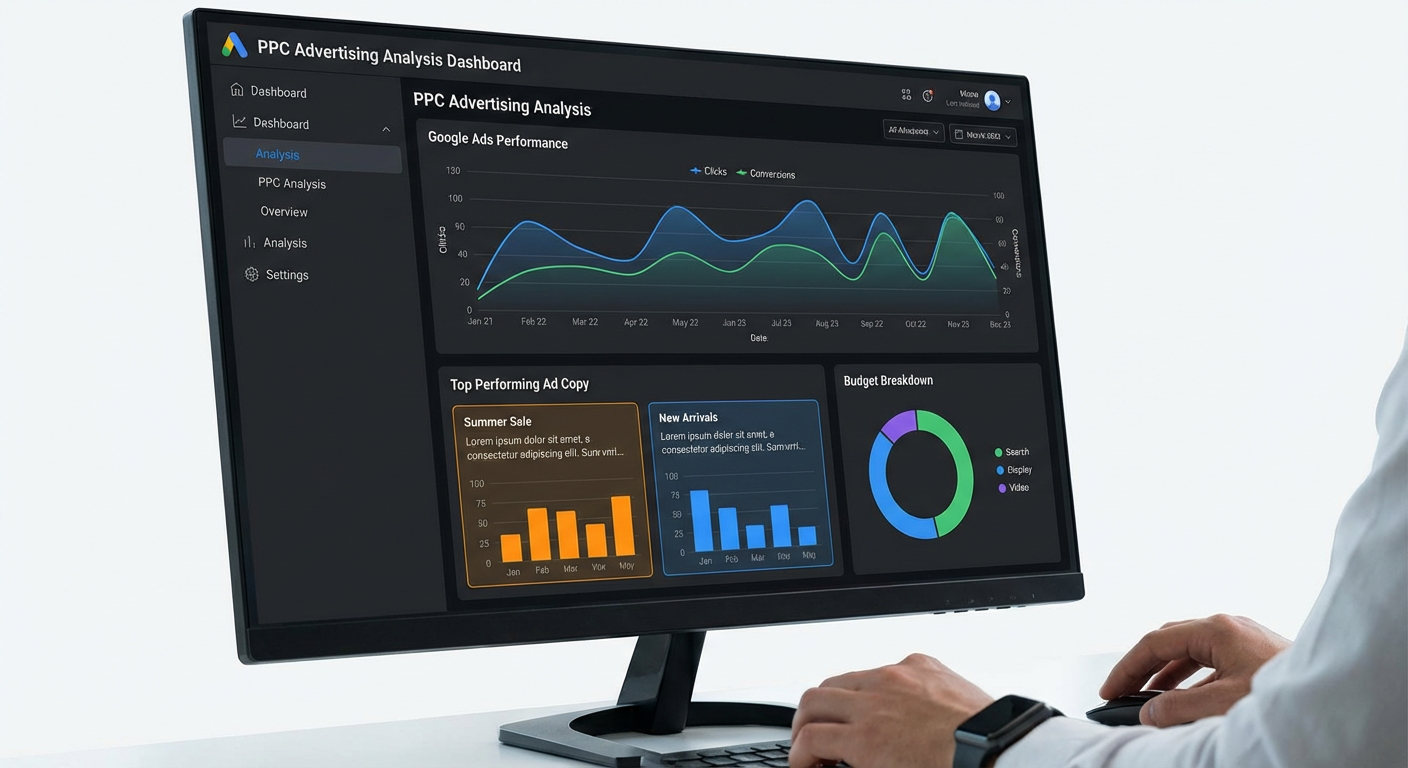
Last year I blew through $14,000 in ad spend in about six weeks targeting keywords I was sure would convert. They didn't. What I didn't know — and should have — was that two competitors had already tested those exact terms, burned their own budgets, and quietly moved on to different angles entirely. The data was sitting right there in the Google Ads Transparency Center. I just never looked.
That experience rewired how I think about paid search. Your competitors are running a continuous, expensive experiment with their ad budgets. Every keyword they bid on, every headline they test, every landing page they build is a data point they paid for. PPC competitor analysis is about extracting those data points so you can skip the expensive lessons they already learned.
Most teams treat this like a one-time project. Pull up a competitor's ads, screenshot a few, maybe check what keywords they're bidding on, and move on. That's not analysis. That's tourism. Here's the actual framework.
Step 1: Keyword Bids Analysis
Start with what your paid search competitors are spending money to show up for. This tells you more about their strategy than any blog post or press release ever will.
Pull their estimated paid keywords from SimilarWeb, SpyFu, or SEMrush. You're looking for three things:
- High-spend head terms. What are they willing to pay $15-40 per click for? Those are the terms they've validated as converting. If three competitors all bid heavily on "employee onboarding software" but none of them bid on "HR automation platform," that's the market telling you something about which framing resonates with buyers.
- Brand conquest keywords. Are they bidding on your brand name? On other competitors' names? Conquest campaigns tell you who they view as direct threats. When a competitor starts bidding on your brand for the first time, that's a signal worth noticing immediately.
- Long-tail bets. The specific, low-volume keywords reveal where they're testing. "SOC 2 compliance automation for startups" is a very different bet than "compliance software." Long-tail keywords are where companies test new positioning before committing to broader terms.
Don't just look at what they're bidding on today. Look at what changed. Keywords they dropped are just as informative as keywords they added. A dropped keyword means they tested it and it failed. That's free negative data.
Step 2: Ad Copy Teardown
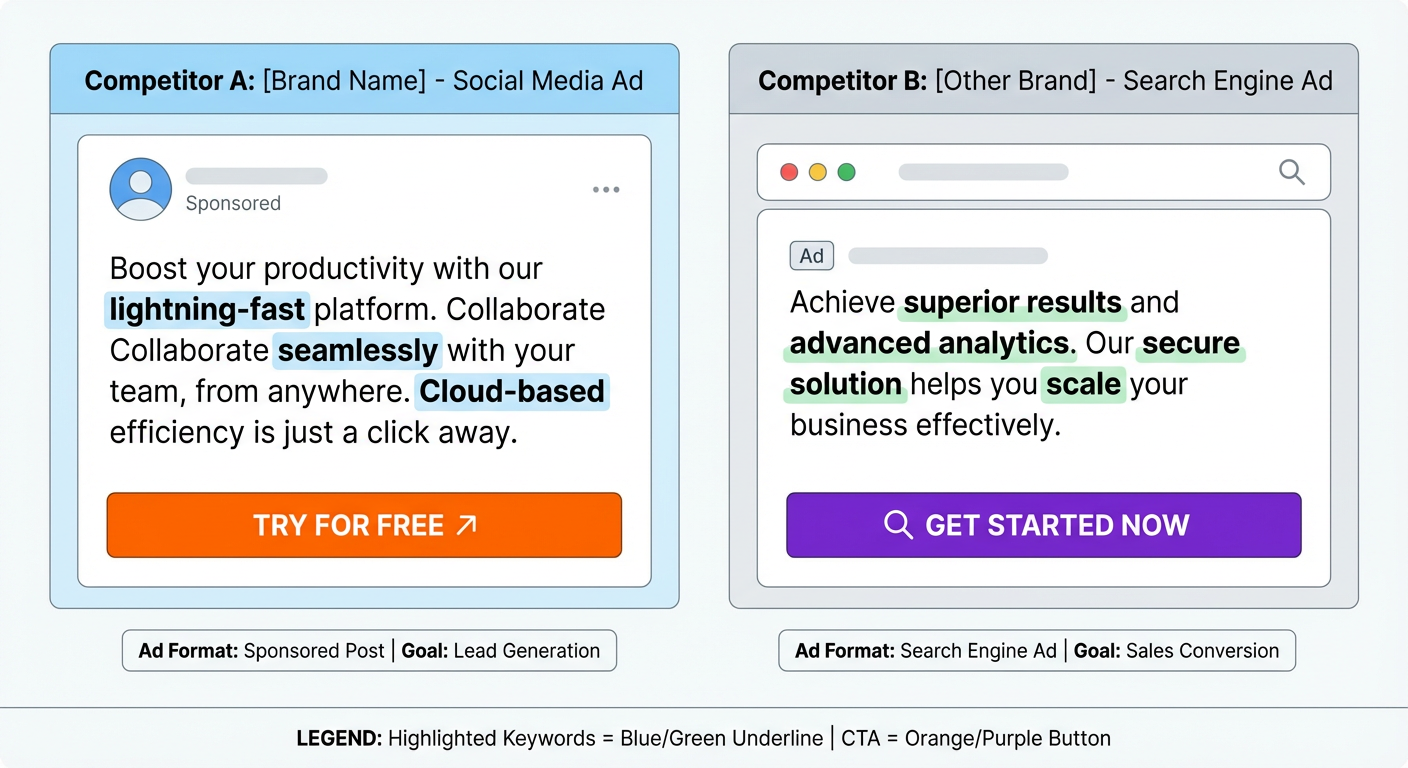
The ads themselves are public. Google Ads Transparency Center, Meta Ad Library, LinkedIn's ad transparency — all free, all updated in near real-time. But looking at individual ads is pointless. You need to look at the pattern across dozens of ads.
Here's what I track:
Primary value proposition. Read their last twenty headlines. What word or phrase appears most? If a competitor's headlines keep hammering "save 10 hours per week," that's the promise their market research says buyers care about. If they shifted from "all-in-one" to "built for [specific role]," they're moving from horizontal to vertical positioning. That shift didn't happen by accident — someone looked at their conversion data and made a call.
Offer structure. Free trial, demo request, freemium, or content download? The CTA tells you where they are in their go-to-market evolution. A shift from "Start Free Trial" to "Book a Demo" usually means self-serve wasn't converting at the rate they needed. A shift the other direction means they're trying to reduce CAC by removing sales from the loop.
Emotional vs. rational framing. Some ads lead with fear ("You're losing deals to competitors who...") and others lead with outcomes ("Teams using X close 30% more deals"). Track which framing each competitor leans on. It tells you what their customers respond to.
Step 3: Landing Page Analysis
The ad is the hook. The landing page is the strategy.
I once spent an afternoon tearing apart a competitor's landing pages after noticing their Meta ads had tripled in volume. Every page had the same structure: short headline, three bullet points, a customer logo bar, and a single "Get Started Free" button. No long-form content. No feature comparisons. No pricing. Pure conversion minimalism.
They'd clearly tested their way into that format. Within two months, two other competitors adopted almost identical page structures. The market was converging on what worked. I would have missed that signal entirely if I hadn't looked beyond the ad itself.
When you analyze competitor landing pages, pay attention to:
- Page length — getting shorter or longer over time?
- Social proof placement — testimonials, logos, or case study numbers?
- Number of CTAs and whether they're consistent or varied
- Form fields — how much information are they asking for? Fewer fields usually means they're optimizing for volume over lead quality
Cross-reference landing page changes with their ad copy changes. When both shift in the same direction at the same time, that's a deliberate strategy move, not a random A/B test.
Step 4: Budget Estimation
You can't see exact spend, but you can get close enough to be useful. SimilarWeb estimates paid traffic volume. Multiply that by average CPC for their keyword set (available from SpyFu or SEMrush) and you get a rough monthly spend estimate.
Why this matters: budget allocation reveals priorities. A competitor spending $200K/month on Google Ads and $15K on Meta is telling you where their conversions come from. A sudden increase in spend usually precedes a product launch or a push into a new market. A sudden decrease could mean budget cuts, a channel that stopped performing, or a pivot to organic.
Track spend estimates monthly. The trend line is more valuable than any single number. A competitor that's increased Google Ads spend by 20% every quarter for the past year is making a very different bet than one whose spend has been flat. Both are useful signals.
Step 5: Creative Strategy
This is the piece most people skip during google ads competitor analysis because it's the hardest to quantify. But creative direction — the visual language, the tone, the format choices — reveals positioning decisions that keyword data alone can't tell you.
Are their display ads photography-heavy or illustration-based? Do their video ads feature customers or product demos? Are they running UGC-style creative on Meta (which signals they're targeting SMB buyers who respond to authenticity) or polished brand ads (which signals enterprise positioning)?
I track creative formats across competitors in a simple spreadsheet. Static image, carousel, video under 15 seconds, video over 15 seconds, UGC. When a competitor that historically ran polished video suddenly pivots to UGC-style content, they've either hired a new agency or their data told them their old creative was underperforming. Either way, worth knowing.
Why Use an Agent
Here's the math problem. Doing this framework properly across even three competitors means checking Google Ads Transparency, Meta Ad Library, LinkedIn's ad library, pulling SimilarWeb data, exporting keyword estimates, analyzing landing pages, and tracking creative formats. For three competitors, that's easily 15-20 hours of manual work. Per month.
Nobody does that. So teams do a half-version once a quarter and call it PPC competitor research. The intelligence is always stale by the time anyone acts on it.
A PPC competitor analysis agent compresses the data-gathering into minutes. It pulls active ads across platforms, analyzes copy patterns, checks SimilarWeb for traffic and keyword estimates, and synthesizes it into an actual analysis — not a data dump. You still interpret the findings and make the strategic calls. The agent handles the part that was taking you two full days and making you want to throw your laptop out a window.
The real win is frequency. When analysis takes fifteen minutes instead of fifteen hours, you do it monthly. Monthly competitor PPC analysis catches strategy shifts while they're happening, not three months after the fact. You see the ad copy change, the landing page pivot, the budget increase — and you respond before the competitive gap widens.
The Short Version
Stop treating PPC competitor analysis as a one-time research project. Your competitors are running live experiments with their ad spend every single day. Keyword bids tell you what they've validated. Ad copy tells you how they're positioning. Landing pages tell you what converts. Budget trends tell you where they're doubling down. Creative direction tells you who they're targeting.
All of it is public. All of it is free. The only question is whether you're paying attention often enough for it to matter.
Try These Agents
- PPC Competitor Analysis -- Analyze competitor ad strategy across Google, Meta, LinkedIn, and more in minutes
- SEO Competitor Analyzer -- Find competitor keywords, content gaps, and organic ranking opportunities
- Market Intelligence Agent -- Full competitor research covering hiring, reviews, keywords, and market signals
- Competitor Keyword Research -- Discover which keywords competitors rank for and where the gaps are