
We Ran Our CRM Out of Slack for 90 Days. Here's What Happened
The experiment started because Tomás said something in a pipeline review that stuck with me. "I spend 90 minutes a day in Salesforce and about 30 seconds of that is actually selling. The rest is finding information that I'll paste into Slack anyway."
He wasn't exaggerating by much. We tracked it. Our five-person sales team averaged 74 minutes per day in the CRM. Updating deal stages, logging calls, reading account histories, pulling contact details, checking pipeline numbers. Necessary work, but almost none of it required the CRM's interface. The reps were using Salesforce as a read-only database and Slack as their actual workspace. The CRM was a pit stop, not a destination.
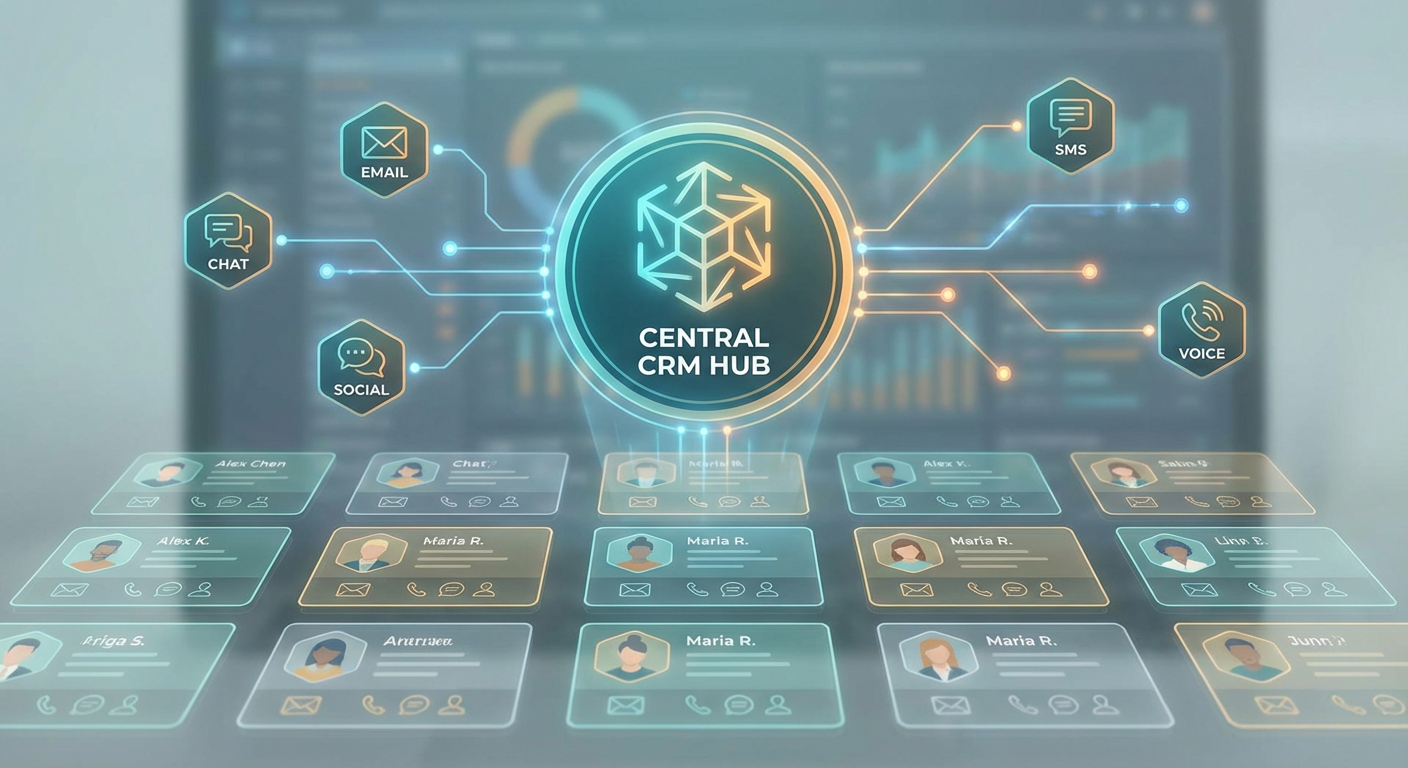
So we ran an experiment. For 90 days, the sales team would use Slack as their primary CRM interface. AI agents would surface Salesforce data into Slack channels, and reps would interact with deals, contacts, and pipeline data without opening Salesforce unless absolutely necessary. We set up a deal room monitoring agent as the backbone and built the rest around it.
The Setup
We created a deal channel for every active opportunity above $15K. The naming convention was simple: #deal-acme-corp, #deal-meridian-labs, #deal-northstar-tech. Each channel was automatically populated with three things.
First, a pinned summary message at the top with the deal basics: value, stage, close date, primary contact, and key decision makers. The agent updated this pinned message whenever the underlying Salesforce data changed, so it was always current.
Second, a daily activity feed. Any emails sent to or received from contacts on the deal, any meetings booked or completed, any notes logged. This replaced the activity timeline in Salesforce. Reps could scroll through the channel instead of clicking through CRM tabs.
Third, a weekly deal health check. Every Monday at 8 AM, the agent posted an assessment for each deal: days in current stage versus average, recent engagement trend (increasing, flat, declining), any risks flagged (no contact in 7+ days, close date approaching, stakeholder gone dark). Kenji called these "Monday reality checks" because they were often less optimistic than what reps were carrying in their heads.
Beyond deal channels, we set up a #pipeline channel where the agent posted aggregate views: total pipeline value, deals by stage, weighted forecast, and deals at risk. This replaced the Salesforce dashboard that only two people on the team actually looked at.
What Worked: Speed and Adoption
The adoption numbers were striking. In the first week, CRM logins dropped by 60%. By month two, they were down 78%. Reps were spending an average of 16 minutes per day in Salesforce, down from 74. The remaining 16 minutes were for tasks that genuinely required the CRM interface: building complex reports, editing multi-field records, and running territory reassignments.
But the more interesting metric was engagement with deal data. Before the experiment, reps checked their pipeline dashboard about once per day, usually in the morning. During the experiment, reps were interacting with deal data throughout the day because it was in Slack, where they already lived. A deal room would get a new message, a rep would glance at it between calls, and they'd have context for their next conversation without any deliberate "let me go check the CRM" moment.
Anya described the difference: "Before, CRM was a chore I did at the beginning and end of the day. Now deal information just flows past me all day. I noticed that my contact at Beacon Group hadn't responded in six days because the agent mentioned it in the deal channel. In the old world, I wouldn't have caught that until my Friday pipeline review, which means I'd have gone ten days without noticing."
The speed improvement for deal-related questions was dramatic. "What's the close date for the Apex deal?" used to require opening Salesforce, navigating to the deal, and finding the field. Now it required glancing at the pinned message in #deal-apex. Time: maybe 3 seconds. "Who's the economic buyer at Northstar?" Same thing. The information was already there.
Team collaboration on deals improved too. When deal data lives in a shared Slack channel, everyone on the account team sees the same information. Elena, our solutions engineer, could jump into a deal channel and get full context in two minutes instead of asking a rep to brief her before a technical call. She estimated this saved her about 20 minutes of pre-call prep per deal.
What Didn't Work: Reporting and History
Here is where I have to be honest about the failures, because they were real.
Reporting fell apart. Salesforce's reporting engine is powerful. You can slice pipeline data by region, by product, by rep, by time period, by deal source, and by about forty other dimensions. Slack channels don't have a reporting engine. The pipeline summaries our agent posted were useful for daily operations, but useless for board-level analysis.
When our VP of Sales needed a report on Q4 pipeline coverage by segment, they had to go back to Salesforce. When finance needed win-rate trends by deal source for the annual planning process, they needed Salesforce. The Slack-as-CRM setup worked for the people doing the selling. It did not work for the people analyzing the selling.
Historical data was harder to find. Salesforce stores everything in structured fields. Slack stores everything in chronological message threads. When Tomás needed to remember what pricing was discussed with a prospect three weeks ago, he had to scroll through a Slack channel and read thread after thread. In Salesforce, he would have checked the notes field on a specific activity record. The Slack approach is more natural in the moment but worse for retrieval.
We partially solved this with a conversation analyzer agent that could search deal channel history and surface relevant messages. Asking "what pricing did we discuss with Apex?" and getting a synthesized answer from channel history was better than manual scrolling. But it wasn't as reliable as structured CRM fields, because the information was scattered across conversational messages rather than logged in a consistent format.
Data entry didn't go away. It moved. This was the most humbling realization. We thought eliminating the CRM interface would eliminate data entry. It didn't. The data still needed to get into Salesforce somehow, because Salesforce was still the system of record. Reps started updating deals less frequently because they weren't in the CRM anymore. By month two, our data quality had degraded noticeably. Stage accuracy dropped. Close dates were stale. Contact information wasn't being updated.
We addressed this by having the agent prompt reps to confirm or update deal data through Slack. A weekly "deal review" message in each channel asked: "Is this deal still at $45K? Is the close date still March 15? Is the stage still Negotiation?" The rep could reply with corrections and the agent would update Salesforce. This recovered most of the data quality, but it was a bandaid on a structural problem.
The Verdict After 90 Days
We did not make Slack our permanent CRM. But we didn't go back to the old model either.
Here is what we kept. Deal channels for every opportunity above $25K (we raised the threshold because the channel volume was too high at $15K). The daily activity feed. The Monday deal health checks. The #pipeline summary channel. The conversation analyzer for searching deal history.
Here is what we changed. Reps are back in Salesforce for data entry, but only for about 25 minutes a day instead of the original 74. They do pipeline updates and field edits in the CRM. They do everything else in Slack. The agents bridge the two, pushing information from Salesforce into Slack and pulling updates back.
Priya, who oversees our sales operations, put it this way: "Slack is where deals happen. Salesforce is where deals are measured. We tried to make Slack do both jobs and it was good at one and bad at the other. Now each tool does what it's good at, and the agents handle the translation."
The 90-day experiment failed as a CRM replacement. It succeeded as a proof that sales teams shouldn't have to leave their primary workspace to access customer data. The answer wasn't replacing Salesforce with Slack. It was connecting them with an intelligent layer that gives reps what they need, where they need it, without asking them to context-switch 20 times a day.
Try These Agents
- Slack Deal Room Monitor -- Automated deal channels with activity feeds, health checks, and risk alerts
- Salesforce Deal Alerts to Slack -- Intelligent CRM notifications filtered by significance and enriched with context
- Slack Customer Mention Tracker -- Surface customer mentions across channels with account history
- Slack Conversation Analyzer -- Search and synthesize conversation history across channels