
TikTok vs Instagram Reels: We Run Both. Here Is What the Data Shows.
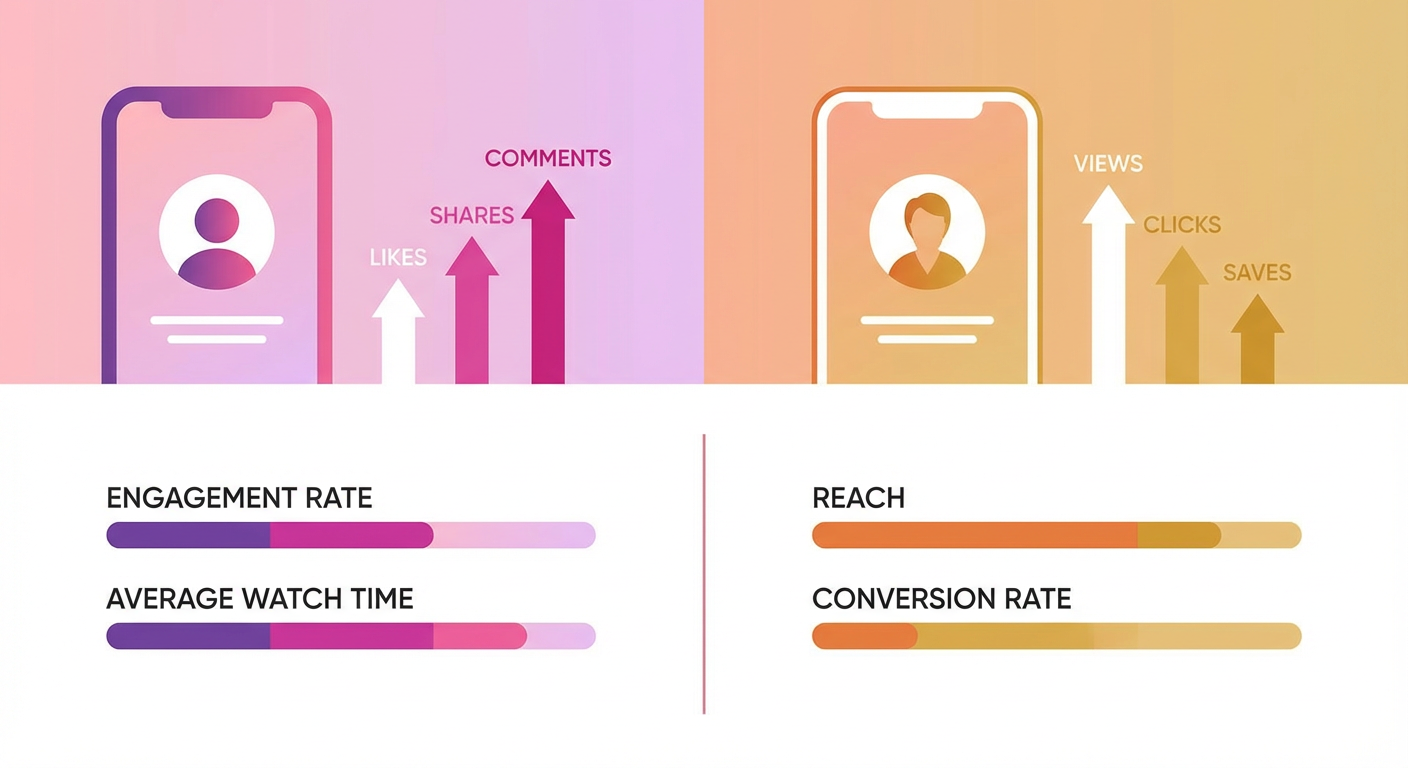
I know Elena because I advise her fintech brand on content. She runs short-form video across TikTok and Reels with one team and one budget, and she has been keeping a spreadsheet of every cross-posted video since last summer. 187 entries so far. The results contradict a lot of what people say about these two platforms.
Her headline number: 3.15% engagement on TikTok, 1.48% on Reels. Looks like a blowout for TikTok. But Reels drives 3.8x more website clicks per impression. TikTok fills the top of her funnel. Instagram closes it. The weird part: her best content on each platform looks nothing alike, even when she started from the same raw footage.
So "which platform should I use" is the wrong question entirely. The real question is whether your team can handle two platforms with different creative requirements, different metrics, and different roles in the funnel — or if you should just pick the one that does what you need most.
The Engagement Rate Gap Is Real (But Misleading)
Every benchmark study from the past two years says the same thing. TikTok: 2.5-4.5% engagement. Reels: 1.2-2.0%. Big gap. Stable for a while now.
The problem: those numbers are lying to you. TikTok counts a "view" after one second. Their engagement rate divides likes, comments, shares, and saves by views. Instagram's Reels engagement? Likes plus comments divided by follower count. Different denominators entirely. You're comparing batting average to on-base percentage and declaring a winner.
Elena ran the math herself. She normalized both platforms to per-view engagement: likes, comments, and shares divided by total views. The gap shrunk a lot. TikTok still won, but by about 40%, not 2x. So roughly half the reported gap turns out to be a measurement artifact. Good to know.
Shares are the one metric that compares cleanly. TikTok videos get shared at about 5x the rate of Reels. I care about this number because a share means someone liked a video enough to send it to a friend. That is a far stronger signal than a double-tap. If you care about word-of-mouth, about getting forwarded in group chats, TikTok is just not in the same conversation as Reels.
Algorithm Differences That Actually Matter
Both platforms claim they prioritize "content quality" and "user interest." In practice they work nothing alike.
TikTok treats every video as a stranger. Followers barely matter. It shows your video to a small test group, watches whether people finish it, and decides from there. I've seen a 200-follower account hit 2 million views. Happened more than once. I've also seen a 200K-follower account post something that flatlines at 400. No floor, no ceiling.
Instagram leans on existing relationships. Your Reels go to followers first. If they watch consistently, Instagram finds more people who look like them. Follower count matters here. A lot. Growth is steadier, slower, more predictable. No random 2-million-view spikes, but also no posting into a void because the algorithm killed your video after 50 impressions.
What does this mean day to day? On TikTok, you can experiment freely. A weird video that flops does not hurt your next post. On Instagram, abrupt format changes confuse whatever model Instagram has built of your account, and your next couple of Reels pay the price.
Elena tested this directly. She ran a series of "hot take" financial opinion videos on both platforms. On TikTok, one went semi-viral (280K views) and the rest performed normally. On Instagram, the series tanked and her next two "normal" Reels also underperformed.
Audience Demographics: The Part Everyone Glosses Over
I keep hearing "TikTok is for teens." It hasn't been for about three years. The 30-49 demo is actually the fastest-growing segment on TikTok right now, and the overall age breakdown looks a lot like the general internet at this point.
What actually differs between the platforms is not age. It is intent.
People open TikTok to kill time. They scroll the For You page with zero agenda and discover brands they have never heard of along the way. Top of funnel. Brand discovery.
People open Instagram to see what their friends and favorite brands posted today. The feed is dominated by accounts they already follow. Mid-funnel. Keeping the relationship warm.
Elena's website traffic data backs this up. TikTok drives more new visitors. Instagram drives more return visitors and higher pages-per-session.
Content Strategy: Stop Cross-Posting the Same Video
This surprised me. The same video performs differently on each platform, and it goes beyond algorithmic differences. After months of just dumping the same file on both platforms, Elena started cutting two versions of each video. The difference showed up immediately.
On TikTok, abrupt openings work (start mid-sentence, no intro, no logo). Dense text overlays are fine. Trending sounds get an algorithmic boost. And raw, unpolished video often outperforms polished stuff.
On Reels, the opposite rules apply. Clean color grading and intentional composition win. You can use carousel-Reel hybrids (short video as the first frame, then swipeable info slides) which do not exist on TikTok at all. And you get two or three seconds before someone scrolls, versus maybe one second on TikTok.
So now Elena shoots once and edits twice. The TikTok version gets faster cuts, more text overlays, a trending sound, and an abrupt open. The Reels version gets a cleaner grade, a branded intro frame, original audio, and a slightly longer build. Takes about 15 extra minutes per video. Gets her 35-50% higher engagement compared to just uploading the same file to both platforms.
Figuring out what to change per platform used to be guesswork. Elena ran a content research agent against her last 60 TikTok videos and found that face-to-camera openings with text overlays averaged 2.3x the completion rate of her product shots. On Reels, the opposite: product shots with clean edits outperformed face-to-camera by 40%. She would not have spotted that split manually because she was looking at aggregate numbers, not platform-specific patterns.
Measuring Performance Across Both Platforms
This is the part that drives people nuts. You post on both platforms, you want to know which one is "working," and the answer is: depends what you mean by working. The metrics don't translate. The audiences behave differently. And each platform is doing a different job for your business.
Elena tracks three numbers that actually compare across platforms.
First: cost per quality view. She takes total cost (team hours, tools, ad spend if any) and divides by views where someone watched at least 3 seconds. One number. Works on both platforms. Cuts through the noise of how each one defines a "view."
Second: website click-through rate. Link clicks divided by total views. Instagram wins this one consistently for Elena, about 0.12% vs 0.03% on TikTok. Not surprising when you think about it — people click through when they already know who you are.
Third: content-to-creation ratio. Basically, how many content ideas come from audience interactions on each platform? Comments, DMs, stitch requests. TikTok generates roughly 4x more ideas. The comment culture is more conversational there, and stitches create natural content loops.
A video performance analyzer handles the first two metrics by pulling data from both platforms and doing the math automatically. Elena used to spend two hours every Friday building that comparison spreadsheet by hand. Now it takes minutes.
Why Use an Agent for This
Running two platforms means double the content, double the analytics, double the competitive monitoring. The teams that make this work aren't burning twice the hours. They're pushing the data collection and number-crunching to agents so people spend time on what to create next.
Elena uses a video performance analyzer every week on both platforms. A few weeks ago it flagged something she would have missed: TikTok completion rates were down 15% over a three-week period. The daily numbers looked normal. The weekly trend was not. She figured out she had been posting screen recordings instead of face-to-camera videos. Switched back. Numbers recovered in about a week.
Here is Elena's take after eight months of running both platforms side by side: they are not interchangeable. Not even close. The algorithms are different. The content preferences are different. They play completely different roles in the funnel. The "shoot once, edit twice" approach works, but only if you actually measure what each platform is doing for you. Otherwise you are just guessing where to put your team's time.
Try These Agents
- TikTok Video Performance Analyzer -- Analyze video metrics, hooks, and content patterns across your TikTok content
- TikTok Content Research Agent -- Research trending formats and hooks to inform your content strategy
- Brand Monitoring Agent -- Track brand mentions across TikTok, Instagram, Twitter, and Reddit
- Social Listening Alerts -- Monitor mentions and sentiment across platforms with Slack delivery