
How to Build Asana Automations with AI Agents
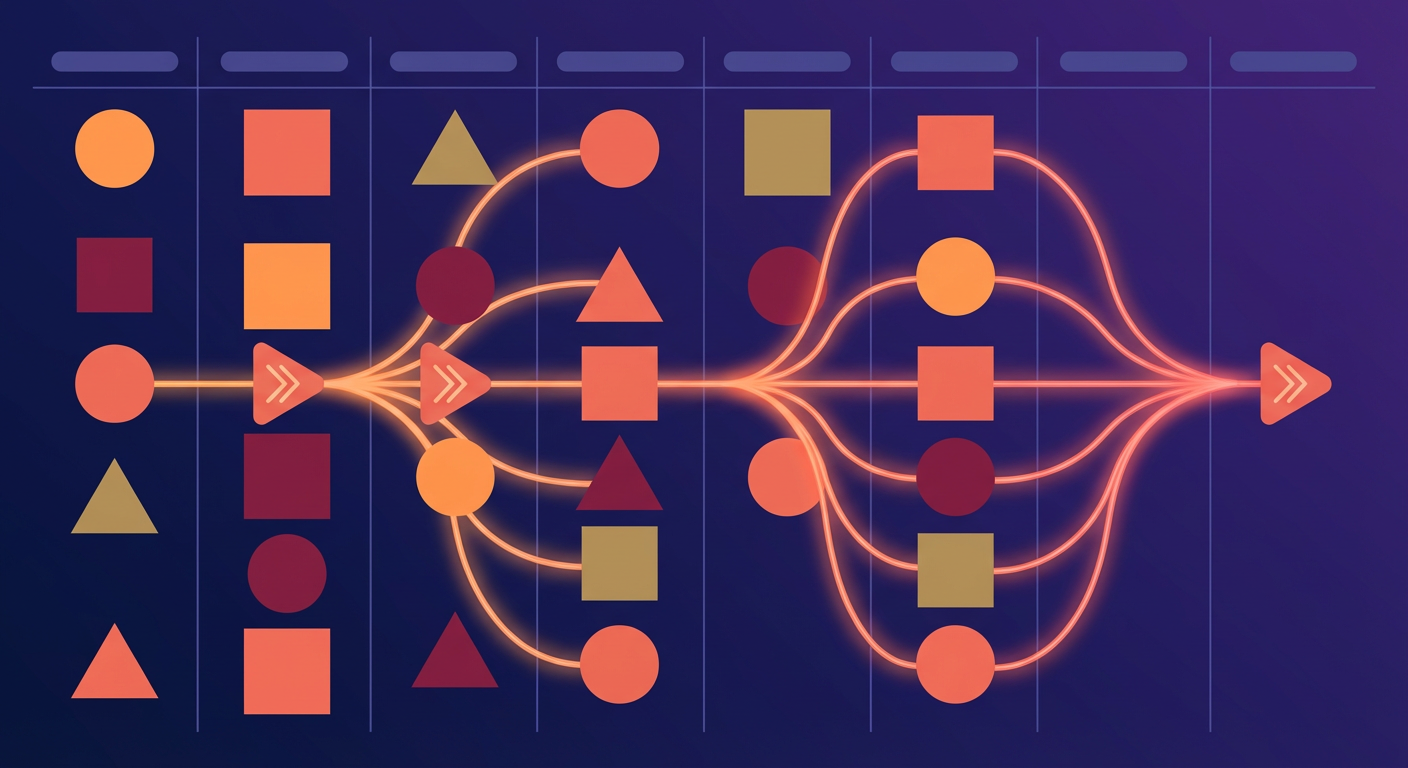
I spent two weeks in January trying to build an Asana automation that would take inbound leads from a form, create tasks in the right project, assign them to the right rep based on territory, set a due date three business days out, and add a comment with context from our CRM. Using Asana's built-in Rules.
Two weeks. For something I can now describe in three sentences to an AI agent.
The automation I built technically worked. For about eleven days. Then someone added a new sales territory and the whole thing collapsed because the rule conditions I had carefully stacked together did not account for a region called "APAC-2." Nobody told the rules engine that APAC-2 existed, so leads from that territory just vanished into the default project where nobody was looking. We lost four qualified leads before anyone noticed.
That experience broke something in my brain about how we think about project management automation. And I do not think I am alone.
Asana's Built-In Automations Are Fine Until They Aren't
Let me be clear: Asana Rules are not bad. For simple stuff they are genuinely useful. "When a task moves to Done, mark it complete." Great. "When a task is assigned to me, move it to My Tasks project." Perfect. Straightforward triggers, straightforward actions.
But the moment you need anything that requires actual thinking, you hit a wall. Asana automation gives you a fixed set of triggers and a fixed set of actions. If your workflow does not fit neatly into those boxes, you are out of luck. There is no "when a task has been sitting in Review for more than three days and the assignee has not commented, reassign it to their manager and add a note explaining why." That requires reasoning. Rules do not reason. They just match patterns.
Here is what I have seen break in practice:
Conditional logic gets unwieldy fast. You start with one rule. Then you need an exception. Then an exception to the exception. Pretty soon you have fifteen rules that interact with each other in ways nobody fully understands, and your new PM is afraid to touch any of them because the last person who edited a rule accidentally auto-completed 200 tasks.
No cross-project awareness. Asana Rules operate within a single project. If you need to coordinate work across multiple projects -- which is, you know, how real companies operate -- you are duct-taping together multiple rules and hoping they fire in the right order.
Zero ability to search or reason. A rule cannot look at a task, read its description, figure out what it is about, and then decide where to route it. It can only check whether a field equals a specific value. That is pattern matching, not automation.
The AI Agent Approach: Describe It, Don't Build It
The shift that changed everything for my team was moving from "build the automation" to "describe the automation." Instead of configuring triggers and conditions in a UI, you tell an AI agent what you want to happen and it figures out which API calls to make.
This is not theoretical. This is working right now. An Asana AI agent can receive a plain English prompt like "find all incomplete tasks in the Q1 Launch project that are past their due date, reassign them to the project lead, and add a comment saying the deadline was missed and asking for a revised estimate." The agent breaks that down into a series of operations: list tasks in the project, filter for overdue incomplete ones, update the assignee on each, and add a comment. It handles the sequencing, the error handling, and the edge cases.
The fundamental difference is reasoning. A rule says "if X then Y." An agent says "given this situation, what is the right thing to do?" That distinction matters enormously when your workflows are not perfectly predictable -- which, if you manage real projects with real humans, they never are.
What an Asana AI Agent Can Actually Do
I want to get specific here because the vague "AI can do anything" pitch is exactly the kind of thing that gets people burned. Here are the seven concrete operations an Asana AI agent can perform, and what each one looks like in practice.
Create Task. Spin up a new task in any workspace with a name, assignee, due date, description, and project assignments. When a customer emails support and the issue needs engineering work, the agent creates an Asana task with all the context already filled in. No copy-pasting from email to Asana.
Get Task. Pull the full details on any task -- projects, tags, custom fields, completion status. The agent can check on a task's current state before deciding what to do next. This is the "look before you act" capability that rules completely lack.
List Tasks. Query tasks by project, assignee, workspace, or completion status. Pull all incomplete tasks assigned to a specific person, or everything in a project that was completed this week. This is how you build standup reports and project summaries without manual effort.
Search Tasks. Full-text search across an entire workspace. Find every task that mentions "migration" or "client onboarding" regardless of which project it lives in. Rules cannot do this at all. Search is what makes cross-project workflows possible.
Update Task. Change the name, assignee, due date, notes, or completion status on any task. The agent can batch these updates -- find twelve overdue tasks and push all their due dates by a week, for example. Try doing that with Rules.
Add Comment. Post a comment on any task, with the option to pin it. When an agent completes a series of updates, it can leave a comment explaining what happened and why. This creates an audit trail that rules never give you.
List Projects. See all projects in a workspace, filtered by active or archived status. This is how the agent orients itself -- it can discover your workspace structure before taking action, rather than needing every project ID hardcoded.
Seven operations. Not flashy. But chained together by an agent that can reason about context, they cover an absurd range of workflows that would take dozens of rules to approximate.
A Real Workflow: Sprint Standup Automation
Let me walk through a workflow I actually run. Every morning at 9:15, an agent generates a standup summary for my engineering team.
The agent starts by listing all active projects in our engineering workspace. For each project, it pulls incomplete tasks sorted by due date. It groups them by assignee. For any task that is overdue, it flags it and adds a comment asking for a status update. For any task that has not been modified in five or more days, it flags that too.
The output is a structured summary: who is working on what, what is blocked, what is overdue, and what has gone stale. That summary gets posted to Slack. The whole thing takes about ninety seconds.
Before this, our standup prep looked like this: the engineering manager would open Asana, click through four projects, try to remember who was assigned to what, notice that three tasks had no updates, Slack those people individually asking for status, wait for replies, and then compile a summary that was already outdated by the time the meeting started. That process took 25 to 30 minutes every single morning.
Ninety seconds versus thirty minutes, every day, with better accuracy. That is not a marginal improvement. That is getting half an hour back daily for a manager who should be unblocking engineers, not clicking through a project management UI.
Another One: Lead-to-Task Pipeline
Here is a non-engineering example. We use Asana to track customer onboarding. When a new deal closes in our CRM, an agent creates a task in the Customer Onboarding project with the company name, assigns it to the onboarding manager for that account size, sets the due date to fourteen days out, and adds a comment with deal context -- what they bought, who the main contact is, any notes from the sales process.
The agent also searches for any existing tasks that mention that company name. If it finds open tasks from a previous trial or demo, it links them in a comment so the onboarding manager has full history. Try building that with Asana Rules. You cannot. There is no rule trigger for "a deal closed in an external CRM" and no rule action for "search for related tasks and compile context."
Getting This Running with Cotera
I will mention that Cotera has an Asana integration that supports all seven of those operations. You connect your Asana account with a Personal Access Token, and then you can include Asana actions in any agent workflow alongside your other tools. CRM data, Asana tasks, Slack messages, email -- the agent works across all of them in a single prompt.
I am not going to pretend this is the only way to connect an AI agent to Asana. You could build your own integration with the Asana API. But you will spend a week on authentication, pagination, error handling, and rate limiting before you write a single line of business logic. We have already done that work, so you do not have to.
The Bigger Picture
The move from rule-based automation to agent-based automation is happening across every tool, not just Asana. But project management is where I have seen the most dramatic difference because project management workflows are inherently messy. They involve cross-references, judgment calls, and context that changes daily. Rules were never designed for that.
If your Asana automation today consists of two or three simple rules, keep them. They work fine. But if you have been trying to build something more ambitious and hitting walls -- conditional routing, cross-project coordination, search-driven workflows -- stop fighting the Rules engine. An AI agent that can reason about your tasks and take action across your entire workspace is not a future promise. It is running in production on my team right now.
The gap between "if task moved to column B then assign to person C" and "look at everything happening across these four projects and tell me what needs attention" is the gap between automation and intelligence. It is time to close it.
Try It Out
- Asana Integration Docs -- Full reference for all seven Asana operations available in Cotera