
Automated Competitor Tracking: The Lazy (Smart) Approach
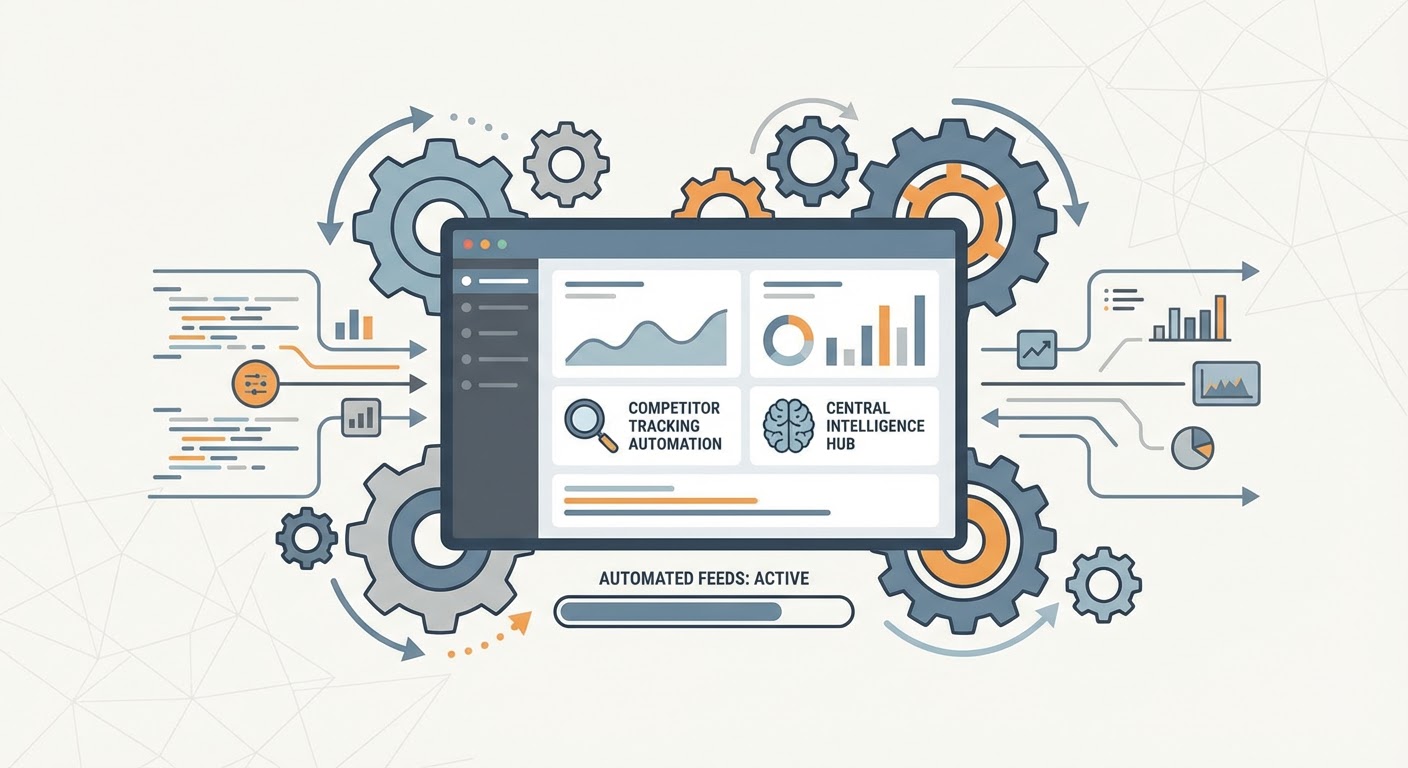
The best competitive intelligence program I ever ran was the laziest. Not lazy in a sloppy way. Lazy in the engineering sense — I spent two hours setting up automated tracking so I could spend zero hours per week on data collection. All my competitive intelligence time went to analysis and action instead of tab-switching and copy-pasting.
Before the automation, our process was: remember to check competitors, forget to check competitors, panic when a prospect mentions something we didn't know about, spend a frantic afternoon catching up on three months of competitive changes. Repeat quarterly. It was stressful and reactive and it cost us deals.
The automated system reversed the dynamic. Now the data comes to me. I decide what to do with it. The checking happens whether I remember or not.
What "Automated" Actually Means Here
Let me set expectations. Fully automated competitor tracking doesn't mean you never think about competitors. It means the data collection happens without you. The analysis is still yours.
I think of it as a newspaper model. Someone else writes the articles and delivers the paper to your door every morning. You still have to read it and decide what matters. The automation eliminates the research, not the thinking.
Here's what runs on autopilot in our system:
- Pricing page monitoring checks each competitor's pricing URL weekly and flags changes
- Google Alerts deliver competitor news mentions daily
- G2 review alerts notify us when new reviews are posted
- Blog RSS feeds surface new competitor content
- A quarterly job posting check runs via a calendar reminder (this one isn't truly automated — someone still has to look at careers pages)
Each of these feeds into a single Slack channel: #competitive-intel. That channel is the "newspaper" someone reads every Monday. Most messages in the channel are noise. The ones that aren't are gold.
The Architecture of a Good Tracking System
Three layers. Data collection, filtering, and distribution.
Data collection is the automated part. Multiple sources pushing updates into one place. The mistake people make is having too many sources. Five to seven feeds per competitor is the sweet spot. More than that and the noise overwhelms the signal.
Filtering separates the interesting from the irrelevant. This is where AI-based monitoring has an edge over basic tools. A basic website monitor tells you "Competitor X's pricing page changed" every time a chat widget loads. An AI monitor tells you "Competitor X moved their analytics feature from the Growth tier to the Enterprise tier." The second one is useful. The first one is noise.
Distribution puts the filtered intelligence in front of the right people. Sales needs competitive battlecard updates. Product needs feature launches. Marketing needs positioning changes. Don't dump everything into one channel that everyone ignores. Route alerts by type: pricing changes go to sales and marketing. Product launches go to product. Hiring signals go to the executive team.
The Setup You Can Build Today
If you want automated competitor tracking running by end of week, here's the minimum viable setup.
Pick your competitors. Three, max five. Fewer is better for maintenance.
Set up pricing monitoring. Either use a website change monitoring service (Visualping, free tier) or a pricing analyzer agent. Point it at each competitor's pricing page. Set it to check weekly.
Connect news monitoring. Google Alerts for company names, delivered daily to a dedicated email label or Slack channel via Zapier. Takes 10 minutes to set up.
Subscribe to blogs and review alerts. RSS feeds for blogs. G2 alerts for new reviews. Both free.
Create the Slack channel. #competitive-intel. All automated feeds post here. One person reviews it every Monday morning and writes a three-sentence summary for the team.
That's it. Total setup time: about an hour. Ongoing maintenance: 15-20 minutes per week for the review.
Scaling the System Over Time
Start minimal and add complexity only when you need it. Month one, just run the basic feeds. Get comfortable with the review cadence. Figure out which alerts are useful and which are noise.
Month two, add traffic monitoring. SimilarWeb data or an automated traffic report that drops competitor traffic trends into a shared spreadsheet monthly. Now you see not just what competitors are doing but whether it's working.
Month three, add social monitoring. Competitor mentions on Twitter, LinkedIn, and Reddit surface conversations you'd otherwise miss. A customer publicly complaining about a competitor on LinkedIn is a prospecting opportunity. A Reddit thread comparing your product to a competitor tells you exactly how the market perceives you.
Month six, consider adding synthesis. Instead of reviewing raw alerts, have a market intelligence agent combine signals into a weekly competitive brief. "Competitor B raised prices, lost two G2 reviews this month mentioning pricing, and their blog shifted focus to enterprise features. Assessment: they're moving upmarket and their SMB customers are unhappy." That level of synthesis used to require a dedicated analyst. Now an agent handles it.
The One Rule That Keeps the System Alive
Every piece of competitive intelligence must connect to an action. If you can't turn an alert into something someone will do differently, remove that alert from the system. The alerts you keep should make someone change a talk track, update a battlecard, adjust a campaign, or flag a strategic concern.
This rule prevents the system from growing into a notification monster. When you add a new feed, ask: "What would I do with this information?" If the answer is "nothing specific," don't add it. The system should get simpler over time as you prune the feeds that don't drive action, not more complex.
Why Use an Agent for This
The market intelligence agent handles the synthesis layer that basic automation can't touch. It connects signals across sources — pricing change plus blog pivot plus hiring push — into a narrative about what a competitor is doing strategically. That synthesis used to be the analyst's job. The agent does it automatically and the analyst (you) decides whether the assessment is right and what to do about it.
For the news and social dimensions, the Newscatcher competitive news tracker provides deeper coverage than Google Alerts, and the Twitter competitor content analyzer catches social conversations that no other monitoring tool surfaces. Together, they fill in the real-time picture of what's being said about competitors in public.
The automation isn't about being lazy. It's about spending your competitive intelligence time on decisions instead of data collection. The machines gather. You think.
Try These Agents
- Market Intelligence Agent — Synthesized competitive intelligence from multiple sources
- Newscatcher Competitive News Tracker — Deep news coverage beyond Google Alerts
- Twitter Competitor Content Analyzer — Social conversation monitoring for competitive signals
- Google Sheets Competitor Traffic Report — Automated competitor data in a shared spreadsheet