
Competitive Intelligence for SaaS Companies
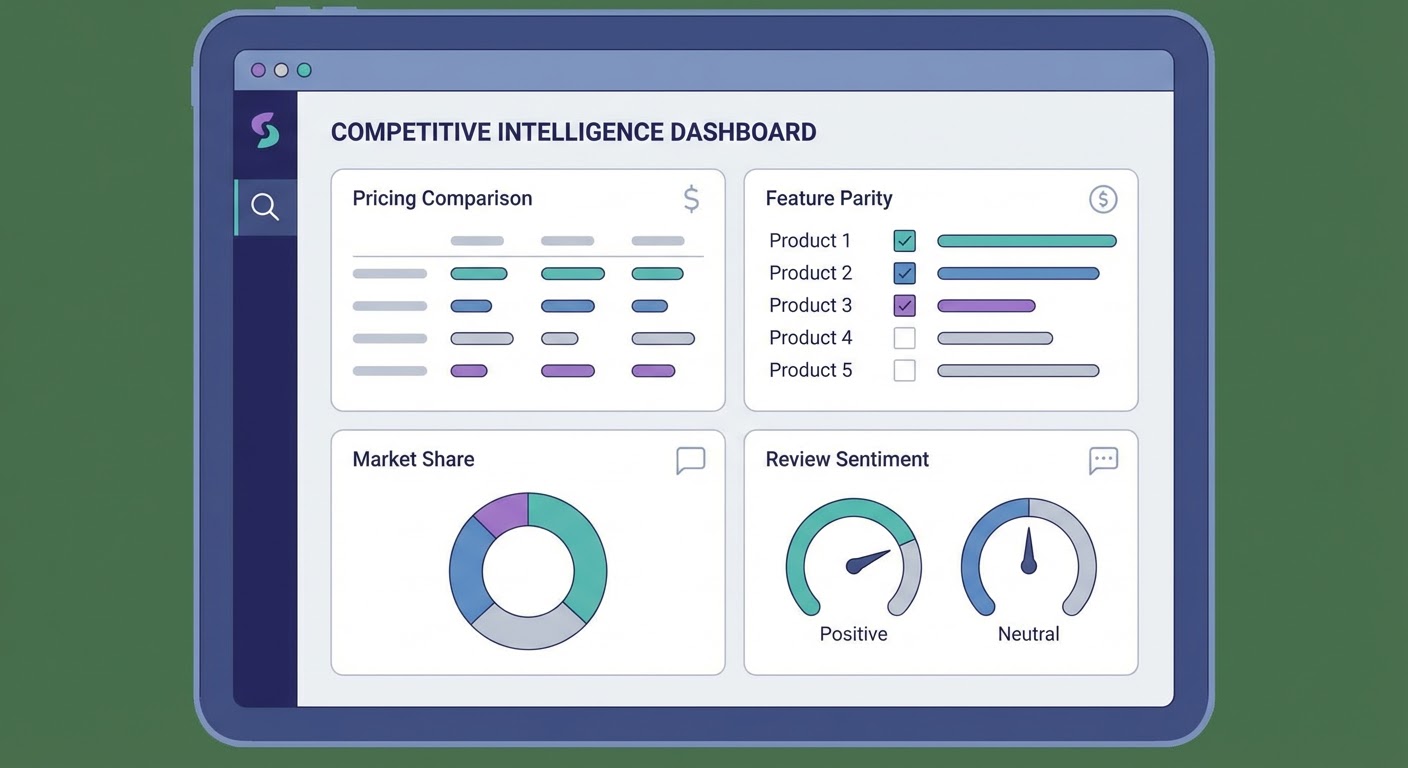
A competitor shipped a feature on Tuesday, changed their pricing on Wednesday, and emailed my prospect about it on Thursday. By Friday, my sales rep was on a call where the prospect said "well Competitor B just launched this and they're cheaper now." We had no idea any of this had happened. We lost the deal.
That's the thing about SaaS competitive intelligence — it moves at product release speed, not quarterly-report speed. The competitive review PowerPoint your team made in January? It was outdated by February. I've run CI at three SaaS companies now and the signals you need to track are always the same. The companies just change.
Start with Pricing (Everyone Forgets This)
Your competitor probably changed their pricing last month and you don't know about it. They didn't do a big announcement. They just quietly moved a feature from the $49 tier to the $99 tier, or started offering 30% annual discounts instead of 20%, or removed their startup program. Your sales team is out there quoting against pricing that no longer exists.
I have Visualping set up on every competitor's pricing page. When anything changes, I get an email within 24 hours. A competitor pricing analyzer does this more systematically if you're tracking a lot of competitors.
Here's what most people miss though: the pricing page is the public story. The real pricing lives in sales conversations. Your reps hear it every day. "Competitor B quoted us $X per seat with a 20% annual discount." Start a Slack channel called #competitor-pricing and have reps drop these data points in. After three months, you'll have better pricing intel than any tool can give you because it's actual negotiated rates, not list prices.
Feature Tracking Separates Winners
Product is the scoreboard in SaaS. When a competitor ships something you don't have, your reps start hearing about it immediately. When you ship something they lack, their reps hear about it. This back-and-forth never stops.
I track competitor releases through their changelogs, their marketing emails (burner email, obviously), and LinkedIn posts from their product managers. PMs love posting about features they just shipped. They often share details the marketing team hasn't approved yet, which is entertaining and useful.
But honestly, the feature itself is less interesting than how they talk about it. A competitor launches an AI feature — ok, everyone is doing that. The question is whether they're charging extra for it or including it in every plan. Whether they're pitching it to technical users or business users. The messaging tells you more about the strategic bet than the feature spec does.
A market intelligence agent monitors multiple competitor signals simultaneously — pricing, features, messaging, hiring. For SaaS specifically, the agent is most valuable when it catches the intersection of signals. A competitor hiring ML engineers + launching an AI feature + raising prices on their analytics tier = they're making a strategic bet on AI analytics and pricing it as premium.
Reviews Tell You Where Competitors Are Weak
G2, Capterra, and TrustRadius reviews are the most honest competitive intelligence in SaaS. Buyers leave unfiltered feedback about products they're paying for. The negative reviews are your competitive ammunition.
Sort by "most recent" to see current sentiment, not historical. A competitor with great reviews from 2023 and terrible reviews in 2025 had a product quality regression. That's a competitive opportunity you'd miss by looking at the aggregate rating.
A G2 competitive battlecard generator mines review data and turns it into sales enablement content. Instead of your sales team guessing at competitor weaknesses, they get specific complaints from real users, with evidence they can reference. "According to recent G2 reviews, Competitor B's users report a 3.2/5 on ease of use, with common complaints about the reporting dashboard being unintuitive." That's a talking point a rep can use in a discovery call.
Churn Signals Are Early Warnings
The most lucrative competitive intelligence in SaaS is catching competitor customer unhappiness before the churn happens. Those customers already understand your category, already have budget allocated, and already know what they don't want. Converting a competitor's frustrated customer is 3x easier than converting a cold lead.
Where to look: G2 review scores trending down over six months. Reddit threads titled "alternatives to [Competitor B]" — those get posted when someone is actively shopping. Competitor job postings suddenly heavy on customer success and retention roles, which screams "we're bleeding customers." And the classic: they raise prices without shipping anything new. That's when the inbound "are you an alternative to X?" calls start.
Social listening alerts automate the watching. I have alerts set for "[competitor name] alternative" and "[competitor name] switching" across Twitter, Reddit, and LinkedIn. When those fire, my SDR reaches out within 24 hours. We've closed six deals from these signals alone this year.
Build the SaaS CI Stack
Here's the minimum viable competitive intelligence stack for a SaaS company.
Every Monday I spend 15 minutes checking competitor pricing pages and scanning their social feeds. Once a month I do a deeper dive on feature releases and compile the pricing data from the Slack channel. Once a quarter I do a full competitive analysis with positioning updates and win/loss patterns.
The stuff that runs on autopilot: a competitor pricing analyzer on pricing pages, social listening alerts catching online chatter, and G2 review notifications. Those three things together mean I never get surprised by a competitive move again. Or at least, I get surprised 24 hours after it happens instead of three weeks.
Try These Agents
- Market Intelligence Agent — Comprehensive SaaS competitive monitoring
- Competitor Pricing Analyzer — SaaS pricing and packaging tracking
- G2 Competitive Battlecard Generator — Review-powered sales enablement
- Social Listening Alerts — Churn signal and competitor mention monitoring