
Competitor Analysis for Startups
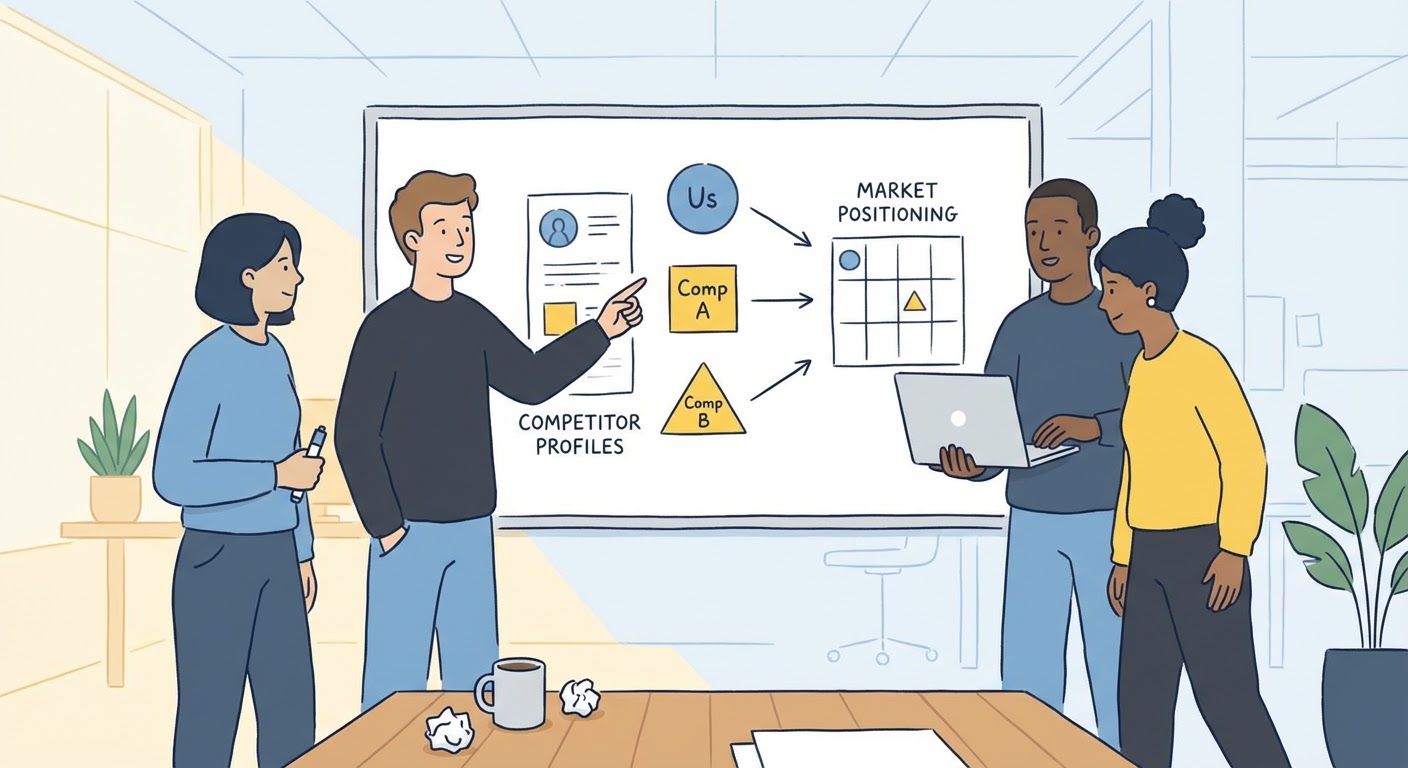
At my first startup, our CEO said "we don't have competitors" in a board meeting. The investors nodded politely. Everyone in the room knew it was nonsense. We had at least four direct competitors and a dozen adjacent ones, and pretending they didn't exist was not a strategy. It was denial dressed up as confidence.
The opposite extreme is also bad. I've seen seed-stage founders build 40-page competitive analysis decks with SWOT matrices and Porter's Five Forces diagrams. You have seven employees and three months of runway. You do not need a consulting-firm-quality competitive analysis. You need to know three things: who are they, where are they better than you, and where are you better than them. Everything else is procrastination disguised as strategy.
The Startup-Specific Challenges
You don't have a competitive intelligence team. You probably don't have a marketing team. The person doing competitive research is also the person doing sales, product management, and sometimes customer support. Any competitive intelligence system that takes more than 30 minutes a week is dead on arrival.
Your competitors move fast too. Unlike competing against an enterprise incumbent that updates their product twice a year, competing against other startups means weekly feature releases, rapid positioning shifts, and fundraising announcements that change the playing field overnight.
And your competitive set might not be obvious yet. At the earliest stages, you're often competing against "the customer does nothing" or "the customer uses a spreadsheet" more than against another product. Figuring out who your real competitors are is part of the competitive intelligence work.
A Crunchbase competitor tracker helps here because Crunchbase data tells you who else exists in your category, when they were founded, how much they've raised, and how big their teams are. I found two competitors I didn't know about through Crunchbase. They were early-stage like us, building similar products, and had just raised seed rounds. That's information I needed before a prospect mentioned them on a sales call.
What to Track (and What to Ignore)
Track their pricing. This is the one thing that directly affects your sales conversations. Know what they charge, know their packaging, know if they discount aggressively. A competitor pricing analyzer automates this so you're not manually checking pricing pages.
Track their product. What features are they shipping? What's on their public roadmap (if they have one)? What do their changelog updates say? You're competing on product at the startup stage. Everything else is secondary. If a competitor ships the feature your prospects keep asking for before you do, that's the competitive event that matters.
Track their funding. A competitor raising a $20M Series A while you're still pre-seed changes the competitive dynamic completely. They're about to hire 30 people and spend aggressively on marketing. You need to know this is coming.
Ignore their social media metrics. Ignore their blog post frequency. Ignore their conference sponsorships. Ignore anything that doesn't directly affect your ability to win customers. As a startup, you have limited attention. Spend it on the signals that change your decisions, not the signals that are interesting but irrelevant.
The Bare-Minimum Competitive System
Here's what I recommend for a startup with zero competitive intelligence budget and zero dedicated time.
Monday morning, 15 minutes: open each competitor's website and check for anything new. Pricing changes, feature announcements, blog posts about direction. Make a note of anything significant in a shared Google Doc.
When a prospect mentions a competitor on a sales call: write down what they said. What did they like about the competitor? What price were they quoted? Why are they also talking to you? This call-level intelligence is the most valuable data you'll get as a startup because it's real market feedback, not theoretical analysis.
Monthly, 30 minutes: review the month's notes. Any patterns? Is one competitor coming up more frequently? Are you losing to the same competitor on the same objection repeatedly? That pattern should inform your product and positioning decisions.
A company growth analyzer can tell you which competitors are hiring aggressively and in which functions. If a competitor is suddenly posting 15 engineering roles, they're about to build something. That's a signal worth knowing.
When to Level Up
You should invest more in competitive intelligence when two things happen: you start losing deals specifically because of competitors (not because of budget, timing, or fit), and you have at least one person who can own competitive research as part of their role (usually product marketing).
Until then, the 15-minutes-a-week approach with sales call intelligence is enough. Don't let competitive analysis become a substitute for building product and talking to customers. At the startup stage, the best competitive intelligence comes from shipping fast, learning from customers, and being honest about where competitors are genuinely better than you.
Try These Agents
- Crunchbase Competitor Tracker — Track startup competitors and funding
- Competitor Pricing Analyzer — Monitor competitor pricing changes
- Company Growth Analyzer — Hiring signals and growth trajectory
- Market Intelligence Agent — Comprehensive competitive research