
Competitor SEO Tracking: What to Actually Watch
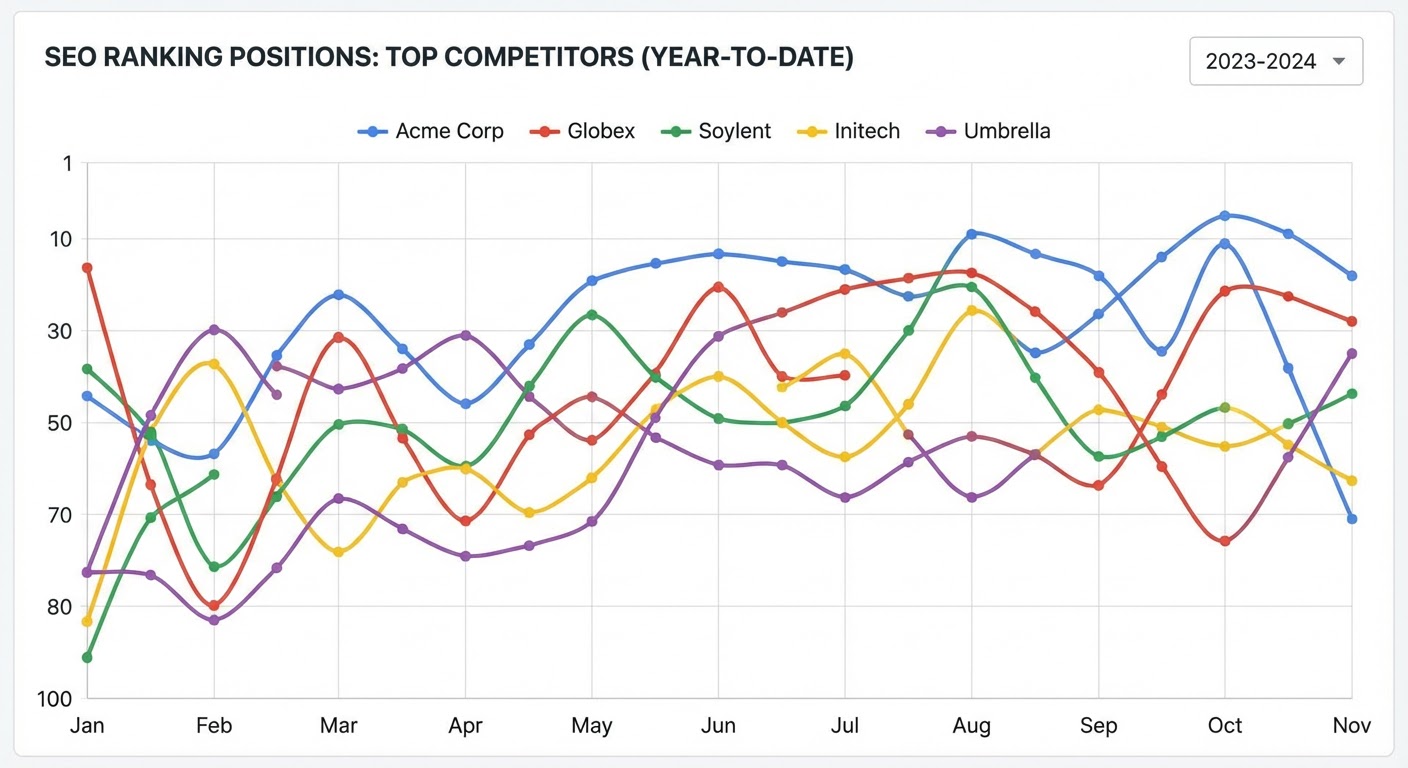
I spent six months obsessively tracking every keyword my competitors ranked for. All 47,000 of them. I had spreadsheets with pivot tables, color-coded rankings, weekly position changes down to the decimal. My SEO dashboard looked like mission control at NASA. One day our CMO asked me a simple question: "Are we gaining ground or losing it?" I stared at my 47,000-row spreadsheet and couldn't give her a straight answer.
That's the trap of competitor SEO tracking. You drown in data and lose the signal. Here's what I track now — a lot less, a lot more useful.
The Four Things Worth Tracking
I track four things now. Just four. It took me embarrassingly long to realize that four signals tell you 90% of the story.
Organic traffic direction. Not exact numbers — SimilarWeb estimates are close enough. I want to know if a competitor's organic is climbing, falling, or sitting still. Growing 15% per month? They've got a content engine that's working. Dropped 25% in a quarter? Algorithm update hit them, or they lost a big link source. I don't need precision. I need the shape of the line.
Keyword overlap on your money terms. Forget their full keyword profile. I care about maybe 30 keywords — the ones that actually bring us revenue. If Competitor B jumps from page 2 to position 3 on a term that drives 30% of our organic signups, that's an emergency. If they fall off a keyword we don't even target, I literally don't care.
What they're publishing and how much. Twenty new blog posts about "AI sales automation" from a competitor who used to write about "CRM best practices"? They're telegraphing a pivot. You can see strategic direction changes in someone's content calendar months before they announce anything officially.
Link velocity. This one gets ignored by most marketers and I don't understand why. If a competitor gains 500 new referring domains in one month, something happened. Maybe press coverage. Maybe a viral tool. Maybe a deliberate campaign. Whatever it is, that link advantage compounds. Rankings don't shift overnight but they shift inevitably when one side is building links faster.
What's Not Worth Tracking
Domain Authority scores. They're proprietary metrics from Moz and Ahrefs that approximate Google's actual ranking signals. Tracking DA is like checking your credit score daily — it changes slowly, the exact number is imprecise, and obsessing over it doesn't help you make better decisions.
Every single keyword they rank for. Your competitor ranks for 50,000 keywords. Most of them are irrelevant to your business. "Competitor X ranks #3 for 'what is CRM'" tells you nothing unless you're also trying to rank for that term. Focus on the keywords that matter to your business, not their entire keyword universe.
Page load speed and Core Web Vitals. Yes, these affect rankings. No, they're not competitive intelligence. Your competitor's page speed doesn't help you improve your own SEO. Fix your own site performance independent of what competitors are doing.
Setting Up Competitor SEO Tracking
Honestly you don't need much tooling to get started.
Make a list of your 20-50 money keywords. Not aspirational terms, not vanity searches with 50K monthly volume and zero buying intent. The terms that actually bring you customers. Put them in a spreadsheet. Check rankings monthly. That's your foundation.
Pick one traffic estimation tool and commit. SimilarWeb free works for directional stuff. Ahrefs or SEMrush if you want more detail. But don't mix tools — they use different methodologies and comparing numbers across them is a waste of time. Consistency within one tool beats accuracy across three.
For content monitoring, I literally just bookmark their blog pages and check them once a month. Some competitors still have RSS feeds (wild, I know). The point is to notice what they're writing about and how much of it. Takes ten minutes per competitor and reveals more about their strategy than any rank-tracking tool.
Monthly Review Process
Thirty minutes, first Monday, every month. No excuses.
Start with traffic direction for each competitor. Anybody move significantly? If yes, figure out why — algorithm update, content blitz, or something broke on their site. If nobody moved, great, move on. Don't spend time analyzing flatlines.
Then check your keyword rankings against the competitor set. Gained ground? Note what you did right so you can repeat it. Lost ground? Look at what they published or linked that you didn't. When Competitor C drops a 5,000-word "Ultimate Guide to [Your Main Keyword]," treat that like a declaration of war on your ranking. Plan accordingly.
Quick scan of their blog. What went up last month? Any new topic clusters appearing? This is the early warning system for strategic pivots.
Check for backlink spikes. A sudden jump in referring domains warrants investigation. Did they get press coverage? Did they launch a tool or resource that earned links? Can you do something similar? Competitive link intelligence is one of the most underused advantages in SEO because most marketers focus on keywords and ignore the link side of the equation.
Why Use an Agent for This
The monthly review works. The problem is maintaining it. Month one, you're diligent. Month three, you skip the backlink analysis because you're busy. Month six, the whole process gets pushed to "when I have time" which means never. I've watched this decay at three companies.
The SEO competitor analyzer runs the organic traffic and keyword analysis continuously. Instead of pulling data manually each month, it monitors your competitor set and flags significant changes — ranking gains, traffic shifts, new content pushes. You review the flags instead of hunting for signals in raw data.
The competitor keyword research agent handles the keyword overlap analysis. It identifies which keywords competitors are targeting, where they're gaining ground, and where gaps exist that you could fill. The "this competitor just started ranking for five of your money keywords" alert is worth more than any amount of monthly spreadsheet checking.
For the traffic side, the website traffic checker provides the directional trends without requiring you to log into SimilarWeb and click around. Traffic up 12% this month? The agent tells you. Traffic down 30% after a Google update? You know immediately.
The insight layer is still human. "Competitor B's traffic dropped — should we target their keywords while they're struggling?" is a strategy question that requires judgment. But the data collection that feeds that judgment runs on autopilot instead of depending on someone remembering to do it every first Monday.
Try These Agents
- SEO Competitor Analyzer — Automated organic traffic and keyword tracking for competitors
- Competitor Keyword Research — Identify keyword overlaps, gaps, and ranking changes
- Website Traffic Checker — Quick directional traffic trends for any competitor
- Google Sheets Competitor Traffic Report — SEO data delivered to a shared spreadsheet automatically