
How to Find Competitor Partnerships (They're Hiding in Plain Sight)
A competitor announced an integration with Salesforce and my first thought was "so what, everyone integrates with Salesforce." My second thought, about a week later, was more useful: they specifically integrated their analytics dashboard into the Salesforce sidebar. That's a design decision that tells you they're targeting sales teams who live inside Salesforce all day. The integration wasn't just technical — it was a market positioning statement.
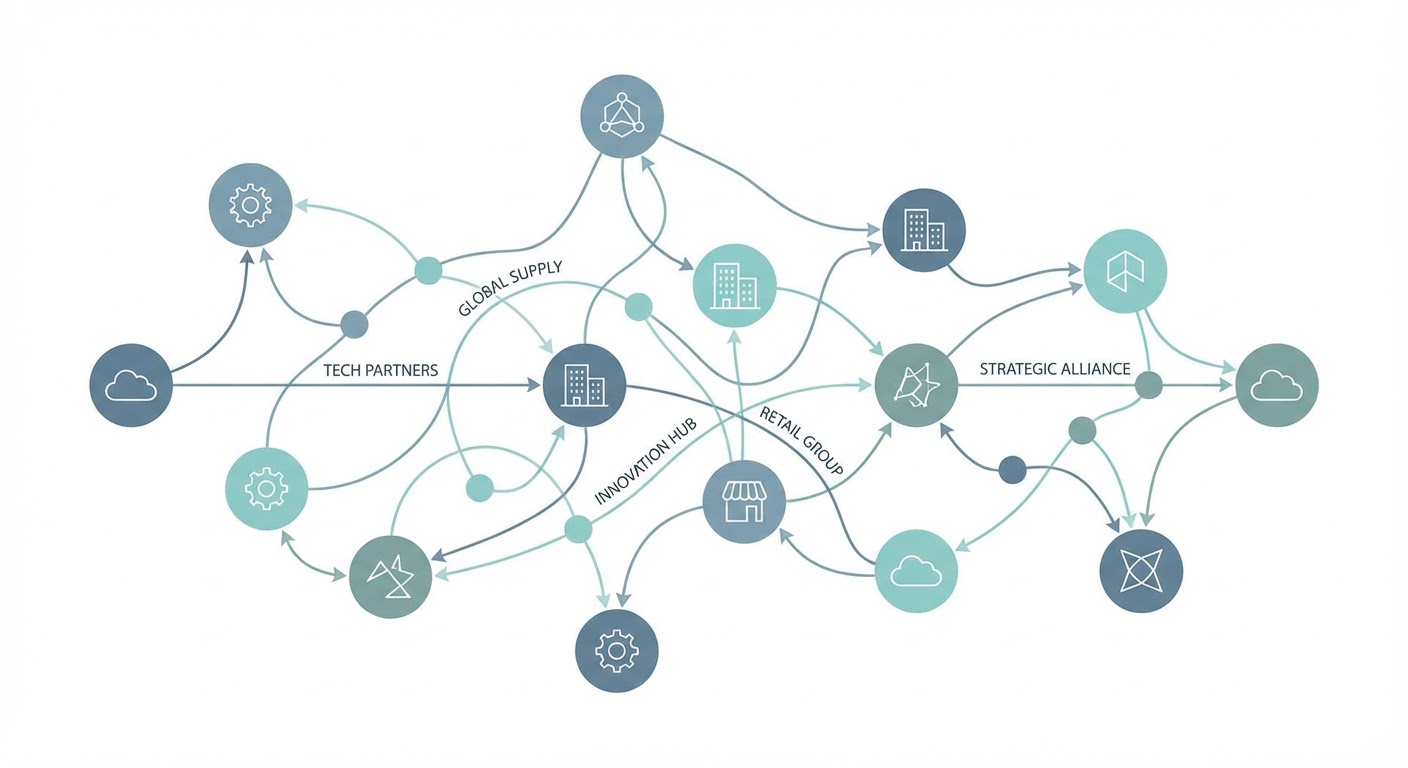
Partnerships and integrations are strategy documents disguised as press releases. The problem is finding them all, because companies don't put their complete partnership list in one place. You have to piece it together from multiple sources, which is annoying but also means most of your competitors aren't tracking yours either.
The Integration Page Goldmine
Start with the competitor's website. Almost every SaaS company has an integrations page, a marketplace, or a partner directory. Some bury it under "Resources" or "Platform." Just search their site for "integrations" or "partners" and you'll find it.
The integration page tells you two things: who they connect with (their ecosystem bet) and how they describe those connections (their use case priorities). A competitor listing a Slack integration as "get alerts in Slack" is doing the minimum. One that describes it as "automated deal alerts for revenue teams in Slack" is telling you exactly who they're building for.
Count the integrations by category. If they have 15 CRM integrations and 2 marketing tool connections, their product roadmap is clearly sales-focused. The distribution of integrations across categories maps their product strategy better than most analyst reports.
I found one competitor had quietly added six different data warehouse integrations over three months. No announcement, no blog post. They were clearly betting that their next growth wave would come from data teams, not from the marketing teams they'd originally targeted. I spotted a market expansion play that was invisible on their homepage.
Press Releases and Partner Announcements
Google "[competitor name] partnership" and "[competitor name] integration announcement" and you'll find press releases going back years. Most companies announce major partnerships even if they don't update their integrations page.
The co-marketing content is even more telling. When two companies write a joint case study or host a webinar together, that's a deeper relationship than a basic API integration. It means they're sharing pipeline and co-selling. Look for these joint content pieces — they reveal who the competitor considers their most important strategic partners.
News intelligence monitoring catches partnership announcements as they happen. Instead of Googling retrospectively, the agent flags new press releases mentioning your competitors and filters for partnership-related content. I've caught integration announcements the day they went live, which gives you time to prepare a response before your sales team starts hearing about it from prospects.
What Partnership Patterns Mean
Technology partnerships tell you about product direction. A competitor integrating with Snowflake and BigQuery is building for data-heavy use cases. Integrating with Zapier and Make means they're going after non-technical users who want no-code workflows.
Channel partnerships tell you about go-to-market. A competitor partnering with a consulting firm or system integrator is going enterprise. Partnering with an agency network means they're targeting SMB through resellers. The channel partner profile maps directly to the customer profile they're chasing.
Industry partnerships are the most revealing. A competitor partnering with a healthcare-specific EHR system or a financial services compliance platform is making an industry vertical bet. Those partnerships require real investment — custom features, compliance certifications, dedicated support — so they signal conviction, not experimentation.
A Crunchbase account research agent surfaces partnership data from funding announcements and company profiles. Strategic investors are sometimes partners in disguise — when a competitor takes funding from a company in an adjacent space, a product integration usually follows within the year.
Tracking Changes Over Time
The most useful partnership intelligence is longitudinal. Save your competitor's integration page URL in a website change tracker (Visualping, Changedetection.io, or similar) and you'll get alerted whenever they add or remove an integration.
Removed integrations are actually more interesting than new ones. When a competitor drops a partnership, something went wrong. Maybe the partner became a competitor. Maybe the integration wasn't getting usage. Maybe they're simplifying their product. Whatever the reason, a removed partnership is a signal worth investigating.
I maintain a simple spreadsheet: competitor name, partner name, type (integration/channel/strategic), date first noticed, any notes. It takes two minutes to update when I spot something new. After a year, the spreadsheet shows partnership velocity — which competitors are building ecosystems fastest and in which direction.
Try These Agents
- News Intelligence Monitor — Catch partnership announcements in real time
- Crunchbase Account Research — Strategic investor and partner data
- Market Intelligence Agent — Broader competitive landscape research
- Brand Monitoring — Track mentions of competitor partnerships online