
How to Track What Customers Say About Competitors
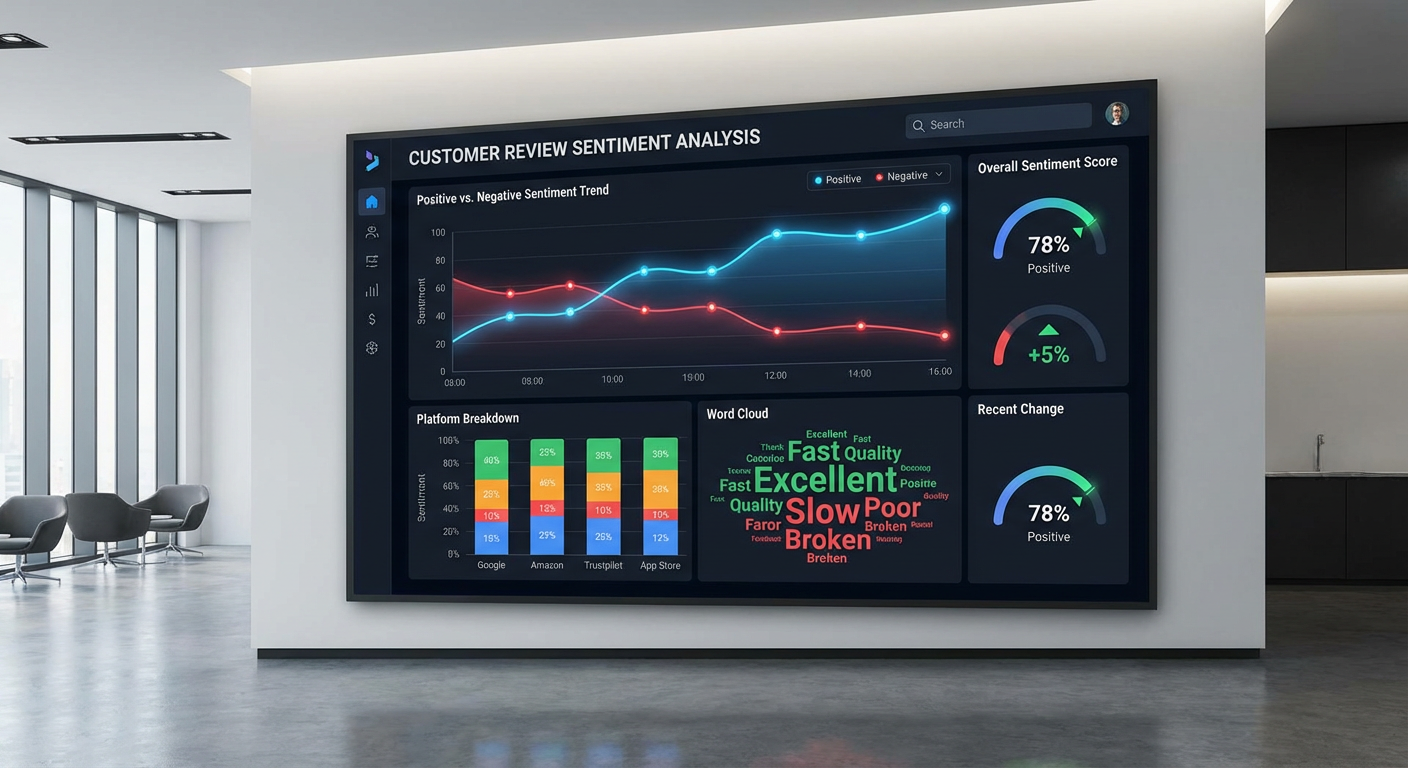
Eight months ago I was prepping for a board meeting when I stumbled on something that changed how I think about competitor monitoring. I was skimming a competitor's G2 page to grab their star rating and noticed a cluster of reviews from the previous three weeks all mentioning the same thing: their new reporting feature was breaking existing workflows. Fourteen separate reviews saying some version of "the update ruined my process."
Their overall rating hadn't budged. Still a 4.3. But those fourteen reviews were a signal that hundreds of customers were frustrated. We adjusted our outbound messaging that week — "your reporting workflow shouldn't break every time your vendor ships an update." Three conversations turned into pipeline within a month.
That's competitor monitoring when it works. Not tracking a rating. Tracking what people say, and moving before the score catches up.
G2, Capterra, and TrustRadius: The Structured Goldmine
Review sites are the most underappreciated source of competitive intelligence. Everyone knows they exist. Almost nobody reads them systematically.
Here's how I approach it. I don't look at the aggregate rating. I sort by most recent and read in chronological order. What I'm looking for is whether the nature of complaints is shifting.
- Recurring themes in recent reviews. If the last twenty reviews all mention "clunky UI" or "slow support," that's not an anomaly. That's a structural problem the competitor either can't or won't fix. Positioning opportunity.
- The "switched from" data. G2 reviews often include what the reviewer used before. When you see lots of people switching from Competitor A to Competitor B because of pricing, the price-sensitive segment is in motion.
- Star rating trends vs. text sentiment. Sometimes a competitor's rating holds steady at 4.1 while the text of recent reviews gets increasingly bitter. The rating is lagging. The words are leading. Read the words.
- Feature gaps that keep appearing. When eight reviewers mention a competitor lacks SSO, or doesn't have a proper API, or makes data export painful — that's a feature request backlog you can read for free.
I spend about 45 minutes every two weeks going through recent reviews for our top three competitors. Not glamorous. But those sessions have generated more actionable intelligence than any competitive monitoring tool I've paid for.
Reddit, Twitter, and LinkedIn: Where the Unfiltered Takes Live
Review sites give you structured feedback. Social platforms give you the raw, unfiltered version of how people actually feel. The difference matters.
On G2, someone writes a 4-star review and stays measured. On Reddit, that same person writes a 400-word post titled "Am I crazy or did [Competitor] completely lose the plot?" and the comments turn into group therapy. That honesty gap is exactly what makes social platforms essential for competitor monitoring.
Reddit is the single best source. Search site:reddit.com "[competitor name]" and sort by recent. I discovered one competitor had quietly sunset a key integration — not through any announcement, but through a Reddit thread where five users were trying to figure out why it stopped working.
Twitter/X is faster but shallower. The replies and quote tweets on competitor complaint posts often contain more insight than the original. Set up a search column for your competitor's handle. Reactions to product changes surface within hours.
LinkedIn is the sleeper. When someone posts about why they switched vendors, it often includes the decision-making process. "We evaluated X, Y, and Z, and ultimately chose Z because..." — a buying committee's logic laid out publicly.
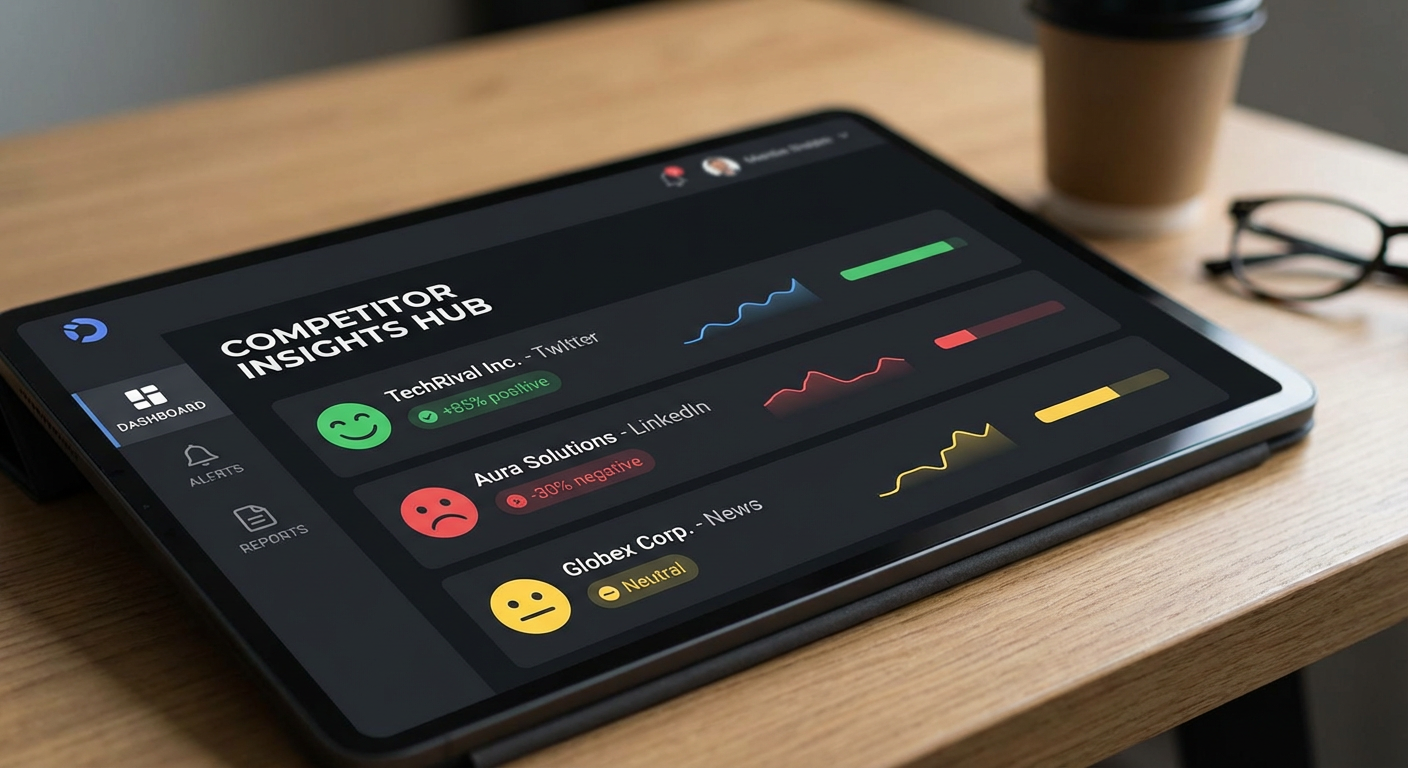
I keep a shared Notion doc with columns for: date, platform, competitor mentioned, the gist, and a link to the original post. Fifteen minutes a day adds up. After a month, you'll start seeing themes you couldn't have predicted — worth more than whatever your competitor monitoring software dashboard is showing you.
Turning Sentiment Data Into Action
Collecting all this is useless if it just sits in a doc. Here's how it should flow into decisions.
Churn signals for targeted outreach. A wave of complaints about a competitor means churn-ready accounts. Not "we noticed you posted about hating your vendor" (creepy), but "we've been hearing teams in [industry] are struggling with [specific issue] — here's how we handle it differently" (helpful).
Feature prioritization from the market. If three competitors all get roasted for the same missing feature and you already have it, that's a messaging priority. If none of you have it and everyone's getting asked for it, that's a build priority.
Positioning and messaging updates. The exact language customers use to describe a competitor's weakness becomes your marketing copy. "Their reporting is a nightmare" means your homepage should mention how easy your reporting is. Customers wrote the copy. Use it.
Sales enablement. Build a living battlecard updated every time a meaningful complaint surfaces. Your reps should know the most common objections about each competitor before the call starts.
Why Use an Agent
I did all of this manually for the better part of a year. What killed it wasn't the effort of reading — I actually found that part interesting. What killed it was the consistency. Week one, I'm diligent. Week six, I skip a day. By week fourteen, the doc is stale and nobody's looking at it.
A sentiment analysis agent can process hundreds of reviews and social posts in a single pass and give you a structured breakdown organized by theme and scored by sentiment. Instead of spending 45 minutes reading G2 reviews yourself, you get a report: "here are the five themes from the last 30 days, ranked by frequency, with representative quotes."
The interpretation still needs a human. But the agent handles data collection and pattern extraction — the part that gets dropped when life gets busy — so that when you sit down to make decisions, the data is actually current.
The Real Competitive Edge
Most companies monitor competitors by checking their website once a quarter. That's not competitor monitoring. That's a glance.
The companies that win are listening to what customers say about their competitors every week. Not the competitor's messaging. The actual voice of people using the product, scattered across G2 and Reddit and LinkedIn.
That data is public, free, and almost nobody is systematically collecting it. If you do, you have information most of your market doesn't — not because it's secret, but because it's tedious and most teams quit after the first month.
Don't quit after the first month.
Try These Agents
- Sentiment Analysis — Analyze competitor sentiment across reviews, Reddit, Twitter, and social platforms in one pass
- Market Intelligence Agent — Full-spectrum competitor research covering hiring, reviews, keywords, and news
- Competitor Keyword Research — Discover what keywords competitors rank for and where the content gaps are