
PostHog Analytics: How to Extract Insights with AI Agents
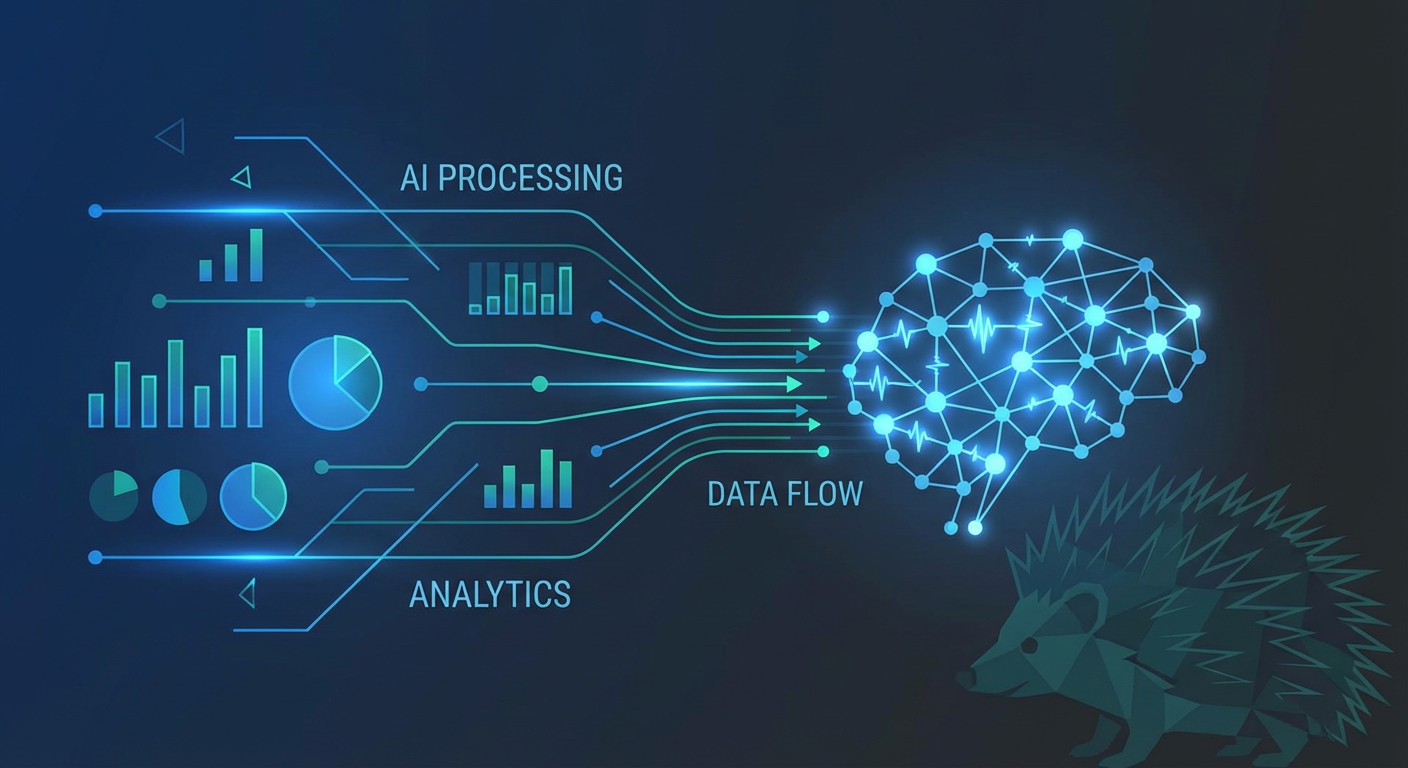
I have a confession. I spent three months building the most beautiful PostHog dashboard you have ever seen. Custom funnels, retention tables, cohort breakdowns. It looked incredible. And nobody used it.
Not because the data was wrong. The data was great. PostHog gave me everything I asked for. The problem was simpler than that: nobody on my team had time to check a dashboard every morning, interpret the numbers, and then actually do something about what they saw.
That gap between "data exists" and "someone acts on data" is where most product teams quietly bleed revenue. PostHog analytics solves the collection problem. But collection was never the hard part.
Why Developers Keep Choosing PostHog
If you are building a product in 2026 and you haven't looked at PostHog yet, you should. It has eaten market share for a reason.
PostHog is open source. You can self-host it. You own your data. There is no sales call required to get started. You install a snippet, and within ten minutes you are tracking events, page views, and user sessions. For engineering teams that are allergic to vendor lock-in, this is a big deal.
The platform covers event tracking, session replays, feature flags, A/B testing, and a SQL-based query engine called HogQL. It is basically the anti-Amplitude: instead of hiding power behind a clunky enterprise UI, PostHog gives you raw access to your data and trusts you to figure out what to do with it.
That trust is both the strength and the weakness. PostHog hands you a firehose. It does not tell you when to drink.
The Dashboard Graveyard
Here is what actually happens at most companies running PostHog analytics. An engineer sets up event tracking during a sprint. They capture button clicks, page views, signups, feature usage. The data starts flowing. Someone builds a dashboard. Maybe two.
For the first week, the team checks the dashboards religiously. By week three, it is down to one person. By month two, the dashboards are orphaned. The data is still being collected. PostHog is still doing its job. But the insights are sitting in a tab that nobody opens.
I have seen this pattern at probably a dozen companies now. The issue is not PostHog. The issue is that dashboards are passive. They wait for you to come to them. They do not tap you on the shoulder when something goes wrong.
Your biggest customer just stopped using your core feature for five days straight? That signal is buried in a retention chart somewhere. A new signup from a Fortune 500 domain just hit your pricing page three times in one session? That is sitting in an event stream that nobody is watching.
The data is there. The action is not.
What PostHog's API Actually Lets You Do
Most people think of PostHog as a dashboard tool. But under the hood, it exposes a clean ingestion API that is designed for programmatic access. This is where things get interesting if you are thinking about automation.
The API supports four core operations:
Capture Event lets you send any custom event for a specific user. Button clicks, purchases, form submissions, feature activations. You define the event name, attach a user ID, and include whatever properties matter. This is the bread and butter of PostHog analytics.
Identify User lets you enrich user profiles with properties like email, plan tier, company name, or anything else you want to segment on later. When your agent identifies a high-value user, it can tag them in PostHog immediately.
Track Page and Screen Views records navigation behavior for web and mobile apps. You get visibility into what users are looking at, how they move through your product, and where they drop off.
Create Alias links two user identifiers together. The classic use case: someone browses your site anonymously, then logs in. The alias merges those sessions into a single user profile so you get the complete picture.
These four operations are simple on their own. But when an AI agent is the one calling them, the game changes completely.
AI Agents as the Missing Layer
Here is the shift I want you to think about. Instead of a human querying a PostHog dashboard, what if an agent is continuously monitoring your analytics data and taking action when it sees something worth acting on?
This is not hypothetical. This is what we are building toward.
An AI agent connected to PostHog can do things that no dashboard ever will. It can watch your event stream and notice that a cohort of users who signed up last Tuesday have all stopped logging in. It can cross-reference that drop with a feature flag you rolled out on Wednesday. It can draft a hypothesis, notify your product team in Slack, and create an Asana task to investigate. All before anyone on your team has finished their morning coffee.
The agent is not replacing PostHog. It is reading PostHog the way a senior product analyst would, except it never takes a day off and it never forgets to check.
A Real Workflow: From Event to Action
Let me walk through something concrete. Say you are running a B2B SaaS product and you want to catch churn signals early.
Step one: your AI agent uses the PostHog capture event API to track a custom event called core_feature_used every time a user interacts with your main value prop. It attaches properties like the user's plan tier and company size.
Step two: the agent runs a daily check. It looks at each account's event frequency over the past 14 days. If a previously active account drops below a threshold, say 60% of their historical average, the agent flags it.
Step three: the agent uses PostHog's identify endpoint to tag the user with a property like churn_risk: high. Now that label is available in PostHog for segmentation, but more importantly, the agent does not stop there.
Step four: the agent fires a Slack message to your CS team with the account name, the drop percentage, the user's plan tier, and a suggested talk track. It creates a task in Asana with a due date. It can even trigger a personalized email through your marketing automation platform.
That entire chain happens without a human opening a dashboard. The data flowed in through PostHog. The intelligence came from the agent. The action happened automatically.
This is what I mean when I talk about closing the gap between collection and action.
Where Cotera Fits
We built a PostHog tool integration inside Cotera that gives AI agents direct access to PostHog's capture, identify, page view, screen view, and alias operations. The agent can write events into PostHog, enrich user profiles, and merge identities as part of a larger automated workflow.
The goal is straightforward. Your agent should be able to monitor product analytics, detect patterns, and trigger downstream actions without anyone manually pulling a report. PostHog handles the data layer. The agent handles the thinking and the doing.
Stop Collecting, Start Acting
PostHog analytics is one of the best tools available for understanding what users do inside your product. The open-source model, the self-hosting option, the raw SQL access. It is genuinely great infrastructure.
But infrastructure without action is just cost. Every event you capture that nobody looks at is wasted compute. Every insight buried in a dashboard that nobody opens is a missed opportunity.
The teams that win are not the ones with the best dashboards. They are the ones that act on their data fastest. AI agents are how you close that loop.
Stop building dashboards that nobody checks. Start building agents that never stop checking.
Try These Agents
- PostHog Tool Integration -- Connect AI agents to PostHog event tracking, user identification, and session management