
Real-Time Competitor Monitoring: When It's Worth It (and When It's Not)
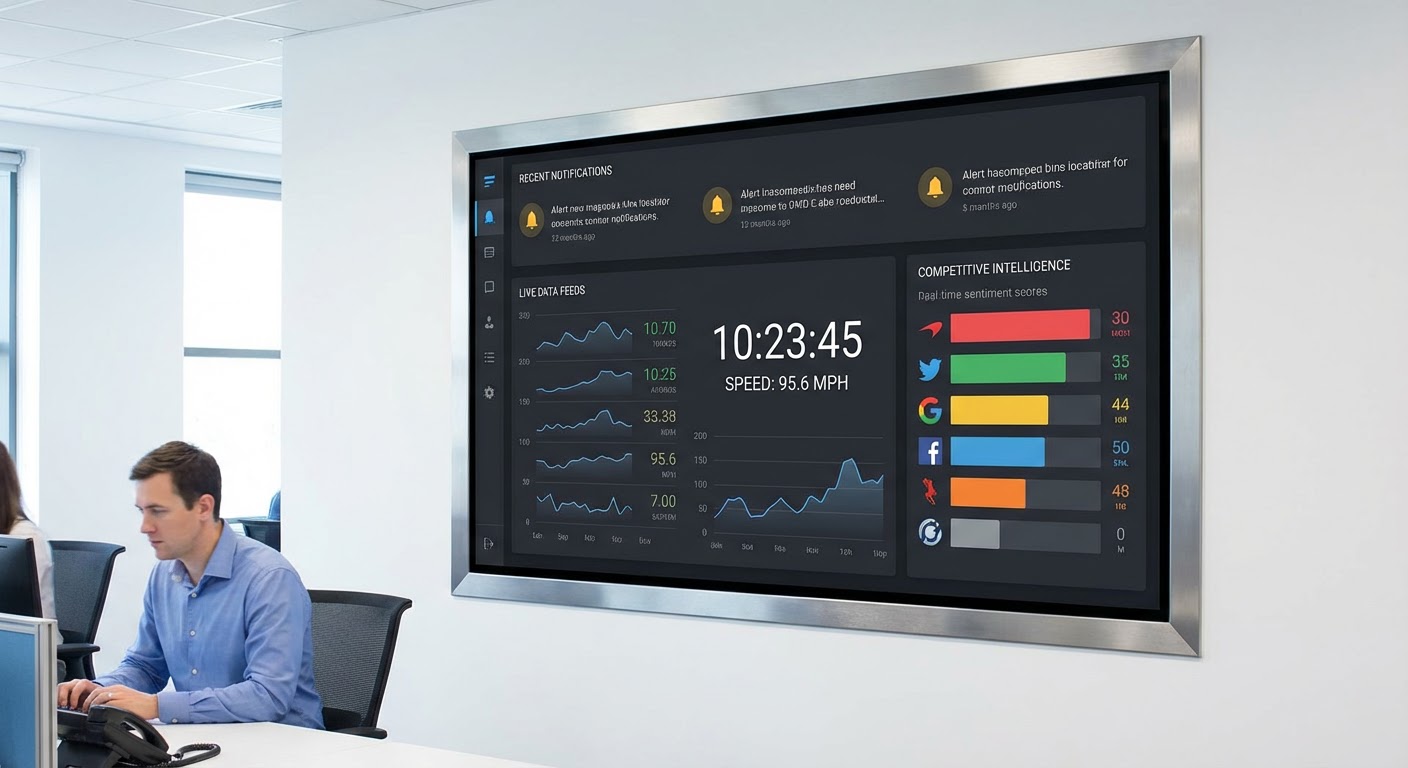
A vendor pitched me on "real-time competitive intelligence" last year. Their platform promised alerts within minutes of any competitor action — pricing changes, new blog posts, social mentions, press releases. Minutes. Not hours. Not days. Minutes.
I asked a question that made the sales rep pause. "What would I do differently if I knew about a competitor's blog post in 3 minutes versus 3 days?" He launched into a hypothetical about market-moving announcements. I pressed further. "In the last twelve months, how many competitor actions required a response faster than 24 hours?" He didn't have an answer.
Here's the thing about real-time competitor monitoring: the use case is real but narrower than vendors want you to believe. Most competitive intelligence is not time-sensitive. A competitor publishing a blog post on Tuesday versus you finding out about it on Thursday changes nothing about your response. Their pricing change happened when it happened — whether you learn about it an hour later or a week later, the change is already in market.
When Real-Time Actually Matters
Real-time monitoring earns its cost in three situations.
Publicly traded competitor announcements. Earnings calls, SEC filings, analyst day presentations. If you're competing against public companies, the information advantage from knowing what they said to investors before your industry digest summarizes it two days later is real. Their CEO told analysts they're investing $200M in AI? That's useful to know immediately for sales positioning, PR response, and executive briefings.
Viral moments. A competitor's product goes down during a major event. A customer publicly tears apart their service on social media and it's spreading. These moments create brief windows where you can either capitalize (tastefully) or get ahead of customer concerns about your own product. But these happen maybe two or three times per year. Paying $500+/month for something you'll use three times is questionable math.
Active deal battles. When you're in a head-to-head deal with a specific competitor, knowing about their latest moves in near-real-time matters. Did they just launch a feature the prospect asked about? Did they change pricing mid-negotiation? In active deals, hours can matter. Between deals, they almost never do.
When Real-Time Is Overkill
For most B2B companies with three to five competitors in a market that doesn't move daily, real-time monitoring is a solution looking for a problem.
Competitor blog posts don't require immediate response. They've been drafted, reviewed, and scheduled. Your response can be equally considered. A week is fine.
Pricing changes happen infrequently. Most B2B companies change pricing once or twice a year. Monthly monitoring catches these with plenty of time to respond.
Job postings accumulate gradually. A competitor posting three new engineering roles this week is the same signal whether you see it today or next Monday. Hiring trends are monthly patterns, not daily events.
Review sentiment shifts slowly. A competitor's G2 rating moving from 4.5 to 4.3 happens over months. Checking quarterly is fast enough.
If your competitive environment genuinely moves slowly (and most B2B markets do), spending on real-time monitoring is like buying a sports car for a daily commute that's 90% highway traffic. The capability is impressive. The use case doesn't justify it.
The "Fast Enough" Alternative
Instead of real-time, aim for "fast enough." What cadence catches the signals that matter without drowning you in noise?
For most teams, that cadence is: daily news alerts (Google Alerts, free), weekly social scans, and monthly deep dives on pricing, content, reviews, and hiring. This catches 95% of competitive signals within a week. The remaining 5% — the truly time-sensitive events — you'll usually hear about from your sales team before any monitoring tool catches them anyway.
A rep who loses a deal will tell you "they just launched a new feature" faster than Slack notification from a monitoring platform. A customer who's evaluating competitors will mention pricing changes during a renewal conversation. Your sales team is a real-time monitoring system that you're already paying for.
Supplement them with automated feeds, not replace them. The brand monitoring agent catches the mentions your sales team won't see — industry forums, niche publications, social conversations outside your company's radar. The social listening alerts pick up customer complaints and product discussions on platforms your team isn't watching. Together with your reps, you get coverage that's comprehensive without being obsessively real-time.
The Right Architecture for Most Companies
Layer 1: Automated daily feeds (news alerts, blog RSS, review notifications). These run without human effort and capture the routine signals. Takes zero time per day.
Layer 2: Weekly human review. One person spends 15 minutes every Monday reviewing the feeds, starring what's notable, deleting what's noise. They write a three-sentence competitive update for the team.
Layer 3: Monthly deep dive. One hour per month checking pricing pages, reviewing competitor content strategy, scanning hiring trends, reading G2 reviews. This catches the signals that daily alerts miss — positioning shifts, design changes, strategic pivots.
Layer 4: Event-driven monitoring. During big events — trade shows, funding rounds, product launches — temporarily increase your monitoring cadence. Check competitor feeds daily instead of weekly. This gives you near-real-time coverage when it matters without paying for it year-round.
This architecture costs $0/month in monitoring tools and maybe 4-5 hours per month in human attention. It catches everything that matters within a reasonable timeframe.
Why Use an Agent for This
The brand monitoring agent sits between "fully manual" and "expensive real-time platform." It monitors for competitor mentions and filters by relevance, so you're not reading every casual brand mention, just the ones that matter to your business. Fast enough without being obsessive.
The social listening alerts cover the social dimension that most monitoring stacks miss. When a competitor's customer tweets about switching away, or a Reddit thread compares your product to a rival, these conversations surface opportunities that news alerts and blog monitoring can't detect.
The Twitter brand sentiment tracker gives you the real-time pulse on competitor sentiment without the full real-time monitoring price tag. Is the conversation about Competitor X positive, negative, or neutral this week? That trend is useful for positioning and worth tracking at lower cost than a full CI platform.
Real-time monitoring is for hedge funds trading on earnings calls. For the rest of us, "fast enough" is fast enough.
Try These Agents
- Brand Monitoring — Relevant competitor mention tracking without the alert flood
- Social Listening Alerts — Social conversation monitoring for competitive signals
- Twitter Brand Sentiment Tracker — Track competitor sentiment on social platforms
- Market Intelligence Agent — Comprehensive competitive monitoring and synthesis