
AI Sales Prospecting: The Automation Guide That Skips the Hype
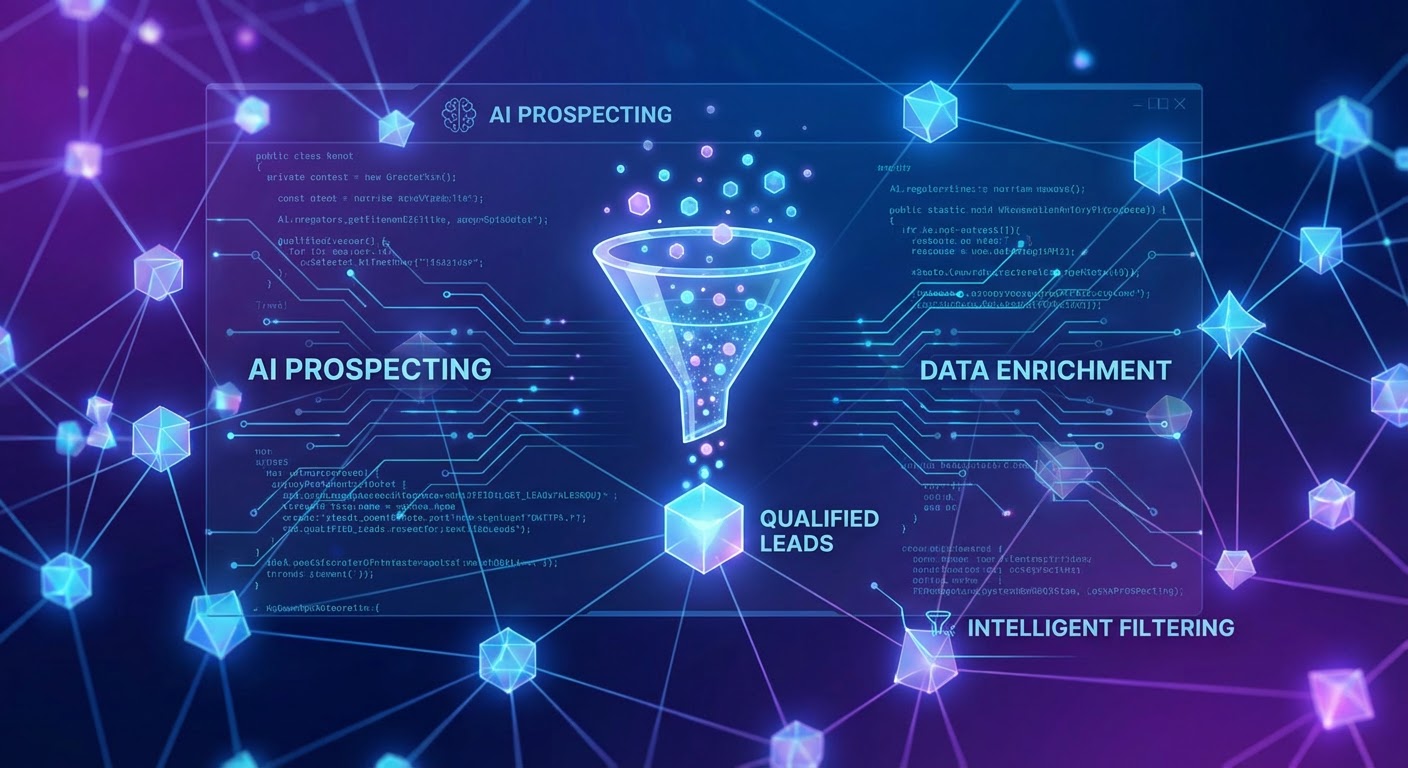
I spent $14,000 on sales automation software last year. Outreach licenses, Apollo seats, a ZoomInfo contract that auto-renewed before I could cancel it, and some sequencing tool whose name I've already forgotten. We had filters, triggers, email sequences firing on schedule like clockwork. Our reply rate was 1.3%.
The problem was obvious once I stopped blaming the market: we'd automated the sending but not the thinking. Our sequences ran perfectly toward the wrong people, at the wrong time, with messages that said nothing specific to anyone. A very efficient machine for generating unsubscribes.
That's the gap this article is about. Not "should you automate prospecting" — obviously, yes. The real question is whether you've added intelligence to your automation or just speed.
Traditional Automation vs. AI: They're Not the Same Thing
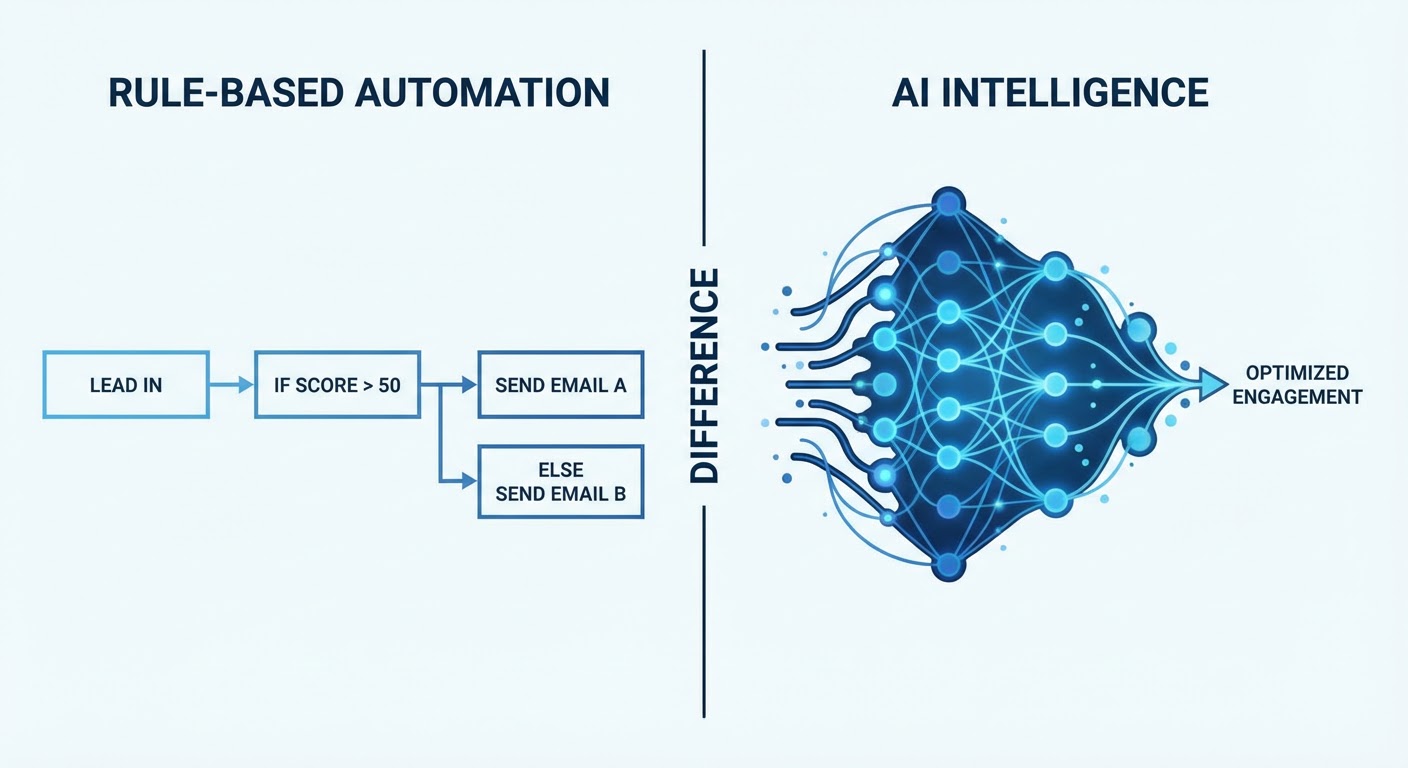
Traditional sales automation is rules-based. If a lead matches these firmographic filters, add them to this sequence. If they open the email twice, bump them to priority. If they don't reply after three touches, nurture track. If-then statements dressed up in a pretty UI.
That's fine. Genuinely. If-then automation saved reps from mind-numbing data entry and I'll defend it to the death. But it has a ceiling.
The ceiling is that rules can't synthesize. A rule can say "company has 200+ employees and is in fintech." A rule cannot say "this company just posted three backend engineering roles, their CEO tweeted about rebuilding their data pipeline, and their latest G2 review mentions integration pain — so the angle should be about migration support."
That second thing is what an AI prospecting layer does. It reads scattered signals across multiple sources and turns them into a judgment call. Not a filter match. A judgment call.
Traditional automation asks: does this lead fit the criteria? AI prospecting asks: should we talk to this person right now, and about what?
What the Intelligence Layer Actually Automates
When I talk about AI in prospecting, I'm not talking about ChatGPT writing your cold emails. I've seen that movie. It ends with messages that sound like a corporate press release had a baby with a LinkedIn influencer post.
The intelligence layer sits between your data sources and your outreach. It does what a really thorough AE would do if they had three hours per prospect instead of three minutes:
- Cross-source synthesis. Pull a company's Crunchbase profile, recent job postings, news mentions, G2 reviews, and LinkedIn activity — then connect the dots. A human doing this needs six tabs and 45 minutes. The AI does it in two.
- Timing detection. Not "did they visit our website" — that's basic intent data. Did something change in their world that makes them more likely to care? New VP of Sales means the stack is getting evaluated. Fresh funding means budget exists.
- Contact prioritization beyond title matching. "VP of Sales" at a 50-person startup is a completely different buyer than "VP of Sales" at a 5,000-person enterprise. The AI looks at what this person posts, how long they've been in the role, whether their background suggests they'd care about your product.
- Research briefs a rep will actually read. Not raw data in a CRM field — a two-paragraph summary of what's happening and why now might be the time. My reps started reading these before calls and first conversations improved immediately.
Building This Without Losing Yours
I've watched teams overcomplicate this into oblivion. They buy four new tools, spend two months on integrations, build a 47-step Zapier flow, and then the whole thing breaks when Apollo changes their API. Don't do that.
Start with one thing: research automation. The "should I even bother emailing this person?" question eats more sales hours than anything else in the prospecting workflow. Automate that first.
Here's what worked for my team:
Week 1: Pick your top 50 target accounts. Run each one through an AI research agent that pulls company data, recent news, hiring activity, and decision-maker profiles. If the output is just regurgitating firmographic data you already had, the agent isn't configured right.
Week 2: For accounts where the research surfaced a buying signal or timing angle, have your reps write outreach based on the brief. Human outreach informed by AI research. Track the reply rate separately from your normal sequences.
Week 3: Compare. My team's AI-researched accounts got a 6.4% reply rate versus 1.3% for standard automated sequences. Same reps, same product, same market. The only variable was whether someone had done the homework first.
The Mistakes That Make AI Prospecting Useless
I've made all of these, so I'm qualified to warn you.
Letting the AI write outreach. AI-generated cold emails are immediately recognizable — slightly too polished, oddly formal where a human would be casual. Prospects can smell them. Use AI for research. Let humans write the messages. The research makes the messages good. The writing makes them feel real.
Not checking the output. AI research agents hallucinate. I had one tell me a prospect company raised a Series C when they'd actually been acquired. If my rep had opened with "congrats on the Series C" it would've been mortifying. Spot-check everything, especially names and funding data.
Automating too early in the funnel. If your ICP definition is fuzzy, AI won't fix it. It'll just research bad-fit companies really efficiently. Get your targeting right manually first, then automate the research.
Ignoring the "why now" question. A company that matches your ICP and just hired a new CTO is wildly more likely to buy than one that matches your ICP and hasn't changed anything in 18 months. The timing signal is the whole point of the intelligence layer. Skip it and you've basically built expensive traditional automation.
Why Use an Agent
Marcus on my team tracked his time for two weeks before we switched to AI-assisted prospecting. Three hours and 15 minutes per day on prospect research and data prep. Over 16 hours a week. His quota was 12 meetings per month and he was spending more time researching than selling.
After we set up an AI sales prospecting agent, that research time dropped to about 40 minutes a day. Marcus reviews each brief, decides whether to reach out, and writes the message himself. Same depth. Fraction of the time.
The Find Decision Maker agent cut what used to be a 20-minute LinkedIn deep-dive into a 2-minute scan. Ten prospects a day, that's 3 hours per week back just on contact identification. And for deeper dives — career history, what they've been posting about, mutual connections — Apollo Lead Research produces a full dossier in minutes. That used to be enterprise-deal-only prep. Now every prospect gets it.
The math: 4 reps saving 2.5 hours per day is 50 hours a week. That's 50 hours of selling time that was previously consumed by tab-switching between LinkedIn and Salesforce.
The Short Version
AI sales prospecting isn't about sending more emails faster. Traditional automation already does that, and reply rates prove it doesn't work. The shift is from automating the sending to automating the thinking — the research, the signal detection, the "should we even bother" question. Add an intelligence layer and the numbers change because the targeting changes. Same team, same product, better aim.
Try These Agents
- AI Sales Prospecting — Automate prospect research with AI-powered company analysis and contact finding
- Apollo Lead Research — Deep-dive research on any lead using Apollo data enrichment
- Find Decision Maker — Identify and research the right decision maker at any target company