
B2B Sales Intelligence Tools: What Your Team Actually Needs
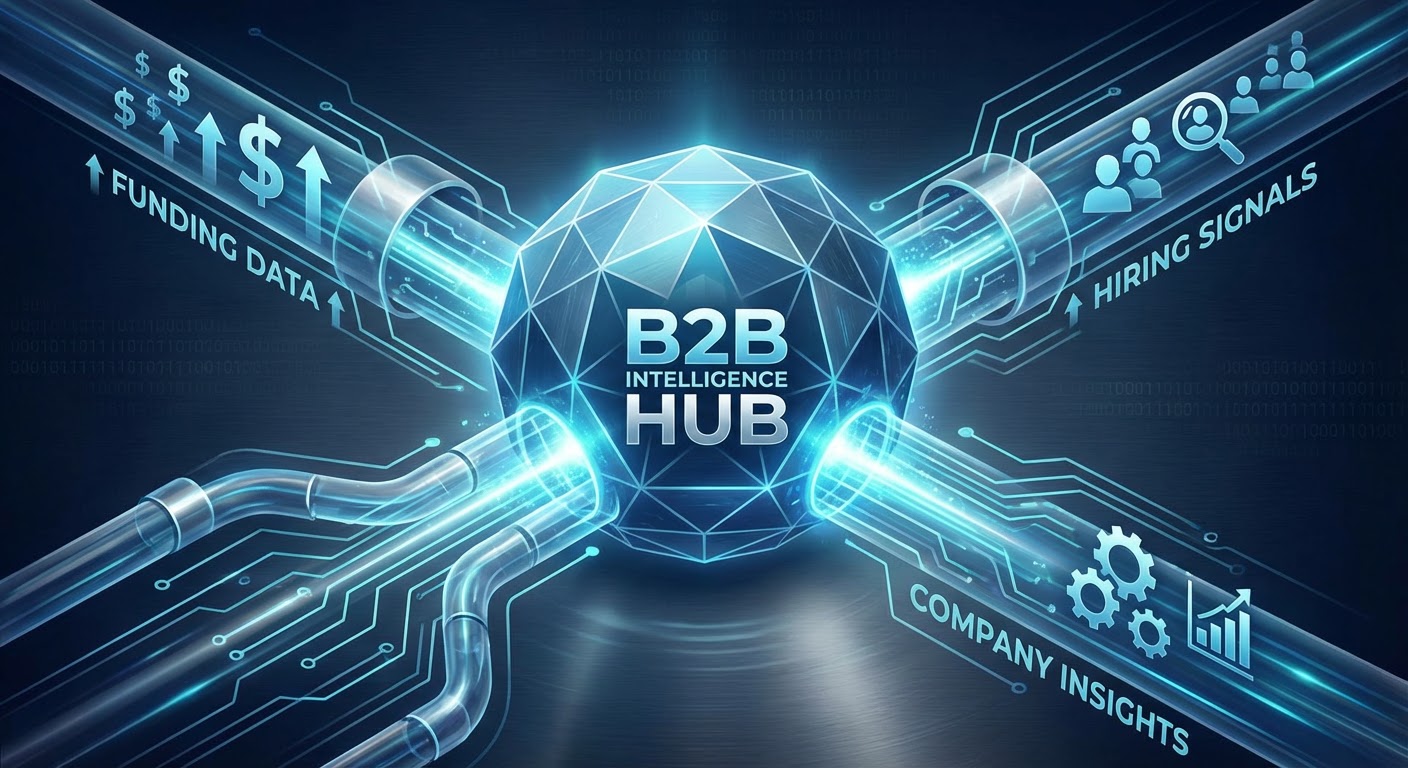
Last quarter I evaluated six different B2B sales intelligence tools. I built a spreadsheet comparing 47 features across all of them. I sat through nine demos — nine! — where product marketers walked me through dashboards with names like "Intent Signal Hub" and "Buyer Activity Center." One vendor's demo lasted 90 minutes and included a live "intent score" that was somehow already calculated for my company. (Flattering, I guess, that someone's algorithm thought we were in-market for our own competitor.) At the end of all that evaluation, you know what my team actually used to research accounts? Crunchbase's free tier, LinkedIn, and a shared Google Doc where our best rep, Marcus, kept notes on funding rounds he'd spotted on Twitter.
We didn't end up buying any of them. And our pipeline didn't suffer one bit.
The B2B Sales Intelligence Tools Market Is Lying to You
Every sales intelligence vendor tells the same story. "We have 200 million contacts." "Our intent data covers 95% of B2B buyers." "Our AI identifies buying signals before your competitors see them." The pitch is always about scale and coverage, because those are things you can measure before you buy. What you can't measure until you're six months into a contract is whether any of it actually helps close deals.
Here's the dirty truth about most B2B sales intelligence tools: they're contact databases wearing a trenchcoat. The core product is a list of names, emails, and phone numbers. Everything else — the intent data, the buying signals, the "intelligence" — is dressing on top.
I know this because I've pulled the curtain back. I asked one vendor where their intent data came from. "A proprietary network of B2B content publishers." Which publishers? "We can't disclose that for competitive reasons." I asked another vendor how they verified their contact accuracy. "Machine learning models cross-reference multiple data sources." Which data sources? "That's part of our secret sauce." When a company won't tell you where their data comes from, it's because the answer would disappoint you.
The tools that are honest about their sources — Crunchbase shows you funding rounds from public filings, Apollo shows you where their contact data comes from, SEC filings are literally public — those tend to be the most useful. Transparency correlates with accuracy more than any confidence score ever will.
The Data Sources That Actually Move Deals
Not all intelligence is created equal. After tracking which research my reps actually reference in deal notes over the past year, a clear hierarchy appeared. Some data sources show up in closed-won notes constantly. Others show up never.
Tier 1 — shows up in almost every closed deal:
- Funding events. Who raised money, how much, what stage, who led the round. A company that just closed a $40M Series B is in a fundamentally different position than one that did a quiet bridge round. Crunchbase is the gold standard here. It's not even close.
- Hiring patterns. When a company posts 15 engineering roles in a month, they're building something. When they post their first VP of Sales, they're about to go outbound. Job postings are the most reliable leading indicator of where budget will go next quarter. Our hiring signal research agent catches these patterns automatically, but even manually checking LinkedIn job postings beats most "intent data."
- Leadership changes. New CTO means new vendor evaluations. New CFO means budget reviews. New CMO means the agency roster is getting reshuffled. A leadership change in the department you sell to is the single strongest buying trigger I've ever tracked.
Tier 2 — shows up sometimes, worth checking:
- Tech stack data. If a company rips out Salesforce and moves to HubSpot, that tells you something about their size, budget, and priorities. BuiltWith tracks this. It's useful but not decisive on its own.
- Earnings reports and SEC filings. For public companies, 10-K and 10-Q filings tell you revenue growth, margins, R&D spend, and risk factors. It's free data that almost no sales team reads.
- Company news. Product launches, partnerships, acquisitions, layoffs. Any change is a conversation opener. No change means no urgency.
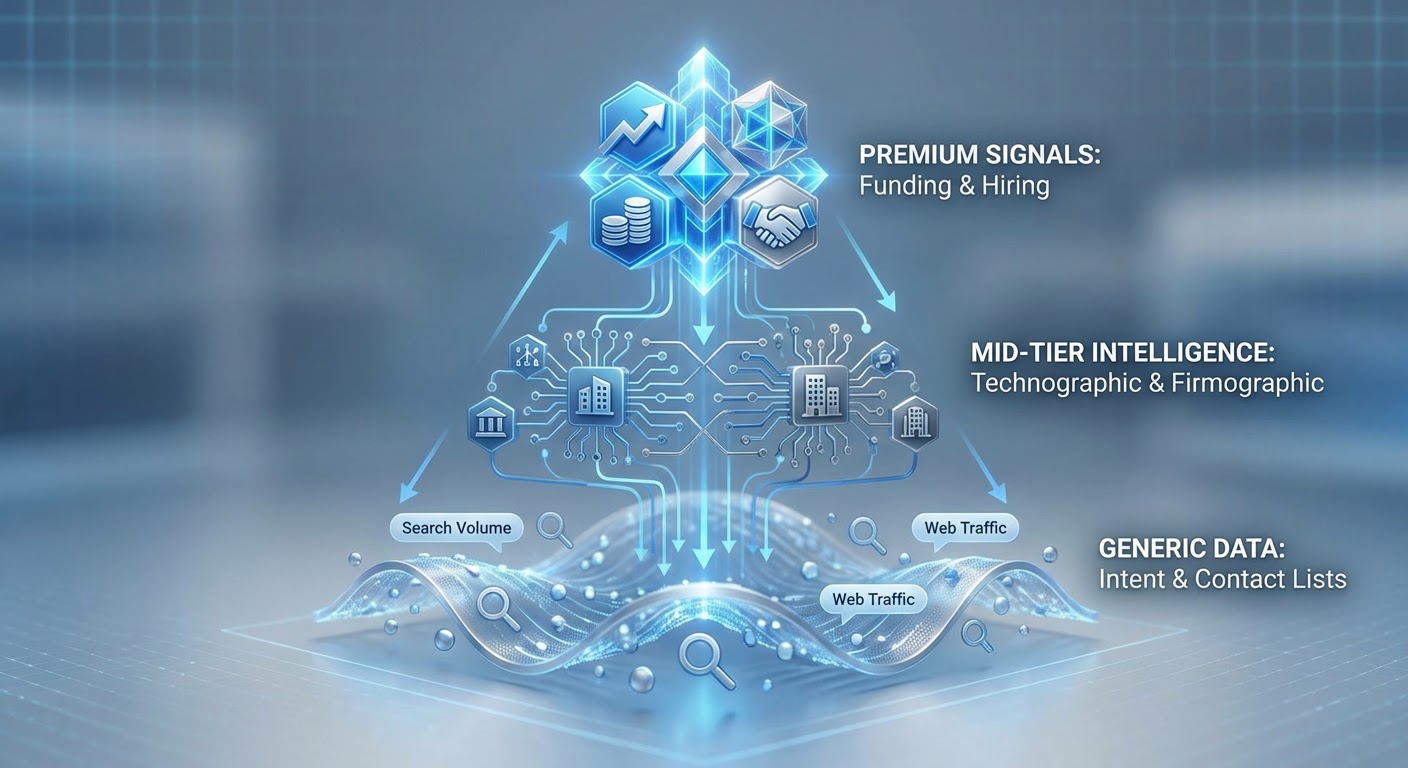
Tier 3 — rarely useful, often misleading:
- Generic intent data. "This company is showing intent for your category." Based on what? Anonymous page visits to unnamed B2B content sites? I've tested intent data from three different providers against our actual pipeline. The correlation was basically coin-flip level.
- Social media activity. Someone at the company liked a post about sales tools. Does that mean they're buying sales tools? No. It means they were on LinkedIn during lunch.
Building a Sales Intelligence Stack That Gets Used
The single most important thing about any B2B sales intelligence tool is whether reps actually open it. Adoption kills more tool purchases than feature gaps ever will. I've watched teams buy best-in-class tools that gather dust because they lived in a separate tab, required too many clicks, or showed information reps didn't know how to act on.
What I've learned from watching Marcus (our best researcher) and trying to replicate his process:
Integration matters more than features. A mediocre data source that surfaces inside your CRM will beat an excellent data source that lives in its own window. If a rep has to leave Salesforce to go check a different tool, they won't do it at scale. Maybe for their top five accounts. Not for sixty.
Fewer sources, checked consistently, beats more sources checked never. Marcus checks three things before every call: Crunchbase for funding and leadership, LinkedIn for recent posts and job changes, and Google News for anything recent. That takes him eight minutes. He does it for every single meeting. Meanwhile, the rest of the team has access to a premium tool with twelve data sources and they check it for maybe one in ten calls.
The output should be a brief, not a dashboard. Reps want the answer, not the tool. "Is this company worth my time, and what should I say when I call them?" A dashboard full of filters and charts requires interpretation. A one-paragraph account brief requires reading. Guess which one reps actually do.
What to Look for (and What to Ignore) When Evaluating Tools
If you're in the market for B2B sales intelligence software, here's my short list of things that predict whether you'll still be using it in six months.
Look for:
- Source transparency. Can you see where the data comes from? If they say "proprietary" more than twice in the demo, walk.
- Data freshness. How old is the data? Funding info from three months ago isn't intelligence, it's history. Ask about update frequency. Ask for specifics.
- CRM integration depth. Does it push insights into existing workflows, or does it require reps to context-switch into a new application?
- Time to value per account. How quickly can a rep go from "I have a company name" to "I know whether this is worth pursuing"? If the answer is more than five minutes, adoption will suffer.
Ignore:
- Database size. "200 million contacts" means nothing if the 400 contacts you actually need aren't accurate.
- AI-generated summaries that you can't trace back to a source.
- Features you'd need a dedicated ops person to configure.
- Anything described as "predictive" without a clear explanation of the model inputs.
Why Use an Agent
Here's the thing that changed my mind about B2B sales intelligence tools: the right approach isn't buying one monolithic platform. It's composing the right data sources together and making the research fast enough that reps actually do it.
That's what agents do. An Apollo lead research agent pulls contact info, company details, and recent activity for any prospect in about a minute — the same research that takes a rep 10-15 minutes of clicking between tabs. A Crunchbase lead prospector finds companies matching your ideal profile based on funding history, growth signals, and industry — then qualifies them automatically instead of dumping a raw list of 2,000 names on your desk.
And for timing — which is honestly more important than targeting — a hiring signal research agent monitors job postings at target accounts and flags the ones showing patterns that indicate budget allocation in your category.
The difference isn't the data. The same data is available to anyone with a browser. The difference is speed. When research takes eight minutes per account, reps do it for their top accounts. When research takes sixty seconds, they do it for every account. And that's when conversion rates actually change.
The Short Version
Most B2B sales intelligence tools are contact databases with extra steps. The data sources that actually predict deals are funding events, hiring patterns, and leadership changes — and the best versions of those data sources are either free or cheap. What matters more than which tool you pick is whether your reps actually use it, which means it needs to be fast, integrated, and transparent about where the data comes from. If you're evaluating tools, skip the vendors who won't tell you their sources, ignore database size as a metric, and focus on time-to-value per account. Or just do what Marcus does — three sources, eight minutes, every single meeting — and outperform the team with the $40K annual contract.
Try These Agents
- Apollo Lead Research — Deep-dive research on any lead using Apollo's contact and company database
- Crunchbase Lead Prospector — Find and qualify leads using Crunchbase company data, funding history, and growth signals
- Hiring Signal Research — Track hiring patterns at target companies to identify buying signals and budget allocation