
Best Drift Alternatives in 2026: 9 Tools I Compared
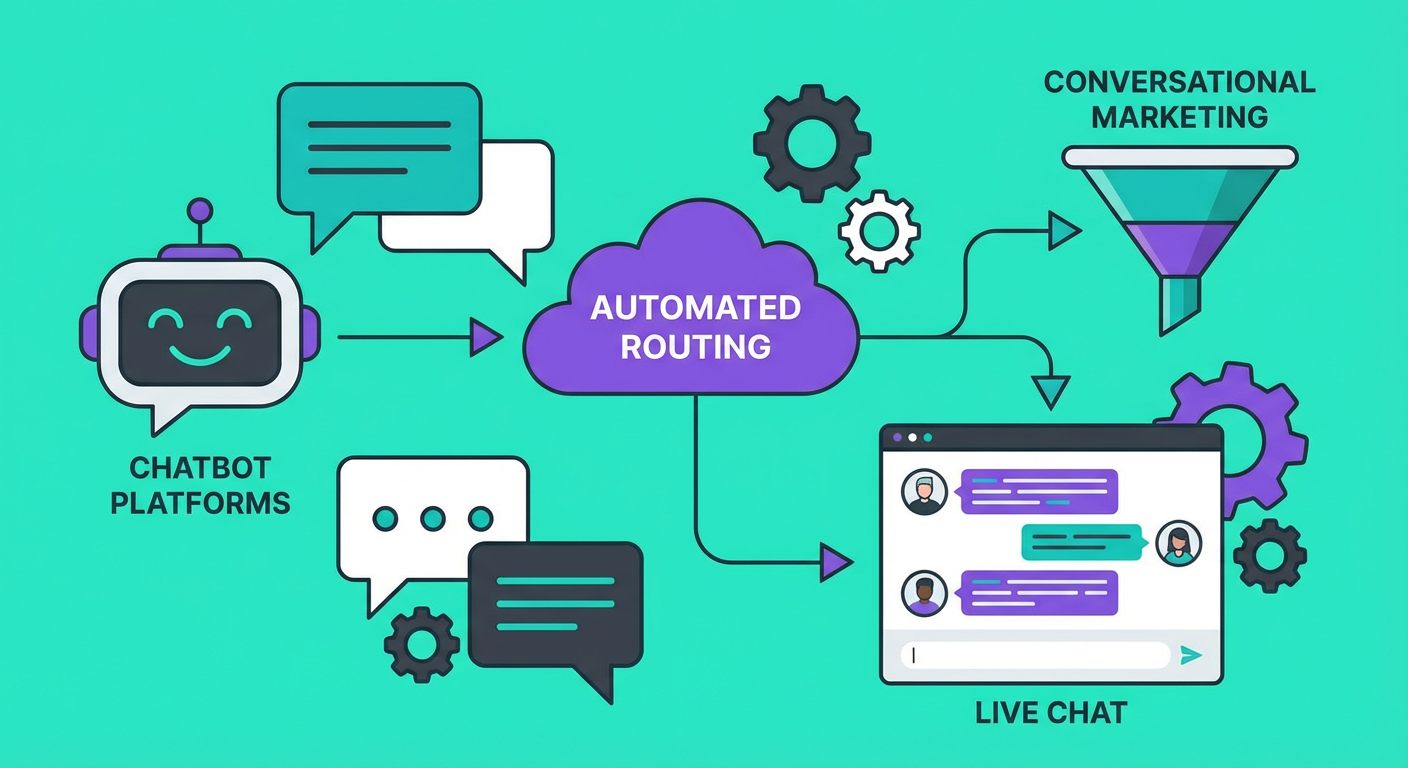
Drift used to be the default answer for conversational marketing. You'd embed the widget, build some playbooks, qualify visitors in real time, and book meetings straight from the chat. It worked. Then Salesloft acquired Drift in late 2023, and things started shifting. Features that were standalone got bundled into the broader Salesloft sales engagement suite. Pricing went up. The roadmap tilted toward enterprise sales engagement and away from the pure conversational marketing product that made Drift popular in the first place.
I've talked to about a dozen teams over the past year who are actively migrating off Drift or evaluating alternatives because the product they signed up for doesn't really exist anymore — at least not as an independent tool. Some got hit with a 40-60% price increase at renewal. Others found that features they relied on now require the full Salesloft platform. A few just don't want their conversational marketing tool tied to a sales engagement suite they didn't ask for.
So I spent three months testing alternatives. I ran live chat on real websites, built lead qualification flows, measured meeting booking rates, and compared how each tool handles the things Drift was actually good at: routing visitors to the right rep, qualifying leads mid-conversation, and turning anonymous traffic into pipeline. I also built an Intercom to Slack Escalation Router agent along the way because none of these tools route conversations with enough nuance out of the box.
| # | Tool | Best For | Pricing |
|---|---|---|---|
| 1 | Cotera | AI agent orchestration for chat and sales workflows | Free tier available |
| 2 | Intercom | All-in-one messaging with AI resolution | From $39/seat/mo |
| 3 | Qualified | Enterprise pipeline generation from web traffic | From $3,500/mo |
| 4 | HubSpot Chat | Free live chat tied to CRM | Free, paid from $20/mo |
| 5 | Tidio | Small business live chat with AI bots | Free tier, from $29/mo |
| 6 | Freshchat | Affordable omnichannel messaging | Free tier, from $19/agent/mo |
| 7 | Crisp | Startup-friendly shared inbox with chat | Free tier, from $25/mo |
| 8 | LiveChat | Dedicated live chat for sales and support | From $20/agent/mo |
| 9 | Chatfuel | No-code chatbots for social and web | From $14.39/mo |
1. Cotera
Free tier available
- AI agents for lead routing, qualification, and conversation intelligence
- Intercom, HubSpot, and Salesforce integrations with real-time sync
- Custom agent builder for sales and marketing workflows
- Automated lead enrichment and scoring before rep handoff
- Free tier covers most conversational marketing automation needs
Drift was always at its best when it was routing the right visitor to the right rep at the right time. The chat widget was fine. The playbooks were fine. But the real value was in the routing logic — figuring out that a VP of Engineering from a target account just landed on your pricing page and connecting them to their assigned AE in under 30 seconds. That's the part most alternatives get wrong. They give you a chat widget and some basic rules, but the intelligence behind the routing stays shallow.
Cotera works differently. Instead of replacing your entire chat stack, it acts as the orchestration layer that makes your existing tools smarter. The HubSpot Inbound Deal Creator agent, for example, watches for inbound leads from your chat widget, enriches them with company data, scores them against your ICP, and creates a deal in HubSpot with all the context already attached. Your reps don't open a chat notification and scramble to figure out who they're talking to — the deal record is already there with firmographics, tech stack, and a qualification summary.
The LinkedIn Outreach Builder adds another layer. Once a lead comes in through chat and gets qualified, the agent drafts personalized LinkedIn outreach based on the prospect's background and company signals. Drift could book meetings, but it couldn't help your reps with the multi-touch follow-up that actually closes deals.
I set up the Intercom to Slack Escalation Router because the built-in routing in every chat tool I tested was too blunt. A visitor asking about enterprise pricing and a visitor asking about a free trial both got routed to the same queue. The Cotera agent reads the conversation, determines intent, checks company data, and routes to the right Slack channel — enterprise AEs, SMB team, partnerships, or self-serve support. Our average response time for high-value leads dropped from 23 minutes to under 4.
The Intercom to Salesforce Conversation Sync solved another Drift gap. Drift conversations lived in Drift. If a prospect chatted on your website and then your AE followed up by email, the AE had no record of that chat conversation in Salesforce. The sync agent logs every conversation to the right account and contact record automatically.
The limitation is that Cotera is not a chat widget. You still need Intercom, HubSpot Chat, or another front-end messaging tool for the actual visitor-facing experience. Cotera is the brain behind the conversation — the routing, enrichment, and cross-tool orchestration that Drift tried to do inside one monolithic product.
2. Intercom
From $39/seat/mo
- Live chat, bots, and AI agent (Fin) in one platform
- Conversation routing based on company data and behavior
- Product tours and in-app messaging for onboarding
- Native CRM with lead qualification workflows
Intercom is probably the most direct Drift replacement if you want a single platform that handles live chat, bots, and lead qualification together. The product has matured a lot — it started as a support messenger but now includes sales-focused features like custom bots for lead qualification, meeting booking, and account-based routing.
I ran Intercom on a B2B SaaS website that was previously using Drift. The transition took about a week, mostly spent rebuilding playbooks as Intercom "custom bots." The meeting booking rate was within 5% of what Drift delivered — 2.8% of qualified conversations resulted in a booked meeting versus 3.1% on Drift. Not a meaningful difference. Where Intercom pulled ahead was in the unified view: support conversations, sales chats, product tours, and onboarding messages all in one platform. With Drift, we needed separate tools for half of that.
Fin, their AI agent, handles the initial conversation triage. For straightforward questions — pricing, feature availability, integration compatibility — Fin resolves them without human involvement. When a visitor needs to talk to a rep, Fin qualifies them first (company size, role, use case) and routes to the right team. It's not as sophisticated as Drift's account-based playbooks were in their prime, but it gets the job done for most B2B teams.
The downside: Intercom's pricing adds up quickly. The $39/seat/mo base price is just the starting point. Fin costs $0.99 per resolution on top of that. Add proactive messaging, product tours, and the higher-tier features, and you're easily north of $200/mo per seat for a full deployment. For a sales team of five reps, that's more than a lot of teams were paying for Drift. The other gap is that Intercom's account-based targeting — showing different messages to different companies — isn't as refined as Drift's was. You can segment by company data, but the real-time visitor identification and intent-based routing requires extra setup or a tool like Cotera layered on top.
3. Qualified
From $3,500/mo
- Real-time visitor identification tied to Salesforce accounts
- AI-powered sales rep routing based on account ownership
- Pipeline generation from website traffic with attribution
- Deep Salesforce native integration
Qualified is the tool for teams that thought Drift was good but wished it was more tightly wired into Salesforce. The entire product is built on top of Salesforce — not as an integration, but as a native extension. When a visitor from a target account hits your site, Qualified identifies them, matches them to the Salesforce account record, checks who owns that account, and routes the chat directly to the assigned rep. No round-robin, no generic queue, no "someone will be with you shortly." The right rep gets pinged immediately.
For enterprise B2B teams running account-based marketing, this workflow is exactly what Drift promised but never fully delivered. Drift had Salesforce integration, but it was always a separate system that synced data back. Qualified reads directly from your Salesforce data — account tiers, opportunity stages, recent activity — and uses it in real time to decide how to engage each visitor.
I saw Qualified in action at a company running about 50 target accounts. The meeting booking rate from target account visitors was 11.3%, compared to 4.2% from the same segment on Drift. The difference was attribution: because everything flows through Salesforce natively, the pipeline generated from website conversations showed up in the right reports automatically. The CMO could see exactly how much pipeline originated from the chat channel without building custom dashboards.
The catch is obvious: $3,500/mo minimum. Most real deployments land between $5,000-10,000/mo. That's enterprise pricing for enterprise teams, and it only makes sense if your average deal size is large enough to justify it. If your ACV is under $20K, the math doesn't work. Qualified also only makes sense if your CRM is Salesforce — HubSpot teams need not apply. For Salesforce-native enterprise sales teams that were using Drift for ABM, Qualified is the upgrade, not a lateral move.
4. HubSpot Chat
Free with HubSpot CRM, paid from $20/mo
- Live chat widget with CRM-connected visitor profiles
- Chatbot builder with lead qualification templates
- Meeting booking linked to rep calendars
- Included free with HubSpot CRM
If you're already on HubSpot, their built-in chat is the obvious first stop. It's free with the CRM, which means you get live chat, basic chatbots, and meeting booking without adding another vendor or another monthly bill. For teams that were paying $2,500+/mo for Drift and mostly used it for lead qualification and meeting booking, HubSpot Chat does 70% of the same job at $0.
The chatbot builder lets you create qualification flows — ask about company size, budget, timeline, route accordingly. Leads that qualify get offered a meeting link pulled from the assigned rep's calendar. Leads that don't qualify get a resource or a nurture sequence. The whole thing is tied to HubSpot contacts and deals, so every conversation automatically enriches the CRM record. No manual data entry, no sync lag, no "the lead chatted but we lost the context" scenarios.
I tested HubSpot Chat against Drift on the same website for a month (split traffic 50/50). Drift booked 18% more meetings from the same traffic. The difference came down to two things: Drift's real-time visitor identification was more accurate (HubSpot only identifies known contacts, not anonymous visitors from target accounts), and Drift's playbook targeting was more granular (different messages by page, referral source, company size, and behavior — simultaneously). HubSpot Chat can target by some of these, but not with the same depth.
The cons: the free chat widget looks and feels free. The customization is limited. The bot builder handles linear flows but gets clunky for anything with multiple branches. And the AI capabilities are basic compared to Intercom Fin or even Tidio's Lyro. If you need conversational AI that handles ambiguous questions gracefully, HubSpot Chat isn't there yet. But for cost-conscious teams already on HubSpot who need meeting booking and basic qualification — which is honestly what 60% of Drift users actually used Drift for — this does the job.
5. Tidio
Free tier available, from $29/mo
- Live chat with AI response suggestions via Lyro
- Visual chatbot builder with 35+ ready-made templates
- Shopify, WordPress, and WooCommerce integrations
- Visitor tracking with real-time page view data
Tidio is what I recommend to small and mid-sized businesses that used Drift's free tier or lower-priced plans and got priced out when Salesloft took over. The product covers live chat, chatbots, and basic AI conversations at a fraction of Drift's cost. Setup takes about 20 minutes — install the widget, connect your site, pick a bot template, customize the qualification questions, and go live.
Lyro, their AI chatbot, trains on your website content and FAQ pages. It handles the standard questions visitors ask before talking to a human: pricing, features, compatibility, integrations. In my testing on a small B2B SaaS site, Lyro correctly answered about 65% of visitor questions without needing a human. The answers weren't always perfect — sometimes they were too generic or pulled from the wrong page — but they were good enough to keep visitors engaged until a rep came online.
The visitor tracking shows you who's on your site in real time, which pages they're viewing, and what they've looked at previously. It's Drift-like in spirit, though not as sophisticated. You can see that someone is on the pricing page for the third time this week, trigger a proactive message, and start a conversation. For outbound-minded sales teams that used Drift's "pounce" playbooks to engage high-intent visitors, Tidio's tracking covers the basic version of that workflow.
Where Tidio falls short versus Drift: account-based anything. There's no company identification for anonymous visitors. No CRM-based routing by account tier. No playbooks triggered by firmographic data. Tidio treats every visitor the same until they identify themselves. For B2B teams running ABM, that's a dealbreaker. For small businesses, e-commerce, and B2B companies with a simpler sales motion, Tidio's price-to-value ratio is hard to beat. The $29/mo Starter plan includes live chat, bots, and 50 Lyro conversations — which is probably what most ex-Drift users need.
6. Freshchat
Free tier available, from $19/agent/mo
- Live chat, email, WhatsApp, and social messaging in one inbox
- AI-powered chatbots with Freddy AI
- Canned responses and conversation assignments for team efficiency
- Part of Freshworks suite with CRM and helpdesk integration
Freshchat is the quiet competitor that rarely shows up in "Drift alternatives" articles but probably should. It's part of the Freshworks ecosystem (alongside Freshsales CRM and Freshdesk), and it delivers live chat, chatbots, and omnichannel messaging at prices that undercut almost everyone on this list.
The $19/agent/mo Growth plan includes live chat, email, Facebook Messenger, and WhatsApp — channels that Drift either didn't support or charged extra for. For teams whose customers reach out through multiple channels, consolidating everything into one inbox with unified conversation history removes a real pain point. One of the B2B companies I talked to during this evaluation switched from Drift to Freshchat specifically because their prospects were starting conversations on WhatsApp (common in APAC and LATAM markets) and Drift had no native support for that.
Freddy AI, the built-in bot engine, handles FAQ automation and lead qualification. It's not in the same league as Intercom Fin or Ada for complex conversations, but for basic qualification flows — "What's your company size? What product are you interested in? When are you looking to buy?" — it gets the job done. The bot hands off to a human with the qualification answers pre-filled, which saves reps the first two minutes of every conversation.
The integration with Freshsales CRM is smooth if you're in the Freshworks ecosystem. Conversations automatically create or update leads, activities log to contact timelines, and deals can be created from chat. If you're on HubSpot or Salesforce, the integration exists but it's not as tight — you'll need Zapier or custom webhooks for anything beyond basic contact sync.
The weakness: Freshchat's conversation routing is rules-based and relatively rigid. You can route by topic, team, or round-robin, but there's no real-time visitor identification, no account-based logic, and no intent-based routing. Compared to Drift's ABM playbooks, it's a step backward. But for teams that mainly used Drift as a live chat tool with basic bots — not the full ABM suite — Freshchat delivers comparable functionality at roughly one-third the cost.
7. Crisp
Free tier, from $25/mo
- Shared inbox combining chat, email, and social messages
- Co-browsing and screen sharing with visitors
- Built-in knowledge base and help center
- No per-seat pricing — unlimited users on all plans
Crisp is the tool I wish I'd found earlier in my career. It bundles live chat, a shared inbox, a knowledge base, a chatbot builder, and a basic CRM into one product — and charges a flat monthly rate with no per-seat fees. For a startup with a team of eight, that's the difference between $25/mo total (Crisp Pro) and $312/mo (Intercom at $39/seat).
The chat widget is clean and customizable. The shared inbox pulls in conversations from your website, email, Facebook Messenger, Instagram, and WhatsApp. The co-browsing feature lets you see what a visitor is looking at on your site and guide them in real time — something Drift never offered and that's genuinely useful for demos and troubleshooting. One startup I worked with used co-browsing during sales chats to walk prospects through their pricing page, which lifted their meeting booking rate by about 15% compared to chat-only conversations.
The chatbot builder covers the basics: qualification flows, FAQ routing, and meeting booking. It's template-based and visual, similar to Tidio but with fewer pre-built templates. The bot can pull data from your knowledge base to answer questions, which saves you from scripting every response manually.
Where Crisp doesn't compete with Drift: enterprise features. No visitor identification by company. No account-based playbooks. No pipeline attribution. No deep CRM integration beyond basic contact sync. The analytics are minimal — conversation counts, response times, satisfaction scores. If you need to report on pipeline generated from chat, you'll have to build that tracking yourself.
For startups and small teams that need a professional chat experience with a shared inbox and aren't ready to pay Intercom or HubSpot prices, Crisp is the best value on this list. The no-seat-limit pricing alone makes it worth considering.
8. LiveChat
From $20/agent/mo
- Dedicated live chat platform with rich messaging (cards, carousels, buttons)
- Canned responses, chat transfers, and agent groups for team management
- Pre-chat surveys and post-chat ratings
- 200+ integrations including Salesforce, HubSpot, and Shopify
LiveChat does one thing and does it well: live chat between humans and website visitors. No AI chatbot bolted on (that's their separate product, ChatBot.com). No email or social inbox. No knowledge base. Just a polished, fast, reliable chat widget with the tools agents need to handle conversations efficiently.
That focus is actually a strength if your Drift usage was primarily human-to-human chat. LiveChat's agent experience is the best I've tested. The interface is fast, the canned responses are easy to manage, and the chat transfer and routing features work without surprises. Rich messaging — product cards, buttons, carousels, quick replies — makes the chat feel modern rather than like a plain text box. Pre-chat surveys collect qualifying information before the conversation starts, so agents open each chat already knowing the visitor's name, company, and what they need.
The 200+ integrations mean LiveChat plays nicely with whatever CRM, helpdesk, or marketing automation tool you're already running. The Salesforce and HubSpot integrations create contacts and log activities automatically. For teams that want chat data flowing into their existing systems without a heavyweight all-in-one platform, LiveChat's integration approach is cleaner than most.
The obvious gap: no AI automation, no chatbots (unless you add ChatBot.com separately, which starts at $52/mo on top of LiveChat). Every conversation requires a human agent to respond. During off-hours, you're limited to a contact form. For teams that relied on Drift's bots to handle after-hours conversations and basic qualification, LiveChat alone won't cover that. You'd need to pair it with a bot tool or use Cotera agents to handle the intelligent routing and qualification that LiveChat doesn't do natively.
For teams that value a polished chat experience and have agents available to respond, LiveChat is a reliable, no-frills choice. It won't replace Drift's automation, but it'll replace Drift's chat widget — arguably the less unique part of what Drift offered.
9. Chatfuel
From $14.39/mo
- No-code chatbot builder for Facebook, Instagram, and WhatsApp
- Website chat widget with automated lead capture
- ChatGPT-powered responses for natural conversations
- Shopify and Stripe integrations for e-commerce automation
Chatfuel comes from a different world than Drift. It started as a Facebook Messenger bot builder and expanded to Instagram, WhatsApp, and website chat. If your lead generation happens on social channels — which is increasingly common for DTC brands, agencies, and service businesses — Chatfuel handles the conversations where Drift never even tried.
The no-code builder is genuinely easy. You design conversation flows with blocks, connect them with conditions, and deploy across multiple channels from one interface. The ChatGPT integration lets you add AI-powered responses that handle open-ended questions instead of forcing visitors into rigid decision trees. For lead capture, the bot collects contact info, qualifies based on your criteria, and pushes leads to your CRM or email marketing tool via native integrations or Zapier.
I tested Chatfuel for a B2B consulting firm that gets about 30% of its leads through Instagram DMs and LinkedIn messages (the LinkedIn part still requires manual handling). The Instagram bot qualified incoming leads by asking about budget, timeline, and project scope, then booked meetings for qualified prospects. Over 60 days, it booked 22 meetings that previously would have required a human to respond to every DM — most of which came in outside business hours.
The limitations: Chatfuel's website chat widget is functional but basic compared to Drift, Intercom, or LiveChat. It works fine for lead capture and FAQ, but lacks the real-time visitor identification, page-level targeting, and account-based features that made Drift useful for B2B sales teams. The analytics are thin — you get conversation counts and completion rates but no pipeline attribution or revenue metrics. And the platform is clearly optimized for social-first businesses. If your prospects engage primarily through your website, other tools on this list are a better fit. But if social DMs are a real lead source for you and Drift was never serving that channel, Chatfuel fills a gap that most Drift alternatives ignore entirely.
How to Choose
The right Drift replacement depends on what you actually used Drift for — and most teams used maybe 30% of the product.
Used Drift mainly for live chat and meeting booking? HubSpot Chat (free if you're on HubSpot) or LiveChat ($20/agent/mo) cover those basics. Neither has the AI sophistication, but they handle the core workflow.
Need AI chatbots that qualify leads autonomously? Intercom with Fin is the closest to what Drift's AI features became. Tidio is the budget-friendly version for smaller teams. Pair either with Cotera's HubSpot Inbound Deal Creator agent to automatically turn qualified conversations into CRM deals with full enrichment.
Running account-based sales with Salesforce? Qualified is the only tool here that matches (and honestly exceeds) Drift's ABM capabilities. Expensive, but the Salesforce-native architecture justifies it for enterprise teams.
Want conversational marketing across social channels? Chatfuel for Instagram and WhatsApp. Freshchat for an omnichannel inbox that combines website chat with social messaging. Neither replicates Drift's website-specific features, but they cover channels Drift ignored.
Startup on a tight budget? Crisp gives you live chat, shared inbox, knowledge base, and bots for $25/mo flat — no per-seat charges. It won't do anything Drift was uniquely good at, but it covers the basics without the cost.
Want the routing intelligence that Drift promised? That's where Cotera fits in. Layer it on top of whichever chat tool you pick. The LinkedIn Outreach Builder handles multi-touch follow-up after a lead chats on your site. The escalation router makes sure high-value prospects get to the right rep immediately instead of sitting in a generic queue.
Most teams I've helped migrate off Drift end up with two layers: a chat tool for the visitor-facing experience (Intercom, HubSpot Chat, Tidio) and Cotera handling the intelligent routing, lead enrichment, and CRM sync that Drift tried to do inside one product. Splitting those responsibilities actually works better because each layer does its job without the compromises that come from an all-in-one tool trying to be everything.
Try These Agents
- Intercom to Slack Escalation Router -- Routes chat escalations to the right Slack channel with context and urgency scoring, replacing Drift's basic routing rules
- Intercom to Salesforce Conversation Sync -- Logs every chat conversation to Salesforce account records so sales reps never lose context from website interactions
- HubSpot Inbound Deal Creator -- Automatically creates enriched CRM deals from qualified inbound chat leads with firmographic data and qualification summaries
- LinkedIn Outreach Builder -- Drafts personalized LinkedIn follow-ups for leads who engaged through chat, extending the conversation beyond the widget