
Competitive Intelligence for Agencies
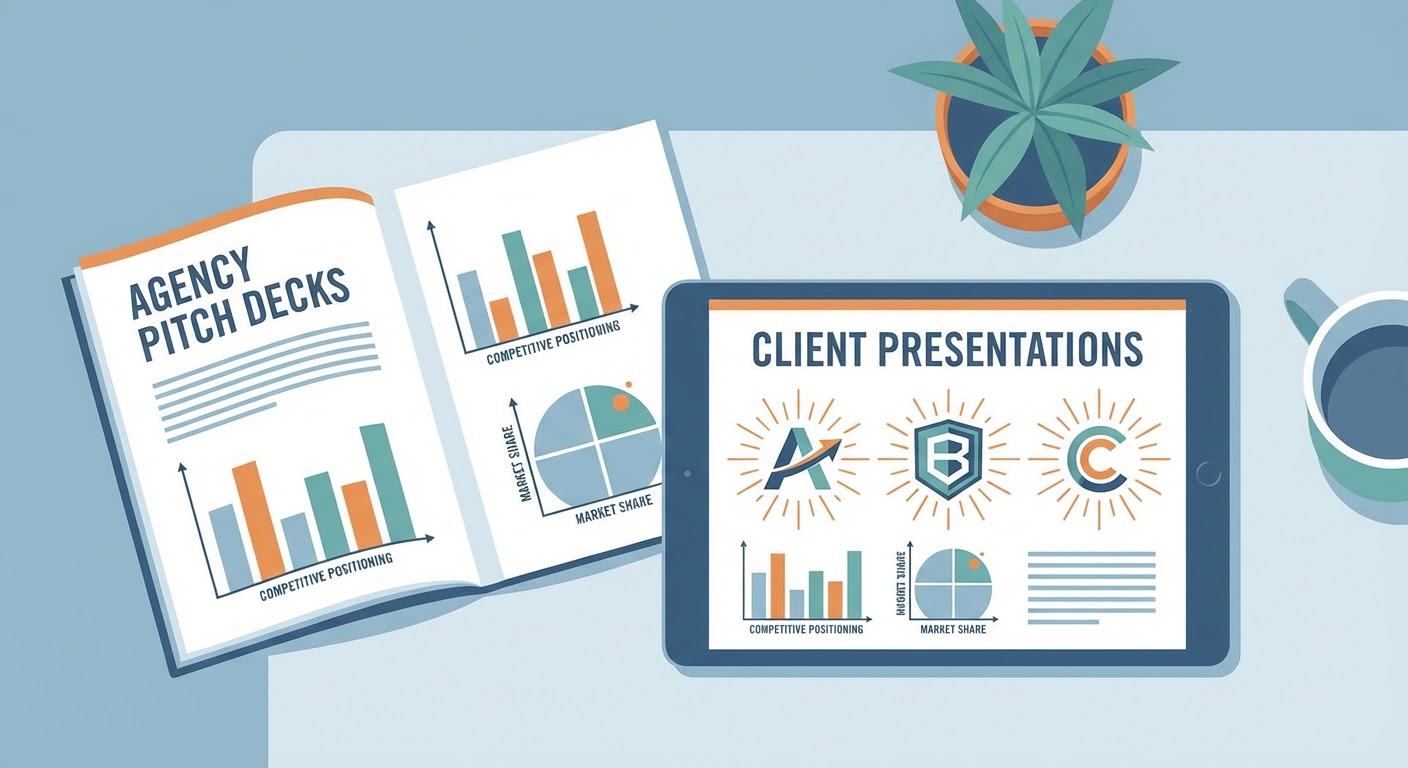
Agency competitive intelligence is weird because you're playing two games simultaneously. You're competing against other agencies for clients, and you're doing competitive research for your clients against their competitors. Most agencies are decent at the second part (it's literally what clients pay for) and terrible at the first part (knowing who they're pitching against and how to win).
I worked at a digital agency for two years and we lost pitches we should have won because we didn't know enough about the other agency in the room. The prospect would say "we're also talking to Agency X" and our response was basically "oh, cool." No prepared differentiation, no intel on their strengths and weaknesses, no idea what they'd propose. We were winging the most important part of the sales process.
Know Who You're Pitching Against
Start with the basics: which agencies do you consistently lose to? Pull your pitch history from the last 12 months. Who came up as a competitor in those pitches? Which ones did you win against and which ones beat you? The pattern tells you who to study.
For each competing agency, build a one-page profile. Their specialties, their biggest clients (usually listed on their website or case studies page), their team size, their pricing model if you can figure it out, and their messaging — how do they describe what they do differently? This isn't a 20-page report. One page per competitor, updated quarterly.
Competitor traffic analysis tells you which agencies are growing their online presence and which are stagnant. An agency that doubled their website traffic in six months is investing in inbound marketing (which means they probably practice what they preach). One with declining traffic might be struggling.
Client-Facing Competitive Research
The competitive intelligence you do for clients is where agencies can really differentiate. Most agencies treat competitive analysis as a one-time deliverable — here's a PowerPoint about your competitors, that'll be $15,000. The agencies winning right now treat it as an ongoing service.
A PPC competitor analysis running monthly for a client is more valuable than a quarterly report. A SEO competitor analyzer tracking keyword movements week over week gives clients real-time intelligence they can act on, not stale insights from last quarter.
The agency opportunity is to productize competitive intelligence as a recurring service. "For $2,000/month, we monitor your top five competitors across SEO, paid media, social, and content. Monthly report with actionable recommendations." That's recurring revenue for you and genuine value for the client. Most clients can't build this internally because they don't have the tools or the expertise.
Positioning Against Other Agencies
The way agencies position against each other is hilarious. Everyone says they're "data-driven," "results-focused," and "collaborative." Those words mean nothing because every agency uses them. Your competitive positioning needs to be specific enough that it actually excludes competitors.
"We only work with B2B SaaS companies between 50-500 employees" is positioning. "We're a full-service digital agency" is not. The more specific your positioning, the easier it is to win pitches where you're the obvious fit and to qualify out of pitches where you're not.
Study how competing agencies position on their websites and in their case studies. If every agency in your space claims to be full-service, you can win by being specialist. If they're all specialists, you can win by being the one that coordinates across channels. The contrarian position often wins because clients are tired of hearing the same pitch from everyone.
Tracking the Agency Market
Agency competitive intelligence includes tracking industry trends, not just direct competitors. When a big agency gets acquired, it reshuffles the market. When a new agency launches with funding, they're going to compete aggressively on pricing to win initial clients. When a competing agency loses a major client, that client is now available.
Industry publications like Adweek, Digiday, and AdAge cover agency news. Google Alerts for your top five competing agency names catch press coverage. LinkedIn is surprisingly useful — agency people love posting about new client wins, awards, and team growth. That content is competitive intelligence delivered voluntarily.
Brand monitoring can track mentions of competing agencies across the web. When a competing agency gets mentioned in a blog post, a podcast, or a conference recap, you want to know. Not because every mention is a threat, but because it keeps you aware of who's getting attention and what they're getting attention for.
The agencies that do their own competitive intelligence well tend to win more pitches. It's almost ironic — the agency that's best at competitive research for itself is probably also best at doing it for clients. If you can't eat your own cooking, why would a client trust you to cook for them?
Try These Agents
- Competitor Traffic Analysis — Track competing agency web presence
- PPC Competitor Analysis — Client-facing ad intelligence service
- SEO Competitor Analyzer — Recurring SEO competitive monitoring
- Brand Monitoring — Track competing agency mentions and wins