
Competitive Intelligence for E-commerce
I ran marketing at a DTC skincare brand and spent three months building a competitor analysis focused on Instagram content, influencer partnerships, and brand aesthetic. Very professional. Very thorough. Completely useless.
You know what actually mattered? Our closest competitor dropped their hero product from $48 to $39 and our conversion rate fell off a cliff within a week. We didn't notice the price change for three days because we were too busy comparing Instagram grid layouts. Three days. Meanwhile customers were doing the obvious math and buying the cheaper product.
E-commerce CI is simpler than people make it. What are they charging, what are they selling, and what do their customers think about it. A competitor with 5,000 SKUs updating prices across three channels generates insane amounts of data, but you only need to track maybe 5% of it.
Price Monitoring Is Everything
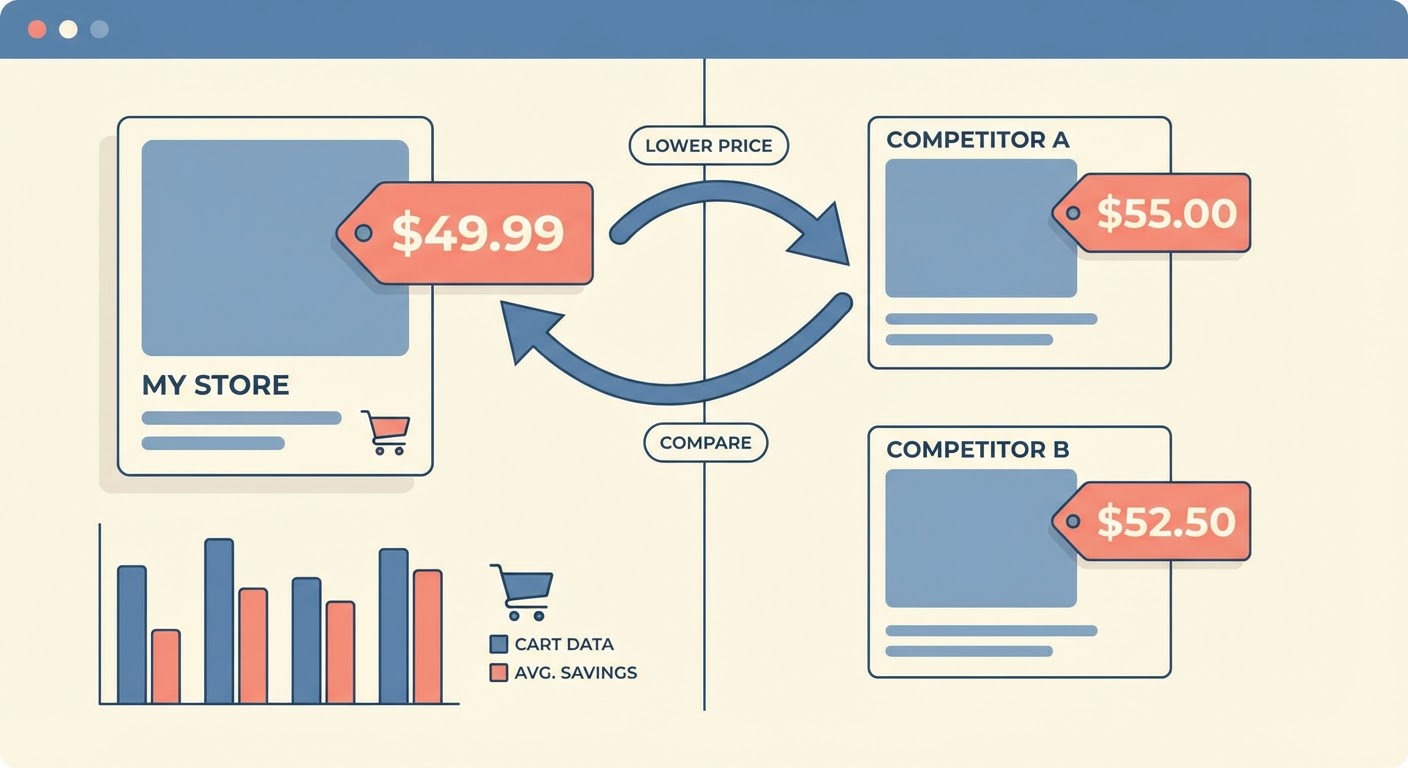
On Amazon, your product is sitting right next to the competition. Literally on the same screen. A $5 difference is the whole ballgame. On your own site, it's slightly less direct, but customers comparison shop. They have both tabs open. They're comparing.
A competitor pricing analyzer watches competitor prices so you don't have to check manually. The value is catching the sneaky stuff — the competitor who drops their price at 11 PM on a Friday hoping you won't notice until Monday.
But the product page price is maybe half the picture. "20% off with code SPRING" doesn't show up on the listing. You find it in their emails (I'm subscribed to every competitor's list), their Instagram ads, their influencer posts. One competitor ran a permanent "limited time" discount that restarted every two weeks. Their product was effectively 30% cheaper than listed and I didn't know for a month.
I keep a spreadsheet tracking competitor pricing on our top 20 competing SKUs. Over time you spot patterns that feel almost predictable — one brand always runs a sale the third week of every month (probably chasing a revenue number), another one basically never sells at full price.
Product and Assortment Intelligence
Speed matters here more than in B2B. A competitor launching a new product can steal attention and shelf space (physical or digital) within days, especially in categories like beauty and skincare where trends move fast.
Watch their new arrivals page, their "just dropped" email campaigns, and their social media product teasers. For Amazon sellers, track when competitors add new ASINs to their brand store. A Shopify customer spending analyzer can help you understand how your own customers' spending patterns shift when competitors launch new products — are your customers buying less, or are new competitor products pulling in new customers that weren't in your market before?
Product discontinuation is the underrated signal. When a competitor removes a product, their customers need to buy something else. If you sell a comparable product, those orphaned customers are fair game. I've run targeted ads to competitor product names that got discontinued and the ROAS is absurdly high because the searcher is literally looking for something that no longer exists.
Review Intelligence at Scale
E-commerce reviews are the most voluminous and the most honest competitive intelligence source. Unlike B2B where you might get 50 reviews on G2, a popular Amazon product can have 10,000 reviews. That's a dataset, not a reading list.
A review monitoring agent chews through thousands of reviews and spits out patterns. The one-star reviews tell you what to put in your marketing ("unlike Brand X, our serum doesn't leave a sticky residue"). The five-star reviews tell you what you need to match. And pay attention when reviewers compare products to other brands — that's your actual competitive set from the customer's perspective, which might be different from who you think you're competing against.
My favorite trick: skip the one-star and five-star reviews entirely. Read the three-star ones. Those people aren't angry and aren't in love. They're genuinely weighing tradeoffs. "Product works great but the packaging leaked twice" is way more useful intel than "LOVE THIS PRODUCT" or "TERRIBLE DO NOT BUY."
The Tools That Work for E-commerce
The e-commerce CI stack is different from B2B. Price tracking is the foundation, everything else is secondary. Review monitoring comes next. Ad and social tracking is the third layer.
A competitor traffic analysis tells you something useful about strategy: if a competitor gets 40% of their traffic from paid ads, they're buying growth. If they're heavy on organic search, they're investing in content and SEO. Both work, but knowing which game they're playing helps you decide whether to compete on the same channel or go where they're weak.
For cadence: automate the daily price checks on your top 10 SKUs (no human time required). Read competitor reviews once a week. Do the ad and social analysis monthly. Go deep on product assortment and positioning once a quarter. That's the whole system.
Try These Agents
- Competitor Pricing Analyzer — Track competitor pricing and promotions
- Review Monitoring — Product review tracking at scale
- Shopify Customer Spending Analyzer — Customer spending pattern analysis
- Competitor Traffic Analysis — Traffic source and growth analysis