
How to Find Your Competitor's Backlinks (and Build Better Ones)
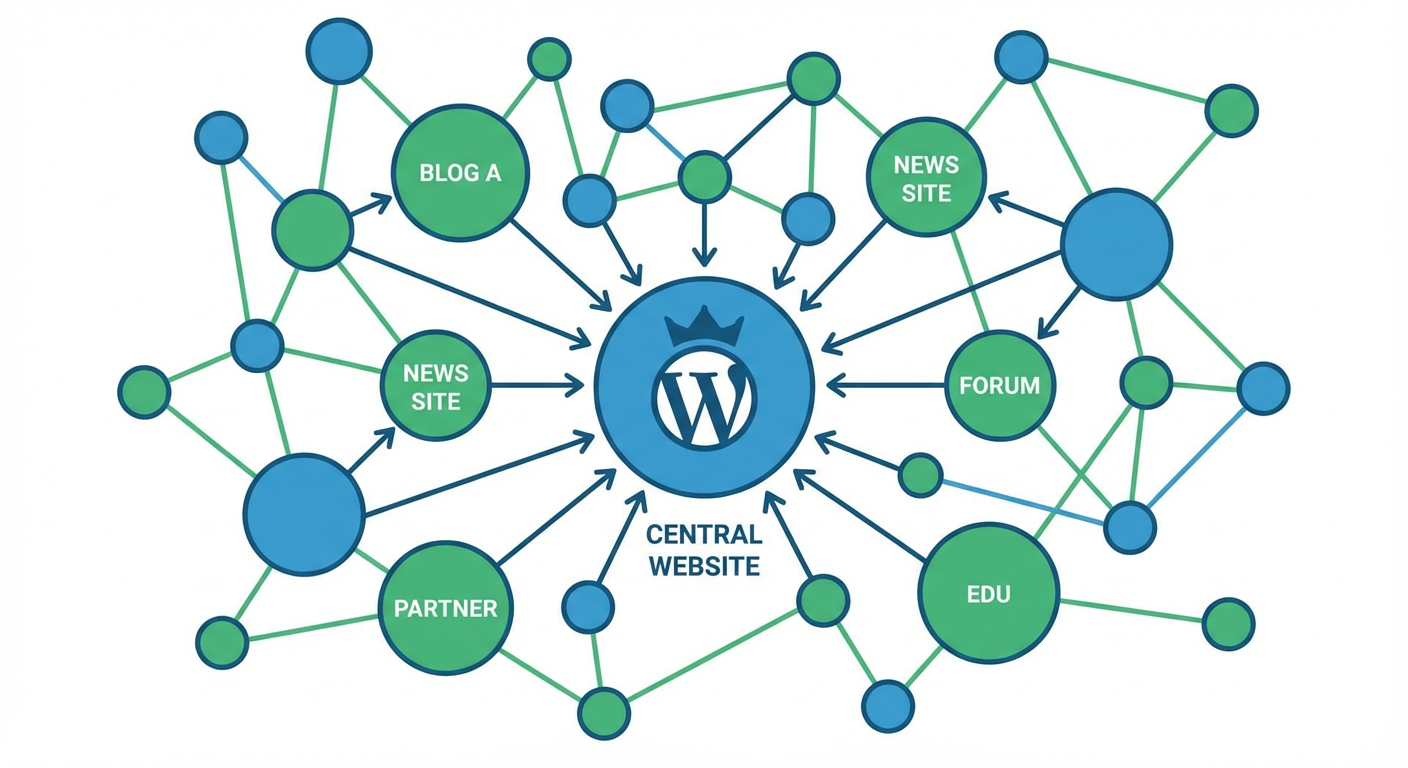
Backlinks are still the strongest ranking signal in Google's algorithm. That hasn't changed in 20 years and it's not changing anytime soon. The difference between ranking on page one and page three for a competitive keyword often comes down to who has better links.
The good news is that your competitors' entire backlink profile is public information. Every site linking to them, every page getting linked, every anchor text. All of it is available through free and paid tools. Their link building strategy is sitting in a database waiting for you to look at it.
Free Ways to Check Competitor Backlinks
You don't need to pay $100/month to get started. Ahrefs offers a free backlink checker at ahrefs.com/backlink-checker. Plug in a competitor's domain and you'll get their top 100 backlinks. That's usually enough to spot patterns.
Moz's Link Explorer gives you 10 free queries a month. Google Search Console shows your own backlinks but not competitors'. For competitor analysis specifically, the free Ahrefs tool is the best starting point.
What to look for in those first 100 links:
- Which pages on their site attract the most links? (Usually their best content)
- What types of sites link to them? (Blogs, news sites, directories, tools?)
- Are the links editorial (someone chose to link) or manufactured (guest posts, directories)?
Even with just 100 backlinks visible, patterns emerge fast. If 30 of their top links come from guest posts on marketing blogs, that's their strategy. If 40 come from news coverage, they have a PR operation working.
The Paid Method: Full Backlink Gap Analysis
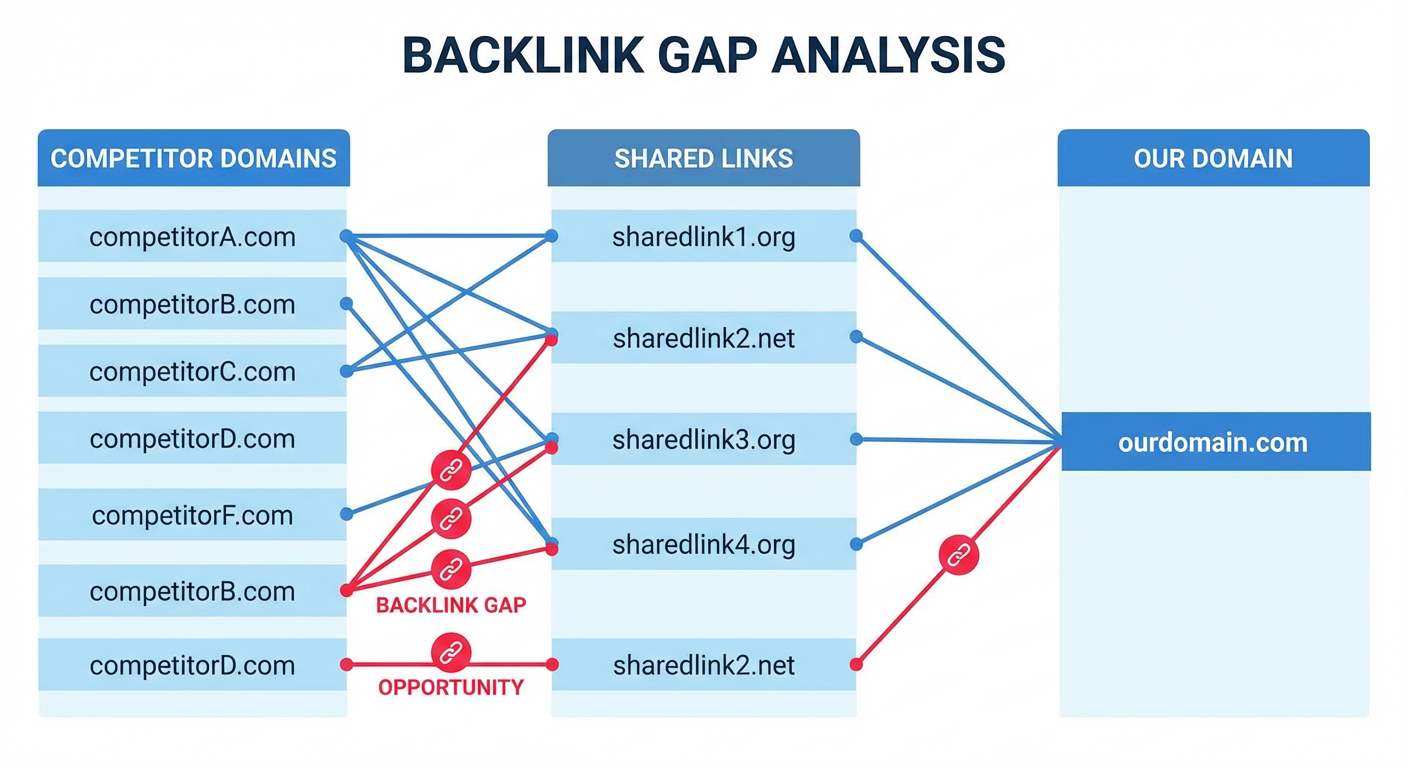
For the full picture, Ahrefs, SEMrush, or Moz Pro are worth the money. The feature you want is called "backlink gap" or "link intersect." It shows sites that link to your competitors but not to you.
In Ahrefs, go to Link Intersect. Drop in your domain and two or three competitors. It returns every domain that links to at least one competitor and doesn't link to you. That list is basically your prospecting sheet.
The raw list will be long. Hundreds, sometimes thousands of domains. Here's how to make it useful:
- Sort by Domain Rating. Links from DR 50+ sites move the needle. DR 10 sites mostly don't.
- Filter for domains linking to multiple competitors. If a site links to three of your competitors, they clearly cover your space. They're probably willing to link to you too.
- Check the linking page. Is it a resource list? A comparison article? A tools roundup? Each page type suggests a different outreach approach.
What Competitor Backlinks Actually Tell You
Most people stop at "here are sites I should get links from." But competitor backlinks reveal a lot more than link building targets.
Their most-linked pages are their best content. If a competitor's "Ultimate Guide to Sales Forecasting" has 200 referring domains while everything else has 10, that topic is clearly linkable in your space. You could write a better version and go after those same linkers.
The type of links tells you their marketing strategy. Lots of .edu and .gov links? They've invested in research or data that institutions cite. Tons of podcast links? They're doing the interview circuit. Heavy guest post profiles? They've got a systematic outreach operation. You can decide which of these approaches fits your team.
Broken links from competitors are pure gold. If a competitor page that earned 50 backlinks is now returning a 404, every one of those 50 sites has a broken link. Email them, point out the dead link, suggest your content as a replacement. This works absurdly well because you're solving a problem for the webmaster, not just asking for a favor.
What to Actually Do With This Intel
Don't try to replicate your competitor's entire backlink profile. That's thousands of links built over years. Pick the wins you can actually get.
Start with resource pages and roundups that already link to competitors. These are the easiest because the page owner actively curates links in your space. A polite email saying "hey, I noticed you list [competitor], you might also want to include [your resource]" has a surprisingly decent response rate.
Then go after the content gap. Find your competitor's most-linked pieces, write something genuinely better, and reach out to the sites linking to the original. This is the "skyscraper technique" and it works best when you can add real value, not just make a longer version of the same article.
Why Use an Agent for Backlink Analysis
Running a competitor backlink analysis manually is one of those things that takes a full afternoon and then you never do it again for six months. Export the CSV, sort it, cross-reference across competitors, check which domains are actually worth pursuing. It's useful work that nobody makes time for.
An SEO competitor analyzer agent does the whole thing in one pass. It pulls backlink profiles, identifies the gap, sorts by authority, and flags the most actionable opportunities. You can also pair it with competitor keyword research to find pages where you could both rank AND build links. Combine backlink intelligence with broader competitive analysis and you've got the full SEO picture.
Your competitors spent years building their link profile. You get to study the results in an afternoon and cherry-pick the best opportunities. That's a good deal.
Try These Agents
- SEO Competitor Analyzer — Uncover what keywords competitors rank for and where the content gaps live
- Competitor Keyword Research — Find keyword gaps and steal ranking opportunities from competitors
- Market Intelligence Agent — Full-spectrum competitor research covering hiring, reviews, keywords, and news
- Landing Page Teardown — Rip apart competitor landing pages for conversion and messaging patterns