
How to Find Competitor Email Campaigns
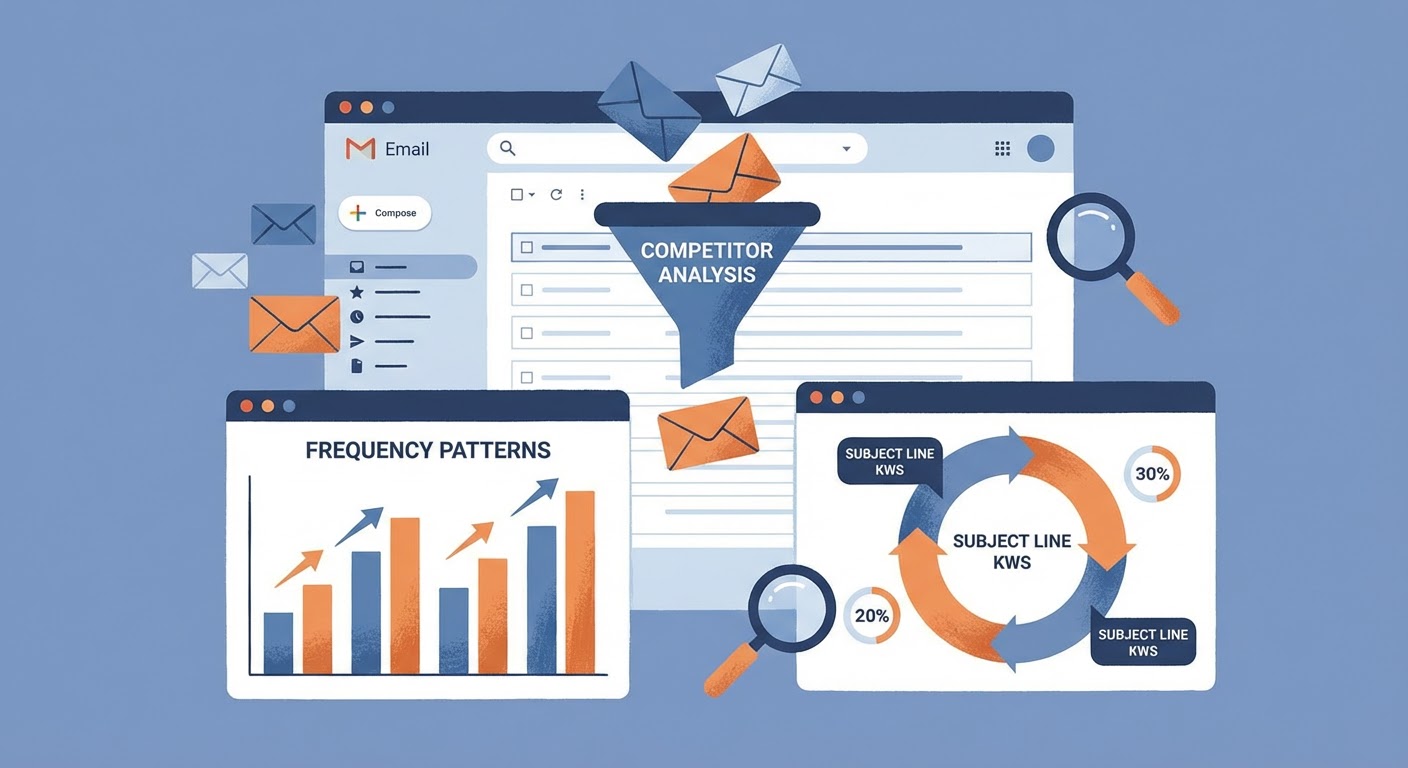
I have a Gmail account that exists purely to subscribe to competitor email lists. No other purpose. It receives maybe 40 emails a week from companies I compete with, and I skim through it every Friday afternoon with a cup of coffee. It's become my favorite 20 minutes of the week because competitors tell you so much through their emails that they'd never say publicly.
Think about it. Blog posts and social media are performative — they're written for the broadest possible audience. But emails go to people who already raised their hand. The messaging is more honest, the offers are more aggressive, and the desperation (when it exists) is way more visible.
Step One: Subscribe to Everything
Make a burner email. Go to every competitor's website and sign up for whatever they offer. Newsletter, product updates, "get a demo" form with a fake company name, free trial, webinar registration. Every entry point into their email funnel.
You'll start getting emails within hours. Some companies send a welcome sequence immediately — five emails over two weeks walking you through their value prop. Others send nothing for a month and then blast you with a webinar invite. Both patterns tell you something about how they think about email.
The welcome sequence is the most revealing part. That's their best pitch, refined over months of testing, delivered in the order they think converts best. I've literally copied the structure (not the words) of a competitor's welcome sequence because it was so well-designed. Subject line pattern, email length, CTA placement — all fair game.
What Their Emails Actually Reveal
Frequency tells you about team size. A competitor sending three emails a week has a dedicated email marketing person or team. One email a month means email is an afterthought, run by whoever has time. The cadence reveals resource allocation.
Subject lines are A/B test results delivered to you for free. Whatever subject line they're using, it probably beat an alternative. If a competitor consistently uses curiosity-gap subject lines ("You won't believe what we just shipped") versus benefit-driven ones ("Cut your response time by 40%"), that tells you which approach works for your shared audience.
Content themes map to business priorities. When a competitor starts sending more case study emails, they're trying to close deals. More "tips and tricks" content means they're nurturing a top-of-funnel list. Sudden promotional urgency — "limited time offer," "ending Friday" — usually means they're behind on quarterly numbers.
A landing page teardown agent helps you analyze the pages these emails link to. The email is half the story. The landing page is where the conversion happens, and that's where competitors often reveal their pricing changes, new feature launches, and positioning shifts before they update their main website.
The Tools That Actually Help
Mailcharts and Owletter (if they're still around — email spy tools come and go) let you search competitor email campaigns. But honestly, the manual subscription approach works better for B2B. The tools are more useful for e-commerce brands sending 10+ emails a week at scale.
For B2B, your burner email + a Google Sheets tracker is the whole system. I log: date, competitor, subject line, email type (promotional, educational, product update, event), and one sentence about what stood out. After three months you have a dataset that shows patterns no tool would surface.
Competitor traffic analysis reveals whether email is actually a meaningful channel for your competitors. Some companies send a ton of email but get almost no traffic from it — their list is dead or their content isn't clicking. Others get 15-20% of their website traffic from email, which means their list is engaged and their sends are driving real behavior.
The Promotions and Pricing Intel
Here's the part most people miss. Competitor promotional emails contain pricing intelligence that you can't find anywhere else.
"Get 20% off annual plans this month" tells you they're discounting, which usually means they're either behind on revenue targets or trying to shift customers from monthly to annual. "New starter plan at $29/month" announces pricing changes before they update the pricing page. "Upgrade to our new Enterprise tier" means they launched something new.
I found out about a competitor's entire pricing restructure through their email list two weeks before they updated their website. The email went to existing customers offering migration to new plans. That's competitive intelligence gold — advance notice of a pricing change that affects your positioning.
A competitor pricing analyzer can track the public pricing pages, but the email-only promotions are invisible to any automated tool. That's why the manual subscription approach matters. Some intelligence only exists in inboxes.
Don't Over-Engineer This
You don't need a complex system. Subscribe with a burner email, check it weekly, log what you notice. The compound value comes from doing it consistently over months, not from building elaborate tracking spreadsheets.
The single best insight I ever got from competitor email tracking: a competitor went from sending weekly product tips to sending daily "limited time" discounts over the course of a month. They were acquired six weeks later at what I'm told was a disappointing price. The email desperation was the earliest signal of trouble, long before any public announcement.
Try These Agents
- Landing Page Teardown — Analyze the pages competitor emails link to
- Competitor Traffic Analysis — Check if email drives meaningful traffic for competitors
- Competitor Pricing Analyzer — Track pricing changes across competitor sites
- Market Intelligence Agent — Broader competitive research and monitoring