
How to Find Your Competitor's Best Keywords (and Steal Their Traffic)
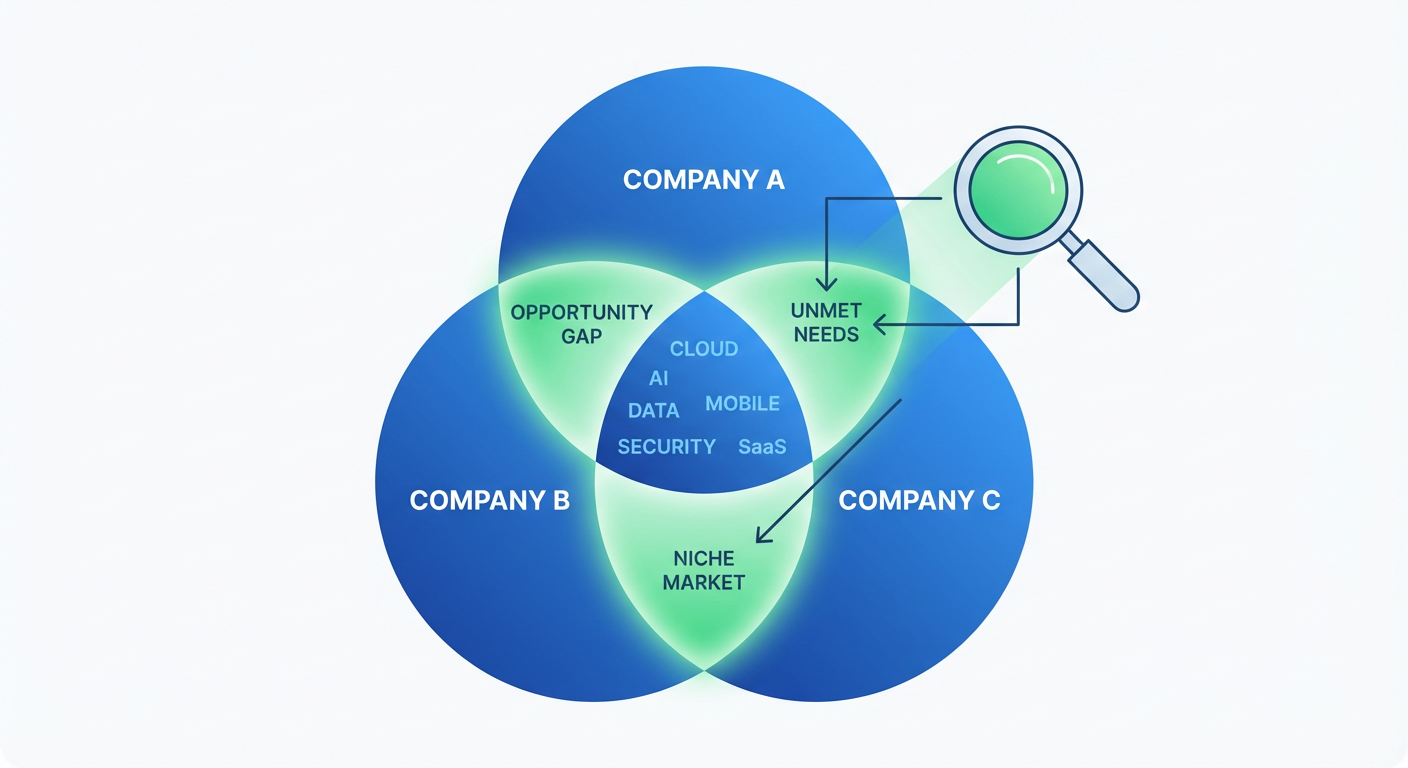
Here's something that should bother you: right now, a competitor is ranking for keywords that would work perfectly for your product. They're pulling in thousands of visits a month from those terms. You don't even know the terms exist because you've been staring at your own Search Console data instead of looking at theirs.
Competitor keyword research fixes that. You skip the guessing, skip the brainstorming sessions, and go straight to "what's already working for someone similar to me?" Then you decide if you can do it better. I've built entire content calendars this way. It's borderline unfair.
The Free Method: Manual SERP Stalking
You don't need expensive SEO tools to find competitor keywords. Google tells you plenty if you pay attention.
Pick a competitor. Search site:competitor.com and look at what comes up. Google tends to surface their strongest pages first. Read the title tags and URLs on those pages. Those are the keywords they're going after, written in plain English.
Now try searching for your main keyword. Look at page one. Click into each competitor result and notice:
- The exact title tag (their primary keyword target)
- The H1 heading (sometimes a slightly different phrasing, which means they're targeting variations too)
- The URL slug (usually the most distilled version)
- Related phrases in the body (secondary keywords they've woven in)
Tedious? Yes. Free? Also yes. You'll find maybe 20-30 competitor keywords in an hour doing this. Enough for a starting point, nowhere near the full picture.
The Paid Method: Keyword Gap Analysis
This is where tools like Ahrefs, SEMrush, or SpyFu earn their keep. Every major SEO platform has a "keyword gap" or "content gap" report. You put in your domain and your competitors. It shows you keywords where they rank and you don't.
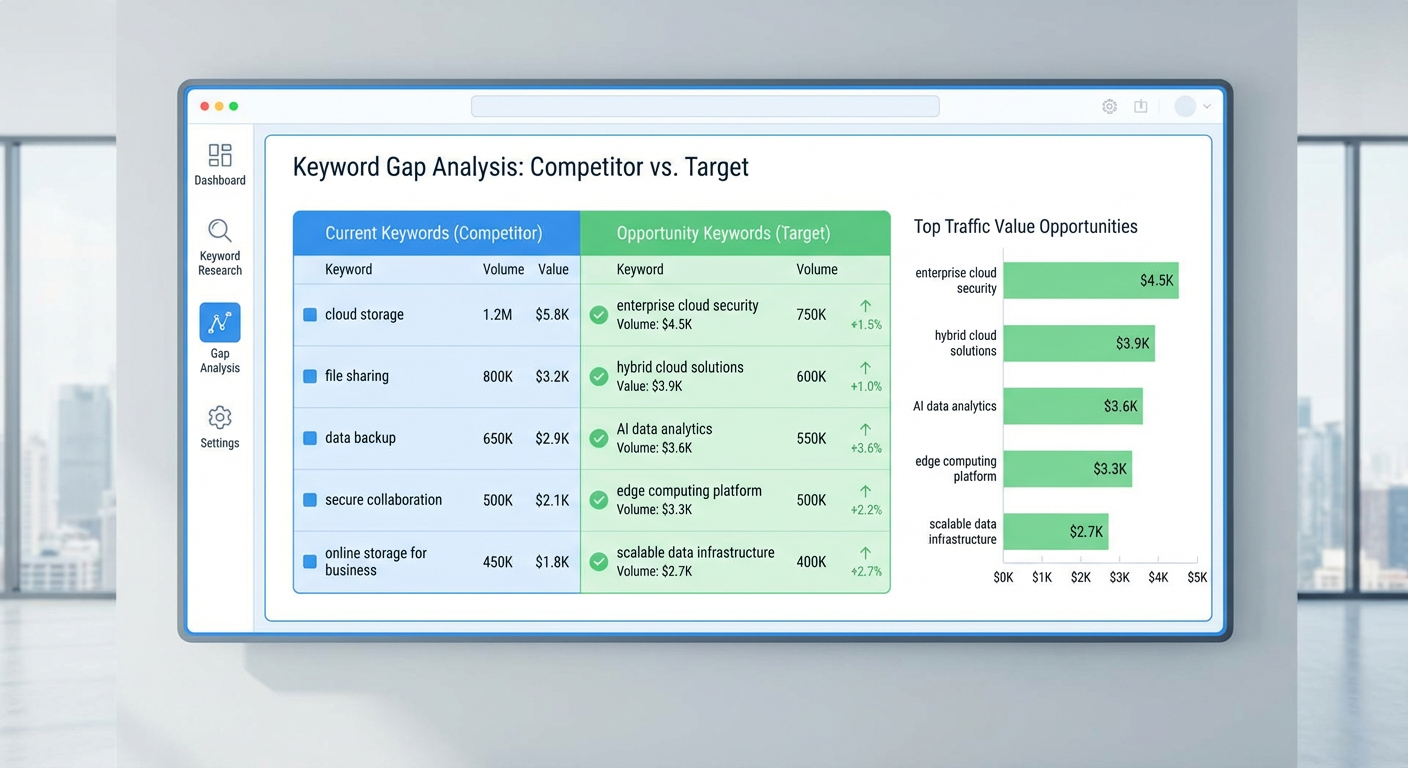
In Ahrefs, drop in your domain and up to three competitors. Out comes a list of keywords sorted by traffic potential. SEMrush has the same thing under "Keyword Gap." SpyFu calls theirs "Kombat." Same idea, different UI.
The raw output is usually thousands of keywords. Most are useless. Here's the filter that actually works:
- Sort by traffic value (estimated traffic times CPC). High traffic value = visitors with commercial intent.
- Filter by difficulty. Newer site? Ignore anything above 50. You're not ranking for those anytime soon.
- Look for clusters. Ten keywords about the same topic beats ten random keywords. Clusters let you write one thorough page instead of ten thin ones.
- Check the intent. "What is [topic]" is someone learning. "[Product] pricing" is someone buying. Both matter, but they need completely different pages.
The real find is keywords where ALL your competitors rank and you don't. If three companies in your space all show up for "sales pipeline automation" and you're nowhere, that keyword is clearly pulling traffic in your market. You're just invisible for it.
Sorting by Intent (Because Not All Keywords Are Equal)
Finding competitor keywords is the easy part. The hard part is deciding which ones to actually chase.
I bucket them into three categories. "Money keywords" are bottom-of-funnel. "Best [category] software," "[product] vs [competitor]," "[product] pricing." Lower volume usually, but the people typing these are close to buying. A competitor ranking here while you don't means you're losing deals without knowing it.
"Education keywords" are the how-to stuff. "How to build a sales pipeline," "what is lead scoring." Higher volume, lower conversion. Competitors with deep libraries of educational content have bet on the long game, building authority over months.
"Branded keywords" are the ones most teams forget entirely. "[Competitor name] alternatives," "[competitor] reviews." Someone searching for a competitor's alternatives is actively shopping. I've seen well-placed comparison pages pull conversion rates north of 5% because the buyer intent is that strong.
Keywords You Should Ignore
Not every competitor keyword is worth chasing. Some are traps.
A competitor with a domain authority of 90 ranking for a hard keyword doesn't mean you can too, especially if your DA is 30. That could take two years. Keywords tangential to their product but irrelevant to yours? Skip them. And keywords with 50 monthly searches are rarely worth a full article unless the intent is extremely high.
Good competitor keyword research is aggressive about filtering. Start with 500 keywords, narrow to 50 worth targeting, then pick the 15 that hit the sweet spot of volume, difficulty, and relevance to what you actually sell.
Why Use an Agent for Competitor Keyword Research
Doing this manually means logging into SEO tools, exporting CSVs, cross-referencing three competitors, and then spending an hour sorting everything into buckets. Nobody does this as often as they should because it's boring.
A competitor keyword research agent runs the whole process in one shot. Give it your domain and your competitors. It finds the gaps, sorts by intent, identifies clusters, and flags the highest-priority targets. It also picks up on things you'd miss manually, like a competitor quietly building an entire content hub around a topic you haven't touched. Pair it with an SEO competitor analyzer for the broader view of how competitors win organically.
Your competitors spent months figuring out which keywords drive traffic in your market. Their rankings are the answer key. Go copy it.
Try These Agents
- Competitor Keyword Research — Find keyword gaps and steal ranking opportunities from competitors
- SEO Competitor Analyzer — Uncover what keywords competitors rank for and where the content gaps live
- Market Intelligence Agent — Full-spectrum competitor research covering hiring, reviews, keywords, and news
- PPC Competitor Analysis Tool — Spy on competitor ads across Google, Meta, TikTok, LinkedIn, and Reddit in minutes