
How to Find Your Competitor's Sales Playbook
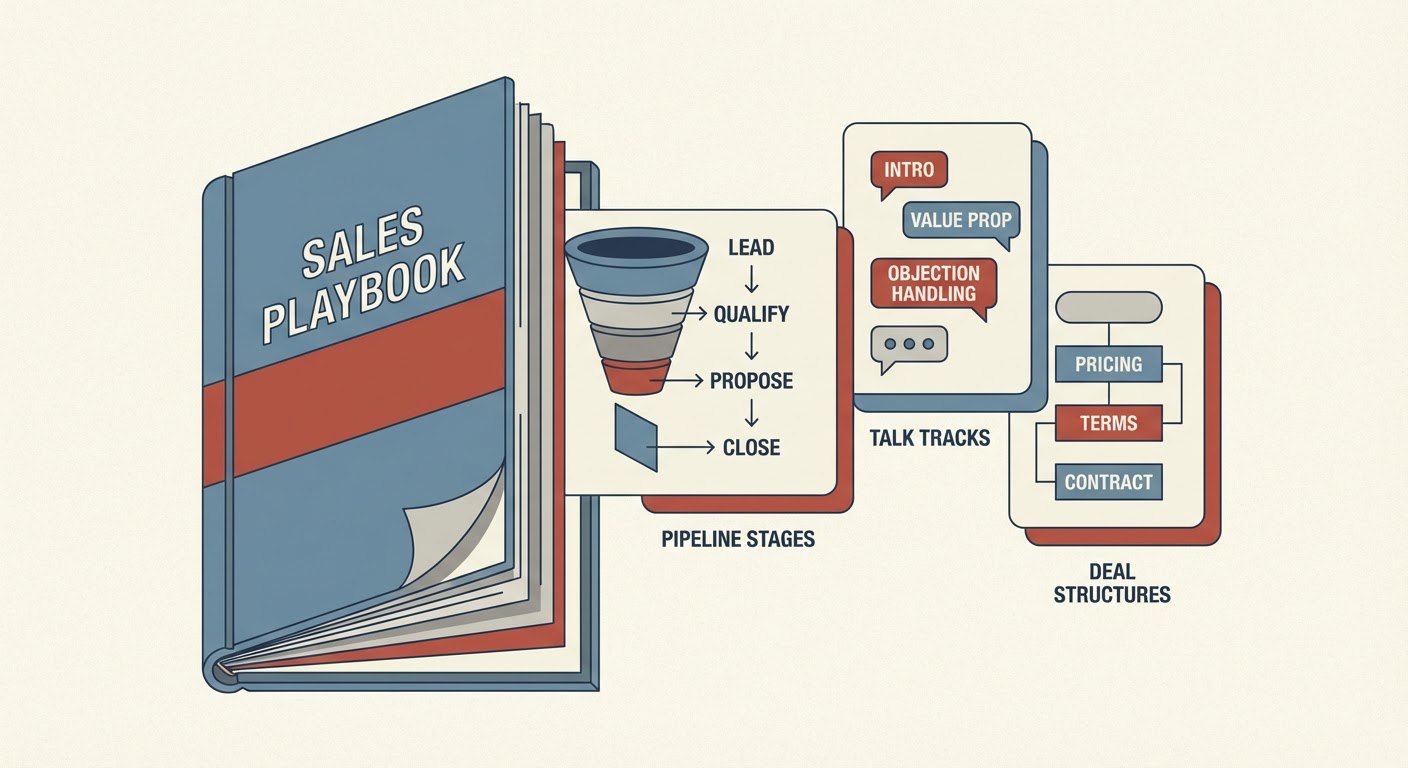
Every company thinks their sales process is a closely guarded secret. It's not. If you know where to look, you can reconstruct about 80% of how a competitor sells without talking to a single person at that company. Their job postings, customer reviews, sales content, and public-facing team members are all broadcasting their sales strategy whether they realize it or not.
I pieced together a competitor's entire sales motion over a long weekend. They run a product-led growth model for accounts under $5K ACV, transition to sales-assisted at $5K-$25K, and have a dedicated enterprise team above $25K. I know their deal cycle length, their primary objection handlers, and the demo flow they use. All from public information.
Job Postings Are Strategy Documents
This is the easiest win. Go to a competitor's careers page and read their sales job descriptions. Not the perks and culture section — the responsibilities and requirements.
"Experience selling to VP-level buyers in the financial services industry" tells you their ICP. "Comfortable managing 60+ day sales cycles" tells you their deal velocity. "Ability to conduct technical product demonstrations" tells you they do live demos rather than self-service trials. "Track record of closing deals $50K+" tells you their ACV target.
One competitor's AE job posting literally said "you'll own accounts from initial outreach through close, managing a full-cycle sales process with 3-5 stakeholders per deal." That sentence alone told me their deal size (multi-stakeholder = enterprise), sales model (full-cycle = no SDR handoff), and complexity (3-5 stakeholders = consensus-driven buying). All from a job post.
Glassdoor competitive hiring intel can systematically analyze these postings and pull out the patterns. Glassdoor reviews from current and former sales reps are even more revealing — people complain about quota structures, territories, and management in ways that expose the internal sales operation.
What Customers Say About Being Sold To
G2 and Capterra reviews occasionally contain gold about the sales experience. Search for reviews that mention the sales process, the demo, the trial, onboarding, or negotiation. Buyers sometimes describe exactly what the competitor's sales team did right or wrong.
"The sales process was really smooth — we signed up for a free trial, had a call two days later, and closed within a week" tells you their PLG-to-sales pipeline motion. "We went through a three-month evaluation with multiple demos and a custom POC" tells you they run lengthy enterprise pilots. "The sales rep was pushy about annual commitments" tells you about their pricing pressure tactics.
I found a G2 review that said "their sales team sent us a custom ROI analysis within 24 hours of our first call." That told me they had a value engineering resource supporting sales early in the funnel — a real investment that shows they're selling on ROI, not features. I started asking my sales team whether we should do the same thing.
A competitor review analysis agent mines review platforms at scale for this kind of intelligence. It's looking for mentions of sales process, buying experience, negotiation, and pricing discussions that individual reviews sometimes contain.
Their Content Strategy Maps Their Sales Process
Look at the content a competitor publishes and you can map their sales funnel. Top-of-funnel blog posts show you what keywords they're targeting to attract leads. Middle-funnel content (webinars, guides, comparison pages) shows you how they nurture. Bottom-funnel content (case studies, ROI calculators, pricing pages) shows you how they close.
If a competitor has 50 blog posts, 10 webinars, and zero case studies, they're strong at generating leads and weak at closing them. If they have a detailed ROI calculator and six industry-specific case studies, they're optimized for enterprise sales where justifying the investment is the hard part.
Their LinkedIn Sales Navigator presence is also telling. Search for their sales reps on LinkedIn and look at what they post. Sales reps who share their own company's content are getting enablement support. Reps who share generic motivational quotes probably aren't. The gap between a well-enabled and poorly-enabled sales team shows up in LinkedIn activity.
Call Intelligence
If you use a tool like Gong or Chorus internally, chances are your sales team has recorded calls where prospects mention competitors. Those calls contain direct competitive intelligence — what the prospect was told by the competitor, what they liked and didn't like, where the competitor's pitch fell flat.
A Gong competitive intel tracker extracts these competitor mentions from your own call recordings. You're not spying on the competitor's calls. You're mining your own conversations for what prospects tell you about how the competitor sells. That's often more accurate than any other source because prospects have no reason to sugarcoat their experience with Competitor B when they're talking to you.
The pattern I look for: when three different prospects describe the same competitor sales tactic ("they always offer a 20% discount if you sign by end of quarter"), that's a confirmed playbook element, not a one-off.
Try These Agents
- Gong Competitive Intel Tracker — Extract competitor mentions from your sales calls
- Competitor Review Analysis — Mine G2 and Capterra for sales process intelligence
- Glassdoor Competitive Hiring Intel — Sales role analysis and employee sentiment
- Competitor Pain Points — Identify weaknesses in competitor sales approach