
How to Find Your Competitor's Top Content (and Beat It)
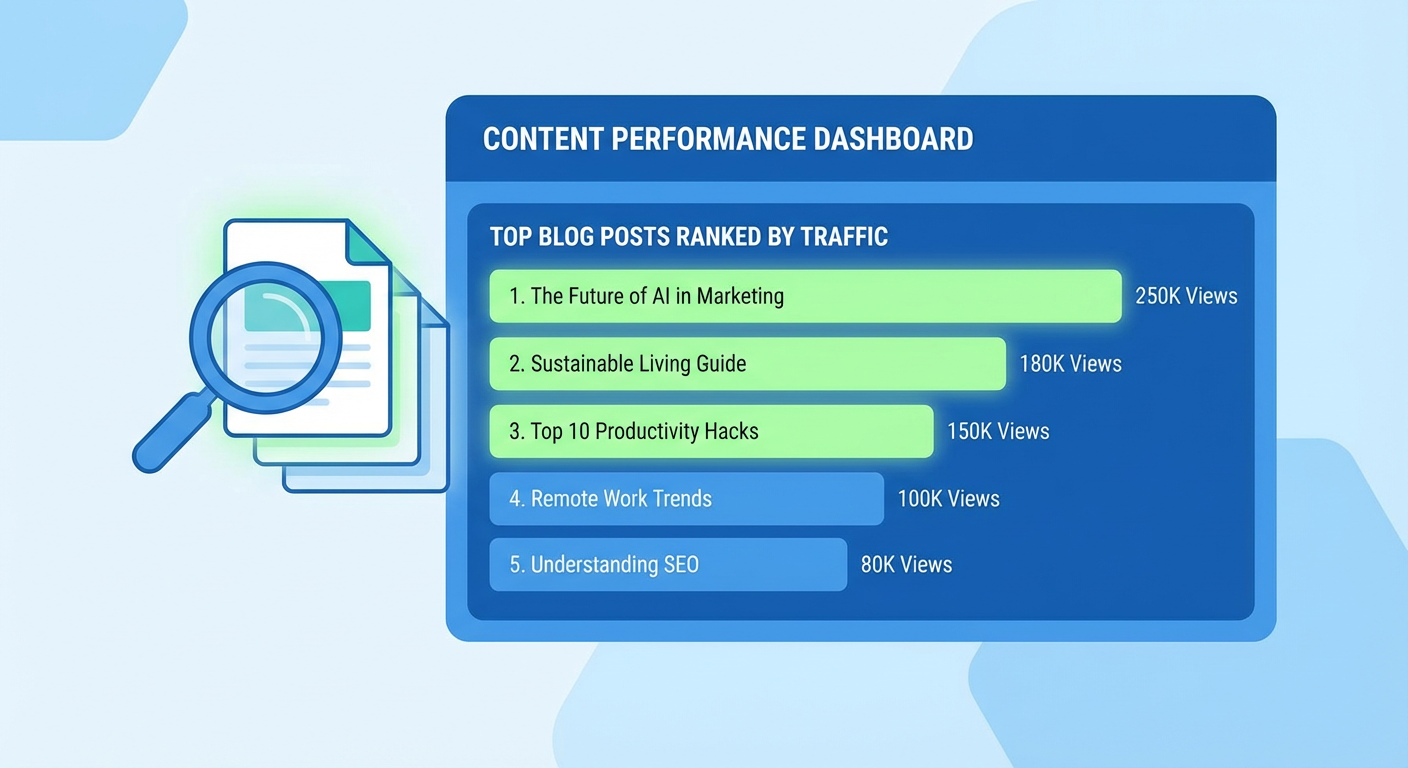
Your competitor has a blog post pulling 15,000 organic visits a month. You didn't know about it because it doesn't rank for your main keyword. It ranks for a keyword you never considered. That post is doing more for their pipeline than half their sales team, and you could write something better tomorrow if you knew it existed.
That's the frustrating reality of content marketing. You can't beat what you can't see. And most teams are so focused on their own content calendar that they never bother looking at what's actually working for the competition.
Finding Top Pages by Estimated Traffic
Ahrefs "Top Pages" report is the fastest way to see which pages on a competitor's site pull the most organic traffic. Plug in a competitor's domain, go to Top Pages, and sort by traffic. Done.
You'll usually see their homepage at the top (ignore that). Below it are the pages that actually earn their organic traffic. Blog posts, landing pages, comparison pages, resource hubs. The list tells you exactly which topics and formats are working.
SEMrush has the same thing under "Organic Research > Pages." SpyFu calls it "Top Pages." Every major SEO tool does this. If you're using a free tier, Ahrefs' site explorer gives you a limited view that's still useful for the top 5-10 pages.
What to look for:
- Which topics show up repeatedly? If three of their top ten pages are about "sales forecasting," that topic clearly resonates.
- What format do their top pages use? Guides, comparisons, tools, templates? Format matters as much as topic.
- How old are the top pages? If their best content is two years old and still ranking, it has staying power. If their top pages are all recent, they're on a growth tear.
Running a Content Gap Analysis
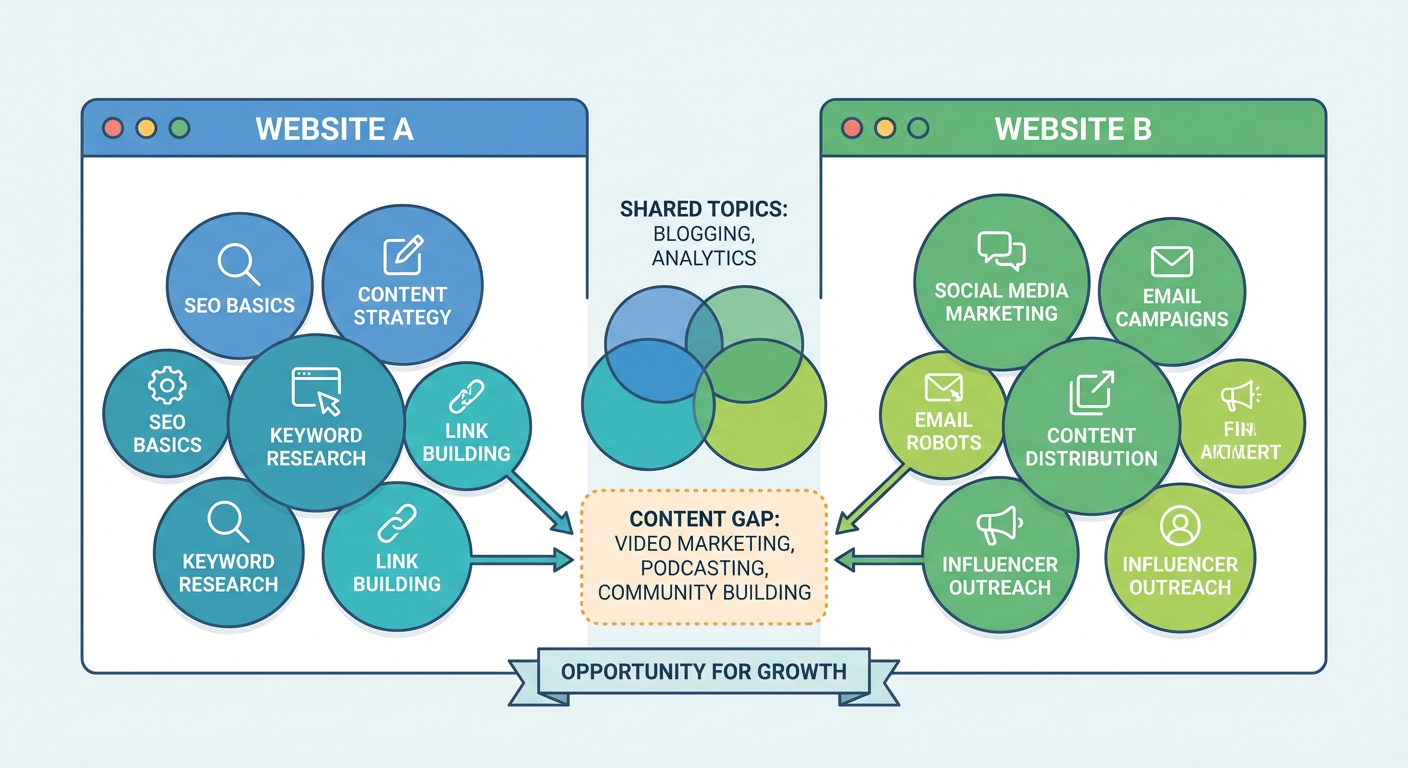
Top pages tell you what's working for one competitor. A content gap analysis tells you what's working for multiple competitors that you haven't covered.
In Ahrefs, use the "Content Gap" tool. Drop in your domain and two or three competitors. It shows keywords where they rank (at least one of them) and you don't. Filter by traffic potential and you get a prioritized list of content opportunities.
The magic is in the overlaps. A keyword where all three competitors rank and you're invisible? That's a gap you need to close. A keyword where only one competitor ranks? Lower priority, maybe it's a fluke.
I like to export this list and group keywords by topic cluster. Fifty individual keywords might collapse into eight or ten topics. Write one thorough page per topic and you've covered a huge surface area with less effort than chasing every keyword individually.
Analyzing What Makes Their Content Win
Finding top pages is step one. Understanding WHY they rank is step two.
Open each top-performing competitor page and ask yourself:
- How long is it? Word count alone doesn't determine rankings, but it tells you the depth Google expects for that topic.
- What subtopics does it cover? The headings are basically an outline of what Google thinks a complete answer looks like.
- What does it have that other results don't? Original data, interactive tools, downloadable templates, expert quotes. The unique element is often the reason it outranks everything else.
- How many backlinks does it have? A page ranking partly on link authority is beatable with better content if you can match the links. A page ranking purely on content quality? You need to out-quality it.
Don't just write a longer version of their content and call it a day. The "skyscraper technique" only works when you genuinely add something new. Better data, clearer explanations, a framework nobody else uses, a practical template. Something that makes a reader choose your version over the one they found first.
Spotting Content Trends Before They Hit
If you check competitor top pages once, you get a snapshot. Check every month and you start noticing movement. New pages climbing into their top 10 that weren't there before? That topic is gaining traction. Old pages dropping out? That topic might be saturated.
Competitors who publish aggressively also give away their content roadmap. If they suddenly publish five posts about "AI sales automation" in a month, they've made a bet on that topic cluster. You can decide whether to follow them into it or differentiate by going somewhere they aren't.
Why Use an Agent for Content Analysis
Manually running top pages reports and content gap analyses across three competitors takes a couple hours. Synthesizing it into a content plan takes longer. Most teams do this once a quarter at best, which means they're operating on stale data most of the time.
An SEO competitor analyzer agent runs the whole analysis in one pass. It pulls top pages, identifies content gaps, spots topic clusters, and flags the highest-value opportunities. Pair it with competitor keyword research to make sure you're targeting the right terms within each topic, and you've got a content calendar built entirely from competitive intelligence.
Your competitors' best content is a public roadmap of what works in your market. Go read it, then write something better.
Try These Agents
- SEO Competitor Analyzer — Uncover what keywords competitors rank for and where the content gaps live
- Competitor Keyword Research — Find keyword gaps and steal ranking opportunities from competitors
- Market Intelligence Agent — Full-spectrum competitor research covering hiring, reviews, keywords, and news
- Landing Page Teardown — Rip apart competitor landing pages for conversion and messaging patterns