
How to See Competitor Landing Page A/B Tests
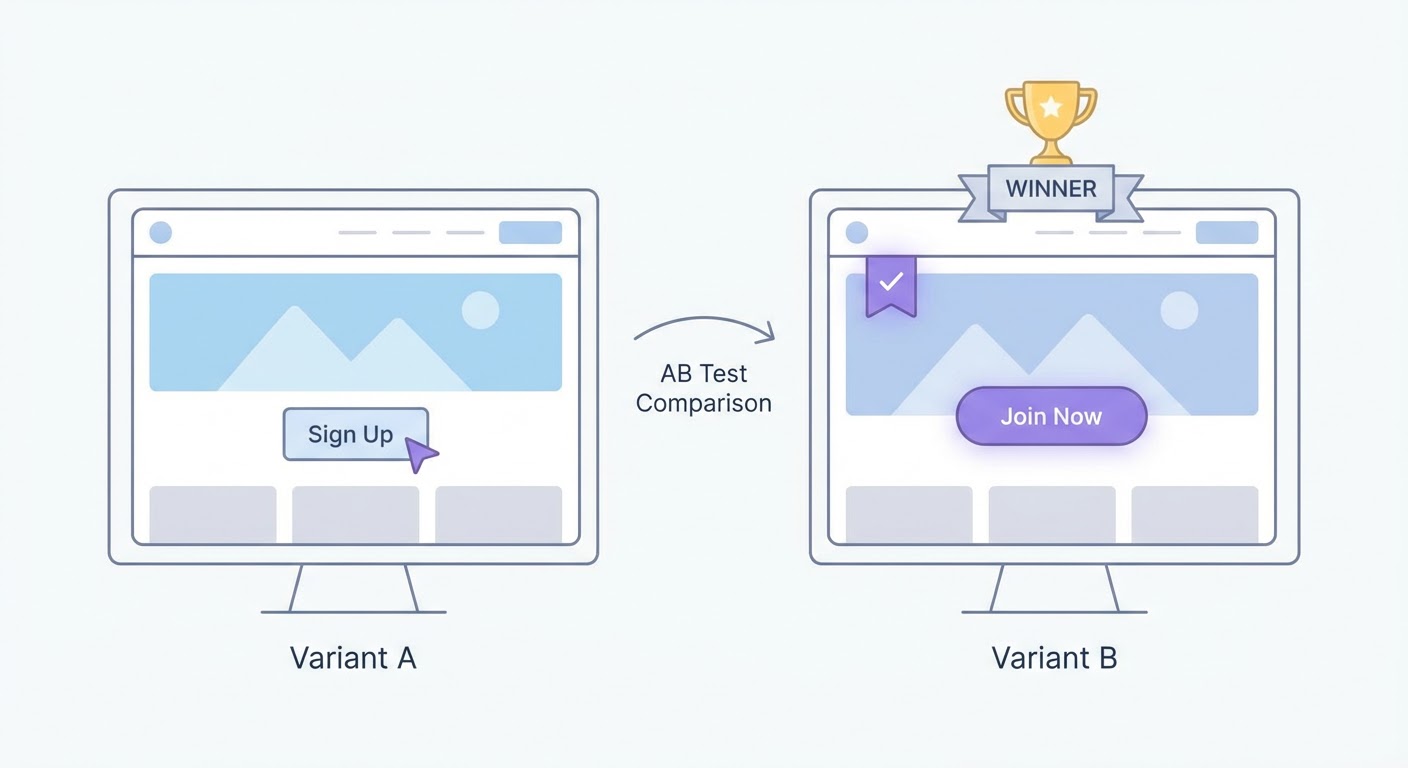
I visited a competitor's homepage three times in one day — once from my phone, once from my laptop, and once from an incognito window. I got three different headlines. They were running an A/B test and didn't realize they were giving me free access to their messaging experiments.
Most companies test their landing pages constantly. Headlines, CTAs, hero images, pricing display, social proof placement. If you check often enough and from different contexts, you'll catch tests in progress. And when a test variant disappears and one version stays, you know which version won. That's conversion optimization intelligence delivered to you on a silver platter.
How to Catch Tests in Progress
The simplest method: visit the competitor's key pages from different browsers, devices, and IP addresses. Tests are usually cookie-based, so a fresh browser session might serve you a different variant. I keep Chrome, Firefox, and Safari for this exact purpose. Plus incognito mode and my phone. Five different "identities" to increase my chances of seeing multiple variants.
Clear your cookies before each visit. Most A/B testing tools (Optimizely, VWO, Google Optimize before it shut down) set a cookie to keep showing you the same variant. Fresh session, fresh chance at seeing the alternative.
If you have a VPN, even better. Some companies run tests by geography. A competitor showing different pricing to US versus EU visitors is doing price testing by region. I caught one competitor showing a "starting at $49/month" headline in the US and "starting at €39/month" in Germany — and no, the math didn't match the exchange rate. Region-specific pricing, exposed by a VPN.
What's Worth Watching
Not every page test matters. Focus on these.
Homepage headline tests reveal positioning decisions. If a competitor is testing "AI-powered analytics" against "analytics that sell themselves," those two headlines represent fundamentally different positioning strategies. Whichever wins tells you which message resonated with their audience. That's market research you didn't have to pay for.
Pricing page tests are the highest-value targets. Changes to pricing tiers, feature bundling, CTA text ("Start free trial" vs "Get started" vs "See pricing"), and plan names all signal conversion optimization priorities. A competitor pricing analyzer can track these pricing page variations over time.
Demo request pages tell you about their sales funnel. The number of form fields, the information they ask for, whether they offer self-serve or require a call — these choices directly affect their conversion rate and lead quality. When they reduce form fields from eight to three, they're optimizing for volume over qualification.
CTA button tests are surprisingly revealing. "Book a demo" versus "Start free trial" versus "See it in action" represent different philosophies about how prospects should enter the funnel. When a competitor switches from "book a demo" to "try free for 14 days," they're probably moving from a sales-led to product-led motion.
Tools That Help
A landing page teardown agent analyzes the current state of any landing page — layout, messaging, social proof, CTAs — and gives you a structured breakdown. Run it on a competitor's page monthly and compare the outputs to spot changes.
The Wayback Machine captures snapshots over time. Compare a competitor's landing page from three months ago to today and you'll see what they changed. The changes that stick are the test winners. The changes that revert were losing experiments.
BuiltWith and Wappalyzer tell you which A/B testing tools a competitor uses. If they're running Optimizely or VWO, they're almost certainly testing regularly. If there's no testing tool detected, they might be changing pages based on gut feel rather than data. That's useful too — it tells you their marketing sophistication level.
Competitor traffic analysis adds context by showing whether landing page changes correlate with traffic changes. A competitor redesigning their homepage and seeing a traffic spike (or drop) tells you whether the new version is working in the real world.
Steal the Winners, Skip the Losers
The whole point of tracking competitor landing page tests is to learn from their experimentation budget. They're spending money and time on conversion optimization — you can benefit from their results.
When I see a competitor test two headlines and one survives, I don't copy it. But I do note the direction. If their winning headline emphasizes speed over features, that tells me our shared audience cares more about speed. I'll adjust our messaging to lead with speed too, in our own words with our own proof points.
The competitors running the most aggressive A/B testing programs are doing the most market research on your behalf. Pay attention.
Try These Agents
- Landing Page Teardown — Structured landing page analysis and comparison
- Competitor Pricing Analyzer — Track pricing page variations
- Competitor Traffic Analysis — Correlate page changes with traffic impact
- Website Traffic Checker — Quick traffic checks after competitor page changes