
How to See Your Competitor's Facebook Ads (and Extract Their Creative Strategy)
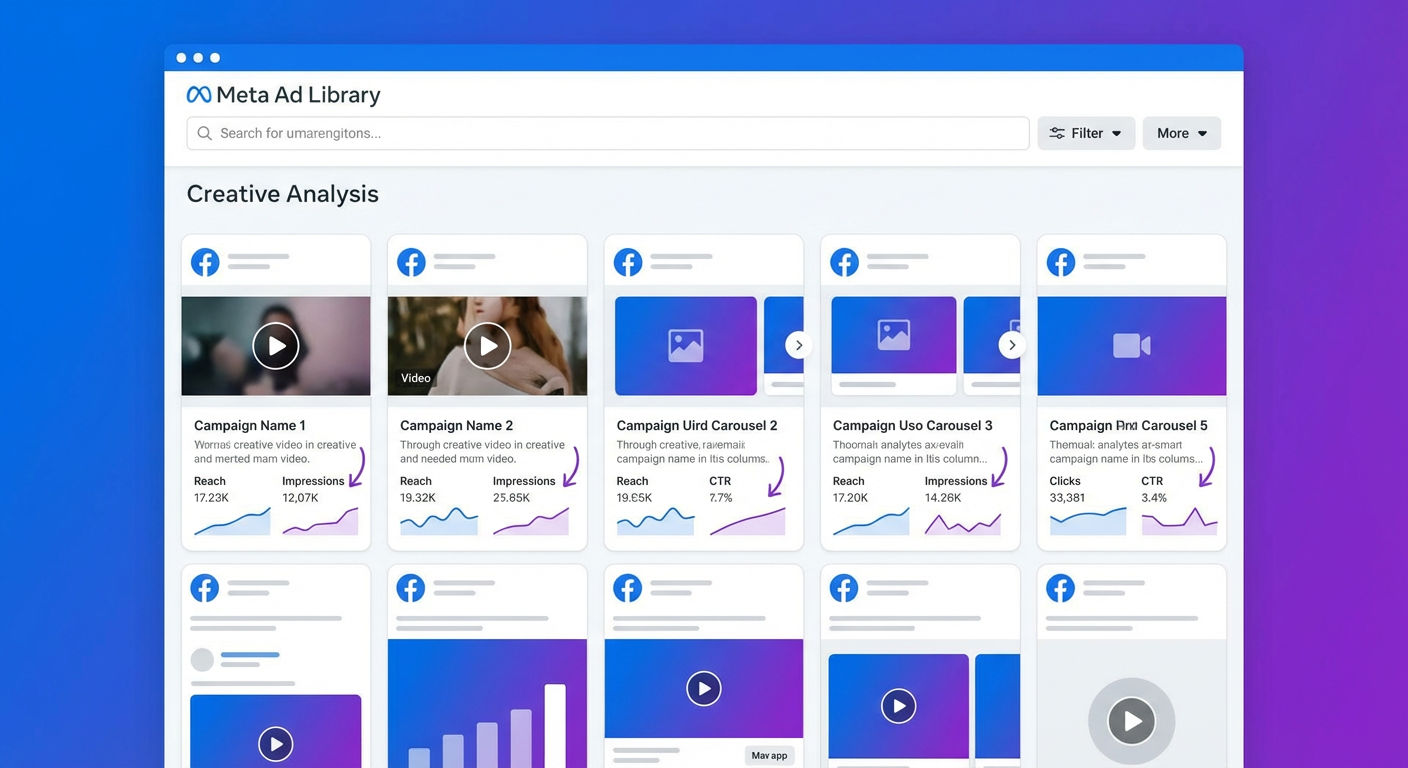
The Meta Ad Library might be the single best free competitive intelligence tool in marketing. It shows every active ad any business runs on Facebook. The creative, the copy, the launch date, every variation they're testing. Public. Free. Updated constantly.
I've watched marketing teams spend weeks building "competitive analysis decks" without once checking the Ad Library. They're Googling screenshots of competitor ads on Twitter instead of pulling up the actual database that Meta maintains for exactly this purpose. Bizarre behavior.
How to Pull Up Every Active Ad
Navigate to facebook.com/ads/library. That's the Meta Ad Library. It covers Facebook, Instagram, Messenger, and the Audience Network. For now, we're zeroing in on Facebook specifically.
- Set the country filter to wherever your competitor runs ads
- Pick "All ads" from the category dropdown
- Type your competitor's name or Facebook page name
- Click the right advertiser page from the results
You're now looking at every live ad that company runs on Meta. Each card shows the creative, body copy, headline, CTA button, and the date it started running.
That "started running on" date is quietly the most useful metadata on the page. An ad running for 90+ days is a proven moneymaker. Companies don't keep pouring budget into losers. An ad from yesterday? Just a test. Maybe it works, maybe it flops. Knowing which is which completely changes how you interpret the creative.
Decode the Creative Trends
Don't scroll through these like an Instagram feed. Actually categorize what you're seeing.
Format breakdown. What's the mix of static images, videos, and carousels? If 80% of their ads are video, they've tested static and found video wins for their audience. Heavy carousel usage usually signals a product that benefits from multiple angles or a before/after narrative.
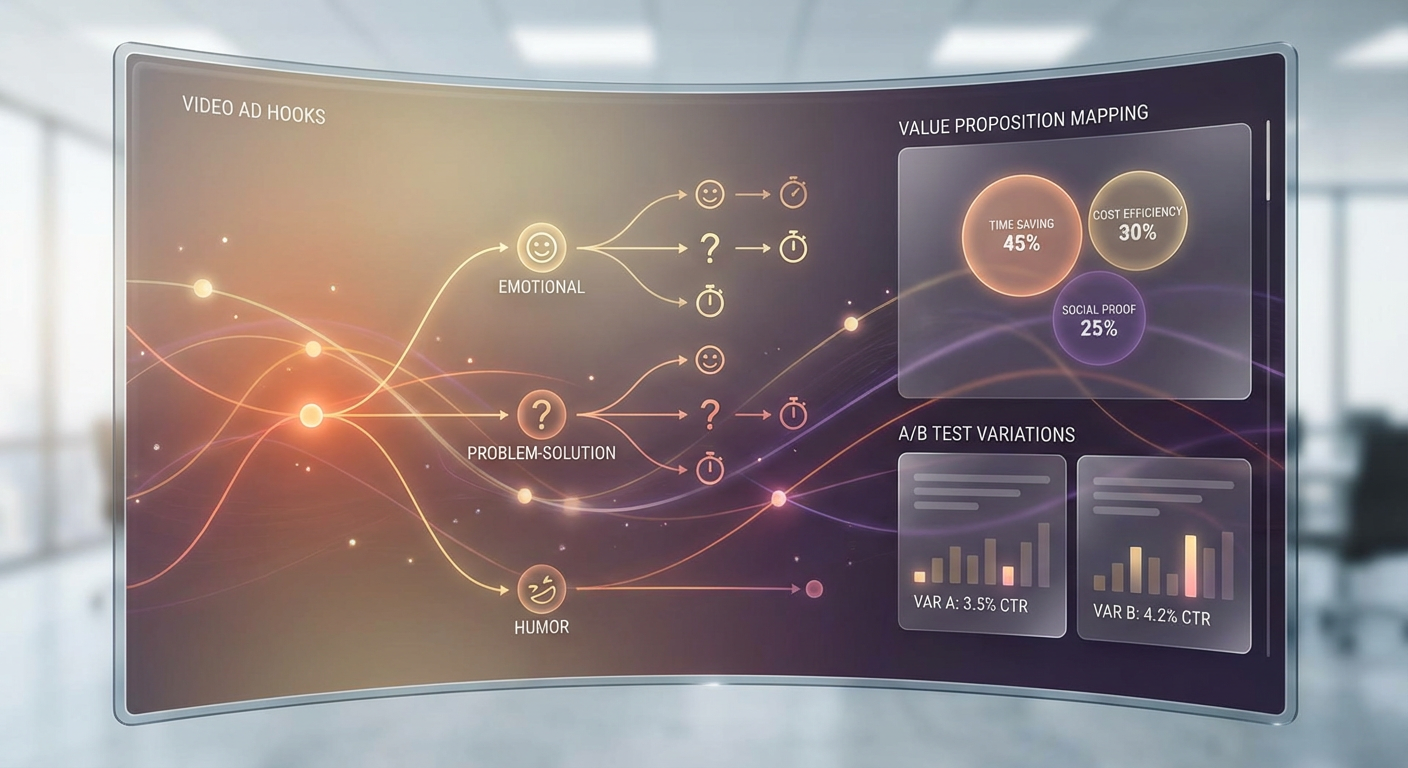
Hook dissection (video only). Open every video ad and watch the first three seconds. That hook is the most A/B-tested fragment of the entire ad. They've probably burned through dozens of opening variations to find the one that stops the scroll.
Copy length tells a story. Facebook truncates body text after about 125 characters. Some advertisers write two tight sentences above the fold. Others write full paragraphs. Long-form copy performs when the product needs explanation. Short copy wins when the brand has recognition or the offer sells itself. Whichever direction your competitor leans reveals how they see their own market position.
Value props by frequency. Read through every ad and tag the primary benefit. Maybe "save time" appears in 60% of ads, "reduce costs" in 25%, "easy setup" in 15%. That ratio IS their messaging hierarchy. You're looking at the output of a multi-thousand-dollar messaging experiment, published for free.
Read the Audience Clues
Meta doesn't show you targeting parameters. But the creative tells you almost everything.
- Language and register. "Hey founders, tired of losing deals?" targets startup founders. "Enterprise teams require scalable solutions" targets corporate procurement. The vocabulary IS the targeting.
- Visual casting. Stock photos of suits in glass conference rooms? Enterprise. Bright illustrations with casual typography? Younger, possibly SMB. Product screenshots packed with data? Technical buyers.
- Offer architecture. "Start your free trial" targets individuals who can adopt solo. "Book a demo" targets buyers who need a sales conversation. "Download the Benchmark Report" targets people still researching. The offer tells you where in the funnel they're fishing.
Tear Down Their Landing Pages
Every Facebook ad points somewhere. Click through on the longest-running ads specifically, since those are the landing pages that actually convert.
Watch for message match (does the landing page echo the ad?), CTA consistency, proof placement, and form friction. Count the form fields. Name, email, phone, company, company size, role? They're qualifying aggressively because sales told them to. Just an email field? Volume play. They want as many people in the funnel as possible.
Pairing this with systematic landing page teardowns gives you the complete picture: what message earned the click, and what experience sealed the conversion.
Make It a Habit
Checking once is research. Checking regularly is intelligence. Block 20 minutes every two weeks. Pull up your top three competitors, scan for new creative, note what vanished since last time.
After three months you start spotting things invisible in any single session:
- Competitor A dumps 20 video ads every time they ship a feature. If you see a burst, they're about to launch something.
- Competitor B cycles value props quarterly. Q1 was "save time." Q2 pivoted to "reduce headcount costs." That rotation tells you which narrative the market responds to at different points in the year.
- Competitor C launches 20+ ads at once, waits two weeks, kills everything except 3 or 4 survivors. Those survivors are your curated shortlist of proven messages.
Why Use an Agent for Facebook Ad Spying
The manual approach works, but it's slow and it doesn't scale. Opening the Ad Library, clicking through 50 ads, categorizing hooks, mapping value props, checking landing pages. That's an afternoon, per competitor.
A PPC competitor analysis agent does this across multiple platforms at once. Feed it your competitor list and it pulls back the creative patterns, messaging hierarchy, and CTA strategy in a structured format. It catches things you'd miss by hand, like subtle copy shifts between this month and last month that signal a positioning change. You can also cross-reference with SEO competitor analysis to see if their paid messaging matches what they're doing organically.
The Ad Library made competitor Facebook ads public knowledge. Ten years ago this kind of creative intelligence cost five figures from a research firm. Now it's free and updates in real time. The only barrier is building the habit.
Try These Agents
- PPC Competitor Analysis Tool — Spy on competitor ads across Google, Meta, TikTok, LinkedIn, and Reddit in minutes
- Landing Page Teardown — Rip apart competitor landing pages for conversion and messaging patterns
- Market Intelligence Agent — Full-spectrum competitor research covering hiring, reviews, keywords, and news
- SEO Competitor Analyzer — Uncover what keywords competitors rank for and where the content gaps live