
How to See Your Competitor's Instagram Ads (and Steal Their Creative Playbook)
Your competitors are spending real money figuring out what works on Instagram. Which hooks stop the scroll. Which formats drive clicks. Which CTAs actually convert. They've run hundreds of tests, killed the losers, and kept the winners.
And every single winner is publicly visible in the Meta Ad Library. Right now. For free.
I'm constantly amazed at how few marketing teams take advantage of this. They'll spend $15k on a creative agency to develop "thumb-stopping content" without ever looking at what's already proven to stop thumbs in their exact market.
Finding Competitor Instagram Ads in the Meta Ad Library
There's no standalone "Instagram Ad Library." If you Google that phrase you'll find a bunch of blog posts pointing you to third-party tools. Skip all that. Instagram ads live inside the Meta Ad Library alongside Facebook ads.
- Go to facebook.com/ads/library
- Set your country filter
- Choose "All ads" from the category dropdown
- Type your competitor's name or Instagram handle
- Pick the right advertiser profile
Now filter to Instagram specifically. This matters because most companies run different creative on Instagram versus Facebook. Lumping them together dilutes the analysis.
The ads worth studying most closely are the Instagram-only creatives. When a company bothers to create Instagram-specific creative instead of letting Meta auto-distribute across platforms, they're telling you they treat Instagram as a distinct channel. Those ads have real Instagram intelligence baked in.
Story Ads vs Feed Ads vs Reel Ads
Not all Instagram ads are the same. The placement changes everything.
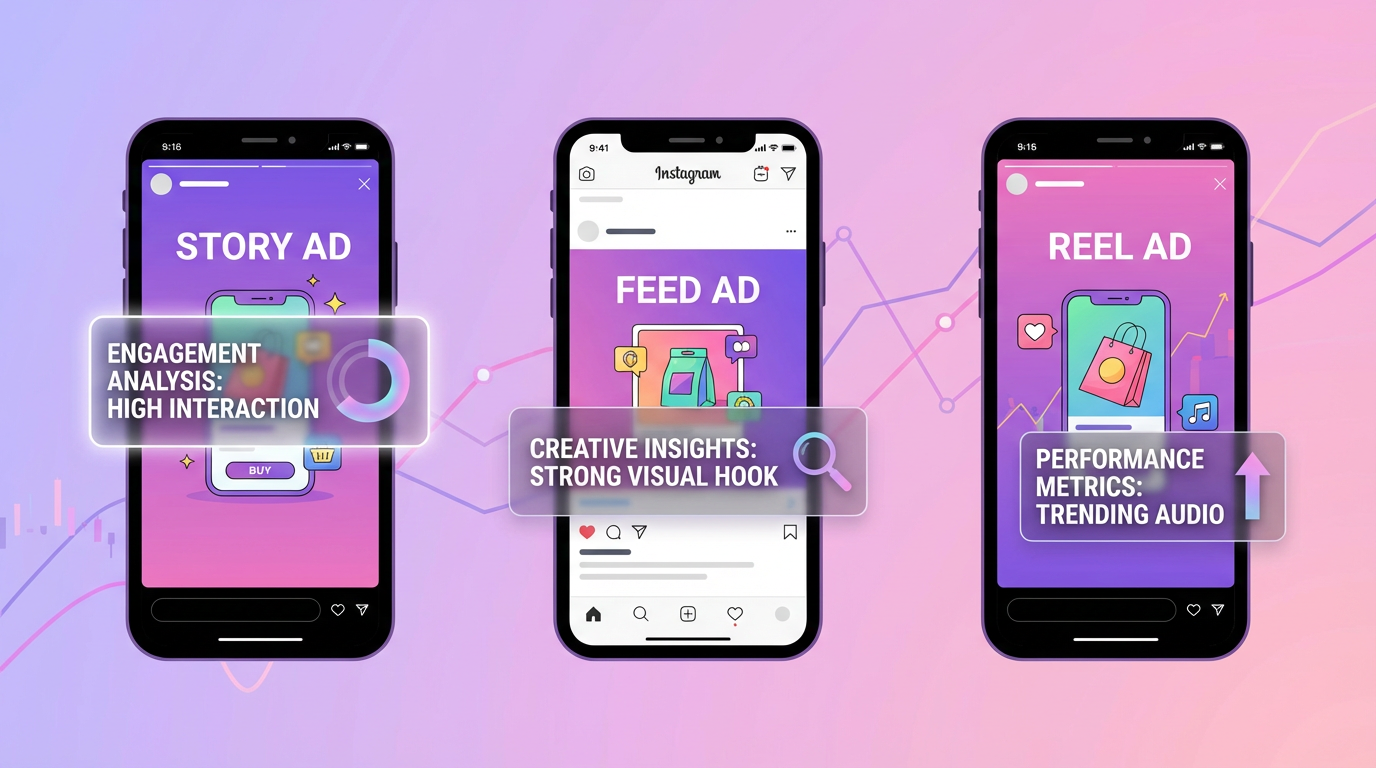
- Feed ads show up as you scroll the main feed. Square or vertical. These skew polished, proper lighting, brand-consistent design. If your competitor runs mostly feed ads, they've decided looking premium matters more than looking authentic.
- Story ads hit you between friends' stories. Full-screen, vertical, ephemeral. The creative tends to be rawer, faster, more urgent. Heavy story investment often signals a budget-conscious competitor squeezing CPMs.
- Reel ads compete directly against native short-form videos. A reel ad that looks like an ad is dead on arrival. If you find a competitor running reel ads that have survived for weeks, study them closely. That creative somehow blends into a native-content feed while still driving commercial action. That's extremely hard to pull off.
The Meta Ad Library doesn't always label placement type, but the aspect ratio gives it away. Square (1:1) = feed. Vertical full-screen (9:16) = story or reel.
Analyze the First Three Seconds
Instagram is a war of attention, and the first three seconds are the entire battle. Everything your competitor knows about hooking their audience is compressed into those opening moments.
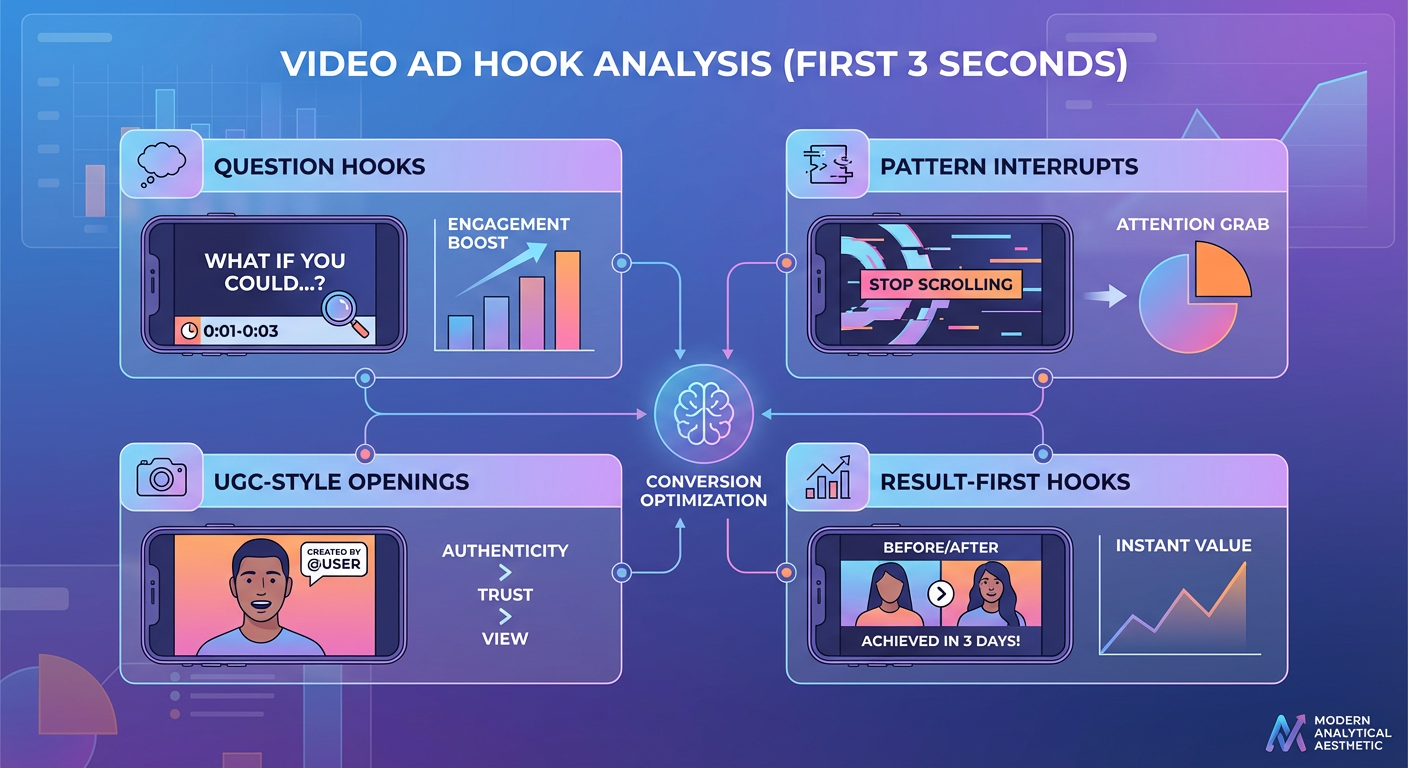
Pull up every video ad and categorize the opening hook:
- Question hooks. "Tired of [problem]?" Works when the pain point is sharp enough to make someone stop mid-scroll.
- Pattern interrupts. Something visually jarring. A hand entering frame, text appearing one word at a time, a sudden zoom. Works by being different from the organic content surrounding it.
- Result-first hooks. "We grew from 0 to 10,000 users in 60 days." Creates a curiosity gap. People need to know HOW.
- UGC hooks. Someone talking to camera, no logo visible, filmed on a phone. Looks like organic content for the first few seconds. If competitors are running UGC hooks and those ads have been live for weeks, their audience trusts real-looking people more than polished brand creative.
Look at the pattern across ALL their ads. If 70% use question hooks, that tells you what structure works with their audience. Since their audience is likely similar to yours, start there.
Map the Visual Language
Track these across your competitor's ad library:
- Color choices. Many brands use off-brand colors in ads because those colors tested better for scroll-stopping. A calm blue brand running screaming orange backgrounds didn't make a mistake. They ran tests and orange won.
- Text overlay density. Meta's own research says ads under 20% text coverage perform better. If a competitor breaks this rule with heavy text AND the ad has been running for months, they found an exception.
- People vs product. Human faces drive engagement. Product screenshots drive conversion. The ratio in a competitor's library reveals whether they're investing more in top-of-funnel awareness or bottom-of-funnel conversion.
- Production quality. Scrappy, phone-shot, lo-fi creative is crushing polished studio work on Instagram right now. If your competitor's longest-running ads look like they were filmed in someone's apartment, resist feeling superior about your production values. Their ugly ads are outperforming your pretty ones.
Why Use an Agent for Instagram Ad Analysis
Manually scrolling through the Meta Ad Library works fine for one competitor. It falls apart when you want to track three or four competitors across Instagram AND Facebook AND TikTok. That's dozens of hours per month.
A PPC competitor analysis agent pulls competitor ad creative across all these platforms in one shot. It categorizes hook types, maps the visual patterns, and spots messaging shifts you'd miss doing this by hand once a month. Pair it with landing page teardowns and you get the full funnel: which creative earned the click, and which experience sealed the conversion.
Your competitors are running their creative R&D lab in public on Instagram. Every dollar they spend on testing is a lesson you get for free. The only investment is building the habit of paying attention.
Try These Agents
- PPC Competitor Analysis Tool — Spy on competitor ads across Google, Meta, TikTok, LinkedIn, and Reddit in minutes
- Landing Page Teardown — Rip apart competitor landing pages for conversion and messaging patterns
- SEO Competitor Analyzer — Uncover what keywords competitors rank for and where the content gaps live
- Market Intelligence Agent — Full-spectrum competitor research covering hiring, reviews, keywords, and news