
How to Track Competitor Social Media Strategy
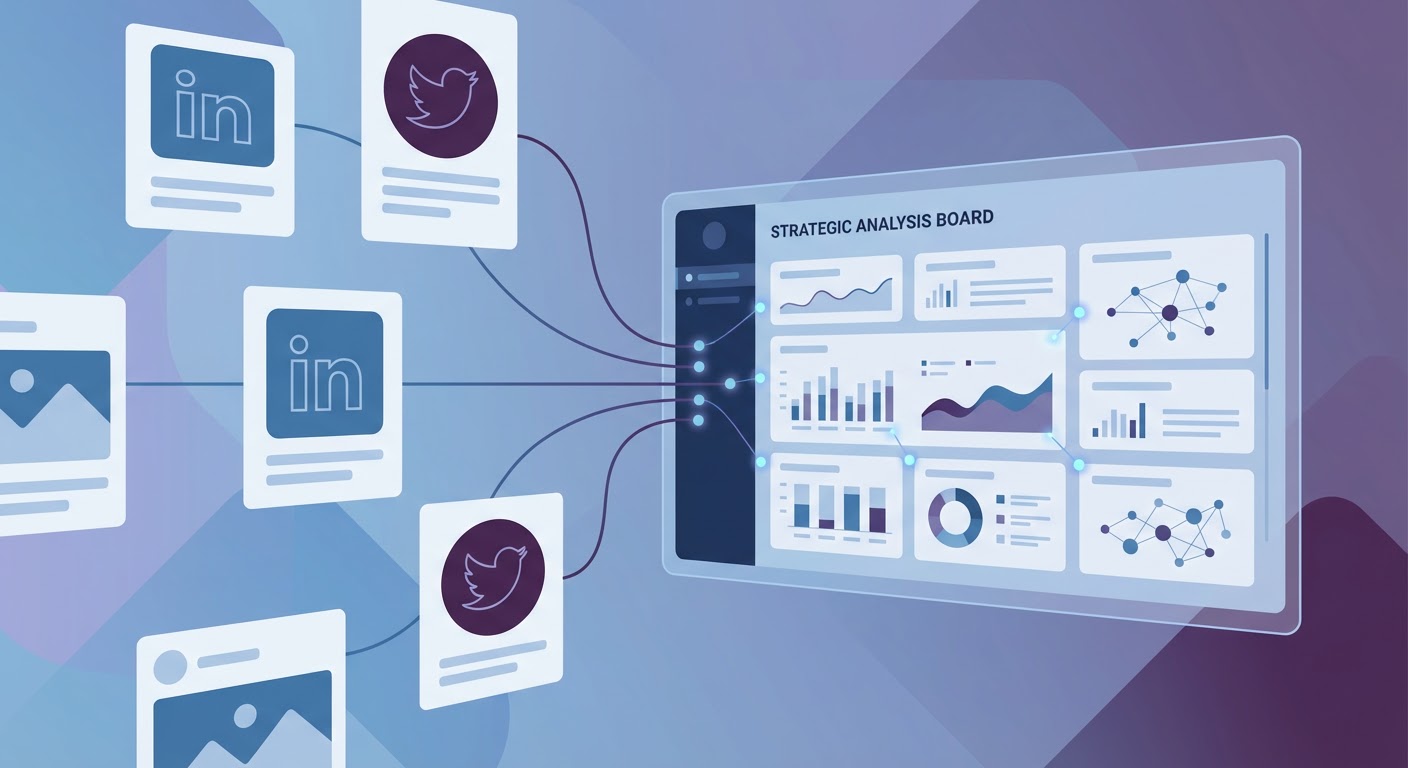
I follow all my competitors' social accounts from a burner account. Not because I'm paranoid — because I don't want my company's social team getting distracted by competitor vanity metrics. "Competitor B got 500 likes on their post!" Okay, but did that post generate pipeline? Nobody knows. Social engagement numbers are the emptiest calories in competitive intelligence.
What's actually useful about tracking competitor social media is the strategy layer underneath the metrics. What are they talking about? What topics are they investing in? Which customer segments are they targeting with their content? Those questions matter. Like counts don't.
My Monday Morning Scroll
I do this every Monday before standup. Takes maybe 15 minutes, usually while eating breakfast. Pull up each competitor's LinkedIn and Twitter, scroll through whatever they posted last week, and look for themes. Not engagement numbers. Themes.
I'm asking myself: did they talk about something new? Are they hammering a specific message harder than usual? Did their comments section blow up or go weirdly quiet? That's the whole framework. Three loose questions while scrolling.
Then I write one sentence per competitor in a running Google Doc. "Competitor A pivoting their messaging to AI this week." "Competitor B won an enterprise deal and won't shut up about it." "Competitor C went completely silent for nine days — layoffs?" Over months, those throwaway one-liners turn into a weirdly accurate strategic timeline. Way more useful than any formal report I've written.
What Social Content Reveals About Business Strategy
When a competitor suddenly shifts their social content themes, something changed internally. I've watched this play out multiple times.
One competitor spent six months posting about SMB use cases. Then, over two weeks, every post shifted to enterprise security and compliance topics. Two months later, they announced an enterprise product tier. The social pivot telegraphed the product strategy months before the launch.
A Twitter competitor content analyzer does this scanning automatically. You feed it a competitor's handle and it maps what they talk about over time, then yells at you when the mix changes. "Hey, Competitor B went from mostly product tweets to half thought leadership and a third customer stories." I would have missed that shift manually because it happened gradually over six weeks.
Hiring content is another tell. One competitor started posting "join our team" stuff three or four times a week — all engineering roles. They were building something. Sure enough, two months later they launched a new product line. The hiring posts were basically a press release nobody read as a press release.
Tracking What Their Audience Says
The comments section on competitor posts is free market research that nobody pays attention to. I found one competitor's LinkedIn post announcing "our new AI feature" that had 50 comments. Half were excited, half were angry about a different feature they'd been waiting on for months. That ratio told me their customer base was getting impatient. I used that in a sales conversation the next day.
Skip the posts and read the comments. People are polite when they email support. They are absolutely not polite in LinkedIn comments.
Social listening alerts pick up conversations that happen away from the competitor's own posts. Someone complaining about Competitor B in a random LinkedIn thread, a Reddit rant about their pricing change, a tweet that doesn't even tag them. That's where people say what they actually think, instead of performing for the brand's social media manager.
The Employee Social Presence
Here's what nobody tells you about competitor social media tracking: the corporate account is the least interesting thing to follow.
Individual employees leak way more strategy than the official page ever will. I follow about six people at each competitor on LinkedIn — their CEO, a couple of product people, someone in sales, someone in marketing. Their personal posts are unfiltered. One competitor's VP of Product kept posting about "building for the enterprise" weeks before the company announced their enterprise tier. A sales leader at another competitor posted about closing a deal in healthcare, which told me they were expanding into a vertical I hadn't seen them target before.
The corporate account would never post something that specific. But people love talking about their wins on LinkedIn.
Brand monitoring catches this stuff at scale. I can't manually check 30 LinkedIn profiles every week, but an agent can flag when someone at Competitor B posts about a new integration, or when a customer of theirs shares a frustration in a comment thread I'd never find on my own.
The Overthinking Trap
I've seen teams build these absurd Notion databases tracking competitor post frequency, engagement rates, sentiment scores, follower growth curves. They spend more time maintaining the database than actually using the insights. Don't be that team.
Social media is a side channel for competitive intelligence. The Monday morning scroll plus an agent running in the background handles 95% of it. You're looking for big signals — a messaging pivot, a new product launch, a sudden silence that suggests internal turmoil. You're not writing a doctoral thesis about their engagement rate trends.
Fifteen minutes a week. One sentence per competitor. Let the agent catch what you miss. That's the whole system.
Try These Agents
- Twitter Competitor Content Analyzer — Content strategy and theme tracking
- Social Listening Alerts — Competitor conversations beyond their own channels
- Brand Monitoring — Cross-platform mention tracking
- Twitter Brand Sentiment Tracker — Audience sentiment monitoring