
AI-Powered Lead Research: Know Everything Before You Call
My worst sales call ever started with "So, tell me about your company." The prospect paused, then said "You called me." Which was true. I'd called him. I knew his name and that he was VP of Engineering at a mid-size SaaS company. That's it. I'd done zero research. He could tell.
The call lasted four minutes. He was polite about it. I was not polite to myself about it afterwards.
That was three years ago, and I've thought about it at least once a week since. Not because it was embarrassing (it was), but because it taught me something I now consider a law of sales: the quality of your first conversation is directly proportional to how much you know going in. More research equals better conversations. Always. No exceptions.
The problem was always time. Proper lead research — the kind that gives you real context, not just a job title — takes 15-30 minutes per lead when you do it manually. At scale, that math breaks. So reps either research deeply for a handful of prospects or skim superficially for all of them.
AI-powered lead research eliminates that trade-off. Deep research for every prospect. That's the whole pitch and it's an honest one.
What "Research" Actually Means in Sales
I need to get specific because "lead research" means wildly different things to different reps.
For some reps, research is reading a LinkedIn headline. That's not research. That's reading a name tag. For other reps, research is a 45-minute deep dive that includes reading the prospect's blog posts, stalking their Twitter, checking if they spoke at any conferences, and reading their company's 10-K filing. That's research, but it's unsustainable for more than a handful of leads.
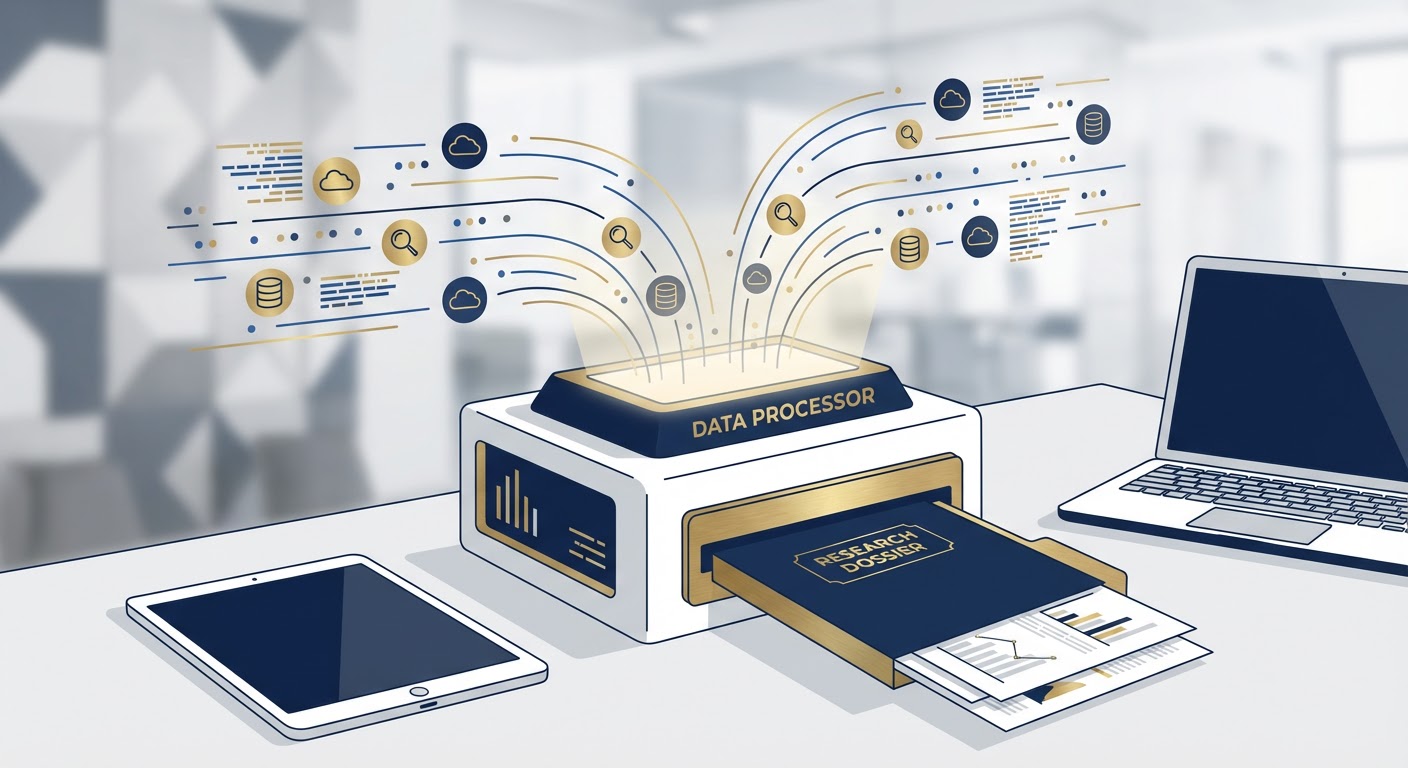
The sweet spot is what I call a "working brief." It's a two-to-three paragraph summary that covers the essentials: what the company does and how they're doing, what changed recently, who you're talking to and what they seem to care about, and why now might be a good time to reach out. This brief takes a human about 20 minutes to assemble. An AI agent builds it in about two.
The working brief is everything you need to have a smart first conversation. You don't need to know the prospect's favorite restaurant. You need to know that their company just raised Series B, they're hiring five engineers, and the person you're calling posted last week about struggling with their current tech stack. That's actionable intel. That's what converts a cold call into a warm one.
Where AI Lead Research Actually Helps
Let me be blunt about what AI does well here and where it falls short.
Cross-referencing multiple data sources fast. A human checking Crunchbase, LinkedIn, G2, news sites, and job boards for one company needs 20 minutes and a lot of tab switching. An agent queries all five simultaneously and returns a synthesized result. The data is the same. The speed is different. For a list of 30 leads, that's the difference between 10 hours of research and 30 minutes.
Catching things humans miss. I've had the agent surface a glassdoor review mentioning frustration with a competitor's product that turned into our best discovery question. Another time it flagged that a prospect's company had quietly acquired a smaller player — something I'd have completely missed doing manual research because I wouldn't have thought to check for acquisitions.
Consistency across the list. Lead number 1 and lead number 50 get identical research depth. No fatigue, no shortcuts, no "I'll just skim this one because I'm tired." This is where AI lead research has the most underrated advantage. When every prospect gets a full brief, you stop having those embarrassing calls where you clearly didn't prepare.
Where it struggles: nuance and judgment. The agent can tell you what a prospect posted on LinkedIn. It can't tell you whether they seem genuinely frustrated or just posting for engagement. It can tell you a company raised $40M. It can't tell you whether the CEO is the type who spends cautiously or goes on a buying spree. That nuance requires a human. The agent gives you the facts; you add the judgment.
Building AI Lead Research Into Your Workflow
The mistake people make is treating AI lead research as a separate activity. "First I'll do research, then I'll do outreach." That's the manual research mindset carrying over. With AI, research should be automatic and invisible. A lead enters your pipeline and the research happens without you clicking anything.
Here's what works for us. When a lead hits our CRM — whether from an inbound form, an Apollo import, or a manual add — an enrichment workflow fires. Company data pulls from Crunchbase. Recent news comes from media monitoring APIs. LinkedIn activity gets scraped. Open job postings get checked. All of that assembles into a brief that lives on the contact record in HubSpot.
By the time a rep clicks on a lead, the brief is already there. They spend 90 seconds reading it, form their angle, and either write an email or pick up the phone. There's no separate "research time" block on their calendar. Research happened while they were doing something else.
The reps who used to resist research now do it for every single prospect because it costs them nothing. Zero extra time. The brief is just sitting there waiting for them. Adoption went from "maybe 30% of prospects get researched" to "100% of prospects get researched" overnight.
Why Use an Agent for This
We started with the Apollo lead research agent for individual deep dives. When a rep wants to go beyond the standard brief — like before an enterprise discovery call or when they're building a business case for a multi-threaded deal — they run a deep research prompt. Career history, mutual connections, publication history, everything available on the person. This used to be the kind of research you'd only do for your top 5 prospects per month. Now every enterprise deal gets it.
For the scaled version, the AI sales prospecting agent runs research across the entire target list. Fifty leads, each with a full brief. Drop them into CRM and the reps start working a pipeline where every contact already has context attached.
The leadership priorities finder is a niche but powerful one. It figures out what a specific executive cares about right now based on their public statements, their company's recent moves, and their industry context. When you know that the CTO you're calling is publicly obsessed with reducing technical debt, your pitch about legacy system migration lands differently.
After implementing AI-powered lead research across our team, first-call-to-meeting conversion went from 22% to 38%. Same reps. Same product. They just stopped going in blind.
Know More, Talk Less
The best sales conversations aren't the ones where the rep talks the most. They're the ones where the rep asks the best questions. And you can only ask good questions when you already know something. AI lead research means you always know something. Your worst-prepared call is still a prepared call. That changes the entire dynamic.
Try These Agents
- Apollo Lead Research — Deep research on individual leads using Apollo enrichment data
- AI Sales Prospecting — Batch research and enrichment across your full prospect list
- Leadership Priorities Finder — Figure out what specific executives care about right now
- Pre-Meeting Research to Notion — Research briefs delivered to Notion before every call