
How to See Competitors' Amazon Ads (and Why Most of What You Find Is Pricing Intel)
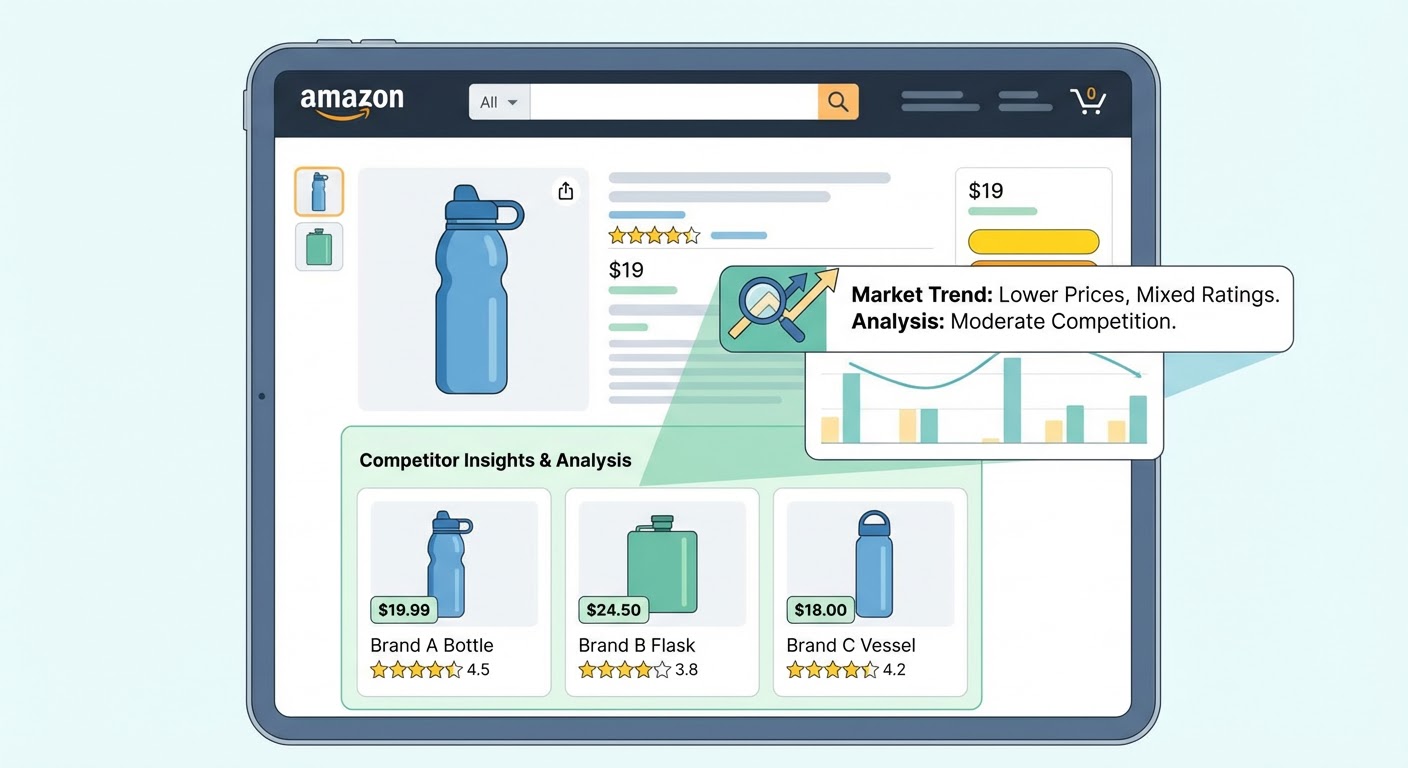
Amazon competitive intelligence is a different animal than Google or Meta ad research. On those platforms, you're mostly looking at messaging and positioning. On Amazon, the competitive intelligence that actually matters is pricing, product listing optimization, and review sentiment. The ads themselves are less interesting than what they're selling and at what price.
I learned this the hard way. I spent a week building an Amazon competitor monitoring system focused on ad creative and sponsored placement tracking. The useful output? Maybe 20% of the effort. The pricing data and product listing changes told me 5x more about competitor strategy than their Sponsored Products ads ever did.
Finding Competitor Amazon Ads
Search for your product category on Amazon. The first few results (and some mid-page placements) labeled "Sponsored" are paid ads. That's your competitor's Amazon advertising, right there. No special tools needed.
For a more systematic approach, search for the keywords you'd want to bid on. If you sell project management software, search "project management tool" on Amazon. The sponsored results show who's paying to appear for those terms. Do this for 10-15 of your target keywords and you'll map out which competitors advertise on Amazon and which keywords they prioritize.
The PPC competitor analysis agent can analyze cross-platform ad strategies including Amazon, though Amazon's walled-garden data limits what any external tool can see. The agent is most useful for understanding how a competitor's Amazon advertising fits into their broader paid media strategy.
Why Pricing Intelligence Matters More Than Ad Creative
A Sponsored Products ad on Amazon is a product image, a title, a star rating, and a price. That's it. There's no room for clever copywriting or emotional messaging. The competitive variables are price, rating, and listing optimization. Everything else is Amazon's algorithm.
This means the real competitive intelligence on Amazon is price monitoring. When did Competitor B drop their price by 15%? When did they launch a new SKU at a lower price point? When did they start bundling products?
A competitor pricing analyzer tracks these changes systematically. You can manually check pricing once a month, but price changes on Amazon happen faster than on most B2B pricing pages. Some categories see weekly fluctuations, especially during promotional periods.
The other intel goldmine is the listing itself. When a competitor changes their product title, bullet points, or A+ content, they're telling you what keywords they're targeting and what benefits they're emphasizing. Track these changes over time and you see their positioning evolve.
Review Intelligence on Amazon
Amazon reviews are more honest than almost any other review platform because buyers have verified purchase status. Read competitor reviews with these questions in mind.
What do buyers wish the product did differently? Those gaps are your product development roadmap. What do buyers compare this product to? Those are your real competitors on Amazon (which might differ from your competitors off Amazon). What made buyers choose this product over alternatives? That's their value proposition in the customer's own words.
The star distribution tells a story. A competitor with mostly 5-star and 1-star reviews (bimodal distribution) likely has a polarizing product — great for some use cases, terrible for others. A competitor with mostly 3-4 star reviews has a "good enough" product that doesn't inspire either passion or outrage. Each pattern suggests different competitive approaches.
Monitoring Changes Over Time
Amazon is dynamic. Prices change, new products launch, listings get optimized, and review counts grow. The companies that win on Amazon monitor these changes rather than just doing a one-time competitive audit.
Set up a monthly review cadence: check competitor pricing, read newest reviews (sort by "most recent"), and note any listing changes. Competitor traffic analysis can show whether competitors are driving external traffic to their Amazon listings from Google, social, or email — a sign of a sophisticated Amazon strategy that goes beyond Amazon's native advertising.
The competitive playbook on Amazon is simpler than on most other channels. Win on price, win on reviews, or win on listing optimization. Monitoring all three tells you exactly how to compete.
Try These Agents
- PPC Competitor Analysis — Amazon ad strategy within broader paid media context
- Competitor Pricing Analyzer — Track competitor price changes and bundling
- Competitor Traffic Analysis — External traffic driving to Amazon listings
- Review Monitoring — Product review tracking and sentiment analysis