
Sales Intelligence vs Lead Generation: Stop Confusing Them
A founder asked me last quarter which sales intelligence platform to buy. I asked what problem he was trying to solve. He said "we need more leads." That's not a sales intelligence problem. That's a lead generation problem. He'd been reading about both for weeks and thought they were the same thing.
He's not alone. I see this confusion constantly. Teams buy ZoomInfo thinking it's a lead gen tool (it's intelligence). Teams buy Apollo thinking it's intelligence (it's primarily lead gen). Then they're confused when the tool doesn't do what they expected, because they bought the wrong category.
So let me draw the line clearly, because getting this wrong costs real money.
The Simplest Way to Think About It
Lead generation answers: "Who should we talk to?"
Sales intelligence answers: "What should we say, and why now?"
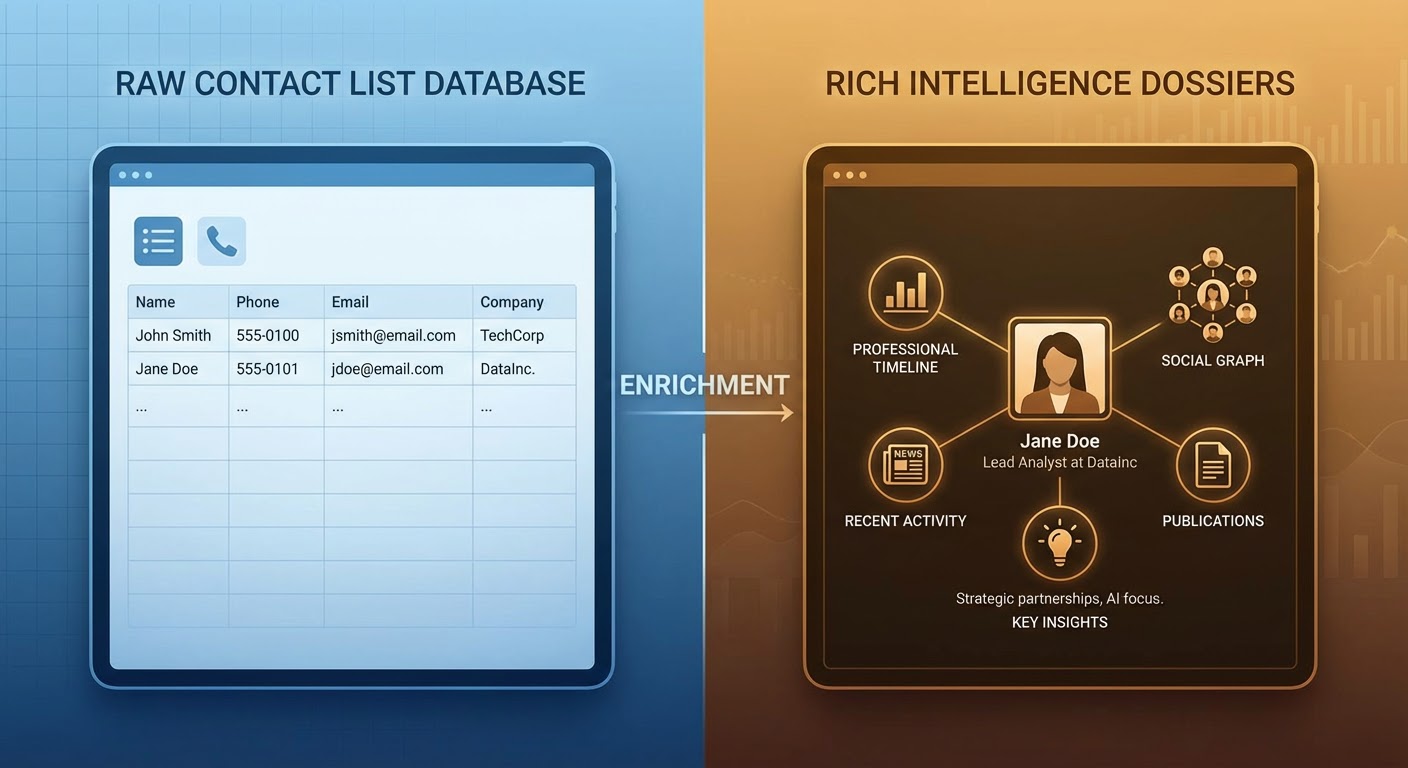
Lead gen gives you a list of names and email addresses that match your ICP. Sales intelligence gives you context about those names — what's happening at their company, what they care about, when the timing is right, and what angle will land.
You need both. But they solve different problems, and mixing them up means you either have a long list of people you know nothing about (lead gen without intelligence) or deep research on a list you haven't built yet (intelligence without lead gen).
What Lead Generation Actually Gives You
Lead gen tools are databases. They store contact information. Names, titles, email addresses, phone numbers, company names, company sizes, industries. Some of them verify emails. Some let you filter by technology stack or funding stage. But at their core, they answer one question: who fits your ICP criteria?
The output is a list. 500 names. 2,000 names. However many match your filters. That list is the starting point, not the finish line.
Where teams go wrong is treating the list as the whole workflow. They pull 1,000 contacts from Apollo, load them into their sequencing tool, and start blasting emails. No research on the companies. No sense of timing. No personalization beyond {first_name} and {company}. And then they're frustrated when the reply rate sits at 1%.
That 1% isn't a lead gen problem. The leads were fine. The problem is that nobody did the intelligence work.
I wrote about this more in the AI lead generation piece — volume without intelligence is just a faster way to fill your spam folder.
What Sales Intelligence Actually Gives You
Sales intelligence is context. It's the answer to "why should this person take my call?" and "what do I say when they pick up?"
Good sales intelligence covers:
- What changed at the company recently (funding, hiring, product launches, leadership changes)
- What the decision maker cares about (based on their LinkedIn posts, conference talks, public statements)
- What their current tech stack looks like (so you know if your product fits)
- What their customers are saying about them (G2 reviews, Glassdoor, Reddit threads)
- What their competitors are doing (so you can reference market pressure)
- Whether there's a timing trigger (budget cycle, contract renewal, expansion plans)
None of that is in a lead gen database. Apollo won't tell you that the VP of Sales just posted a frustrated LinkedIn rant about their CRM. ZoomInfo won't tell you that their biggest competitor launched a feature that makes them nervous. These are the things that make a cold email warm.
The output of sales intelligence is a brief or dossier. Not a list. A paragraph or two per account that tells the rep something they can actually use in conversation.
When You Need Lead Gen vs Intelligence
Here's how I think about the split for different team stages.
Early-stage team (1-3 reps, figuring out ICP): You need lead gen more than intelligence. Your biggest problem is volume — you don't have enough conversations happening to learn what works. Buy Apollo, build lists, get reps on the phone. Research can be light because you're still learning who your buyer is. Save the intelligence investment for when you've nailed the ICP.
Growth-stage team (4-10 reps, ICP is defined): You need both, but intelligence starts mattering more. You've got enough pipeline to see patterns. The difference between a rep who researches and one who doesn't is obvious in their close rates. Start layering intelligence on top of your lead gen so every prospect gets at least a basic research brief.
Mature team (10+ reps, enterprise deals): Intelligence is more important than lead gen. You probably already know your target accounts. You don't need help finding them. You need help timing outreach, personalizing messaging, and understanding what's happening inside those accounts right now. Sales intelligence is the difference between a generic enterprise pitch and an informed one that references specific triggers.
The Overlap (Where It Gets Confusing)
The confusion comes from vendors straddling both categories. Apollo started as lead gen and added intelligence features. ZoomInfo started as intelligence and added lead gen features. 6sense calls itself "revenue intelligence" but also does account identification. Gong is conversation intelligence but also surfaces pipeline insights.
Everyone is expanding into each other's territory, which makes the categories blurry from the outside. But the core functions are still different. Whether Apollo or ZoomInfo sells you both capabilities doesn't change the fact that finding leads and researching leads are two different activities.
My practical advice: audit your current stack by asking which problem each tool solves. If everything you're paying for is lead gen and nothing is intelligence, your reps are flying blind. If everything is intelligence and nothing is lead gen, you've got great research on an empty pipeline.
Why Use an Agent for This
Here's the thing that changed my mind about the whole lead gen vs intelligence debate. With agents, the distinction starts to blur in a useful way. An AI prospecting agent can do both in one pass — search for contacts matching your ICP (lead gen) AND research each one (intelligence). You don't buy two separate tools because the agent chains both tasks together.
The Crunchbase lead prospector finds companies by funding signals, growth patterns, and market position. That's lead gen filtered through intelligence — it's not just finding any company that matches firmographic criteria, it's finding companies where something happened recently that suggests buying intent.
For the pure intelligence side, account research goes deep on individual companies. Funding history, leadership changes, competitive positioning, recent press. This is what you hand a rep before a discovery call so they don't walk in asking "so what does your company do?"
The lead enrichment agent sits in between. Take a list from any source and layer intelligence on top of every record. It's the bridge between "I have 200 leads" and "I have 200 leads and I know something about each of them."
Pick the Right Problem First
Before you buy anything, answer this question honestly: is your pipeline empty or is it full of the wrong people? If it's empty, you need lead gen. If it's full of people who never respond, you need intelligence. If both, start with lead gen (you can't research a list you don't have) and add intelligence once you've got enough contacts to work.
The teams that waste the most money are the ones that buy intelligence tools when they have a lead gen problem, or buy more lead gen when they have an intelligence problem. Get the diagnosis right and the tool choice gets obvious.
Try These Agents
- AI Sales Prospecting — Combined lead gen and intelligence in one research workflow
- Crunchbase Lead Prospector — Find companies by growth signals and funding activity
- Crunchbase Account Research — Deep intelligence briefs on target accounts
- Lead Enrichment — Layer intelligence data onto any existing prospect list