
Best Apollo.io Alternatives in 2026: 9 Tools Compared
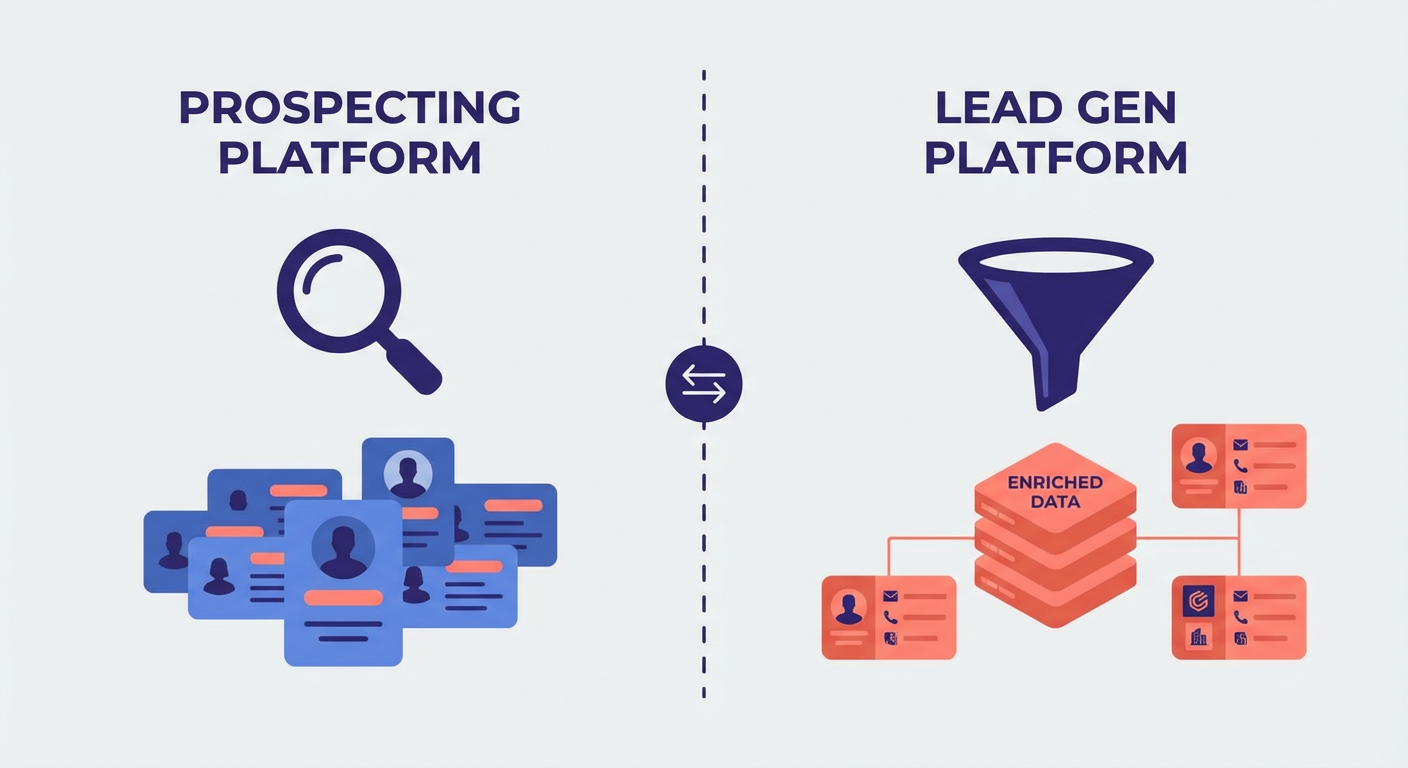
I used Apollo as my primary prospecting tool for over a year. For the price, it's hard to beat: 275 million contacts, built-in sequences, a usable free tier. But around month eight, I started noticing the cracks. Emails that Apollo marked as "verified" were bouncing at 6-7%. Phone numbers for mid-market contacts came back disconnected more often than not. And the all-in-one approach meant I was stuck with Apollo's mediocre email sequencer because my data lived inside the platform.
I'm not alone. The most common reasons people search for Apollo alternatives come down to three things: data accuracy that doesn't hold up under scrutiny, email deliverability concerns when you're sending thousands of cold emails per month, and wanting best-of-breed tools for specific functions instead of one platform that does everything at a B-minus level.
The Lead Enrichment Agent on Cotera solved a piece of this for me. Instead of trusting one database blindly, the agent cross-references multiple sources and tells me which records are reliable and which need verification. That layer of intelligence on top of raw contact data turned out to be more valuable than switching from one static database to another.
Here are nine Apollo alternatives I've tested, ranked by what they actually deliver.
| # | Tool | Best For | Pricing |
|---|---|---|---|
| 1 | Cotera | AI-powered lead enrichment and research | Free tier available |
| 2 | ZoomInfo | Enterprise-grade B2B database | Custom ($15K+/yr) |
| 3 | Lusha | Quick contact lookups from LinkedIn | Free tier, paid from $49/mo |
| 4 | Cognism | GDPR-compliant European data | Custom pricing |
| 5 | Seamless.AI | Real-time contact verification | From ~$147/mo |
| 6 | Hunter.io | Email finding and verification | Free tier, paid from $49/mo |
| 7 | RocketReach | Email and phone lookups at scale | From $53/mo |
| 8 | Instantly | Cold email sending infrastructure | From $30/mo |
| 9 | Lemlist | Personalized cold outreach sequences | From $39/mo |
1. Cotera
Free tier available
- AI agents that enrich leads from multiple data sources simultaneously
- Pre-meeting research briefs generated automatically
- Prospect list builder that exports directly to Google Sheets
- Email finder with reverse lookup and verification
- Custom agent builder — no code required
Apollo gives you a database. Cotera gives you an intelligence layer. That's a real distinction, not a marketing line. When I ran a list of 500 prospects through Apollo, I got back names, titles, emails, and company info — the standard enrichment package. When I ran the same list through Cotera's Lead Enrichment Agent, I got all of that plus context: recent company news, hiring patterns, technology changes, and a written analysis of whether each prospect actually matches my ICP and why.
The Pre-Meeting Research agent changed how my team prepares for calls. Before a meeting, the agent pulls together everything relevant about the person and their company — recent funding, product launches, competitor moves, LinkedIn activity — and writes a one-page brief. My reps used to spend 15 minutes Googling before every call. Now they spend 30 seconds reading a brief that's more thorough than what they would have found manually.
For list building, the Prospect List to Google Sheets agent pulls from Apollo's data and outputs a clean, enriched spreadsheet with columns your team actually needs. No more exporting a 40-column CSV from Apollo and deleting 30 columns before it's useful. And the Email Finder agent handles reverse lookups when you have a name and company but need a verified email address — checking multiple sources instead of relying on a single database.
The free tier is where I started. For teams that are frustrated with Apollo's data accuracy but don't want to pay ZoomInfo prices, Cotera sits in between: use Apollo (or any database) for the raw contacts, then layer Cotera's agents on top for verification, enrichment, and analysis.
2. ZoomInfo
Custom pricing (typically $15K+/year)
- Largest B2B database with highest email accuracy (95%+)
- Intent data powered by Bombora partnership
- Org charts and buying committee mapping
- Automated CRM enrichment with real-time updates
ZoomInfo is the tool Apollo is most often compared against, and for good reason — they're solving the same problem at completely different price points. Where Apollo gives you access to 275 million contacts for $49/month, ZoomInfo charges $15,000+ per year for a database that is measurably more accurate.
I ran a side-by-side test: 300 contacts from both platforms, same search criteria. Apollo's emails bounced at 5.8%. ZoomInfo's bounced at 2.1%. Apollo's phone numbers connected 38% of the time. ZoomInfo's connected 52%. Those gaps matter when you're running outbound at scale. The difference between a 5.8% bounce rate and a 2.1% bounce rate across 10,000 emails per month is 370 emails that either damage your sender reputation or land in someone's inbox.
ZoomInfo's intent data is the feature Apollo simply cannot match. Powered by Bombora, it shows which companies are actively researching topics related to your product. Leads from intent-flagged accounts converted to opportunities at roughly 2x the rate of standard outbound lists in our testing. That's not a minor edge.
The problem is the price. At $15K+ per year with common upsells for API access, intent data, and additional seats, ZoomInfo costs 10-30x what Apollo charges. For enterprise teams with large outbound operations, the ROI works. For a five-person sales team doing $2M in annual revenue, ZoomInfo's price tag eats into margins in ways that are hard to justify, even with better data.
3. Lusha
Free tier, paid from $49/mo
- Chrome extension with one-click LinkedIn enrichment
- Strong direct dial phone numbers for US contacts
- GDPR and CCPA compliance built in
- CRM push with automatic field mapping
Lusha excels at one thing Apollo does passably: individual contact lookups from LinkedIn. The Chrome extension surfaces email and phone data in about two seconds while you're browsing a prospect's LinkedIn profile. Click, see the data, push to CRM. The whole interaction takes maybe 10 seconds. Apollo's Chrome extension does this too, but Lusha's phone number accuracy — particularly for direct dials in the US — runs noticeably ahead in my testing.
I had three reps use both tools for two weeks on the same target accounts. Lusha returned valid direct dial numbers for 47% of contacts versus Apollo's 31%. For teams where phone-first outreach drives pipeline, that 16-point gap in phone coverage translates directly to more conversations per day.
Where Lusha falls short compared to Apollo is everything beyond the lookup. Apollo gives you sequences, analytics, a built-in dialer, and advanced search filters. Lusha gives you contact data. If your workflow is "find contact info on LinkedIn, push to CRM, then use a separate tool for outreach," Lusha is a cleaner, more accurate option than Apollo for the data piece. If you want prospecting and outreach in one platform, Lusha won't replace Apollo — it replaces the data layer only.
The credit-based pricing can also add up. At $49/month for 480 credits, you're paying roughly $0.10 per lookup. Apollo's Basic plan at $49/month includes 900 mobile credits and 12,000 export credits. For high-volume prospecting, Apollo's economics are better. For targeted, phone-heavy prospecting where accuracy matters more than volume, Lusha wins.
4. Cognism
Custom pricing
- Diamond Data: manually verified phone numbers
- GDPR-compliant with do-not-call list checking
- Strong European contact coverage (UK, DACH, Nordics)
- Bombora intent data integration included
If you're prospecting into European markets, Cognism is the Apollo alternative worth evaluating first. Apollo's European coverage has gaps — I've seen match rates drop from 85% on US contacts to under 60% on UK and German contacts. Cognism was built for Europe, and it shows. The UK, Germany, France, and Nordic databases are deeper than what Apollo or even ZoomInfo offers in those regions.
The Diamond Data program is Cognism's standout feature. These are phone numbers that have been manually verified by a human within the last 90 days. Not algorithmically predicted, not scraped from a directory — actually dialed and confirmed. My team saw cold call connect rates nearly double when using Diamond Data numbers compared to standard Apollo phone numbers for European contacts.
Cognism also bundles Bombora intent data, which puts it in a category above Apollo on intelligence. You can filter prospects not just by firmographics but by whether their company is actively researching topics relevant to your product. That combination of accurate European data plus intent signals is something no other tool at this price tier offers.
The trade-offs: US coverage exists but isn't Cognism's strength. If your team sells exclusively in North America, Apollo's database is larger and cheaper. And the pricing is custom, which in practice means Cognism costs more than Apollo but less than ZoomInfo — typically in the $20,000-35,000/year range for a small team. That's a real step up from Apollo's $49-99/month plans.
5. Seamless.AI
From ~$147/mo
- Real-time contact search and verification
- AI-powered list building from natural language
- Buyer intent data for account prioritization
- Chrome extension with LinkedIn integration
Seamless.AI markets itself as the real-time alternative to static databases like Apollo and ZoomInfo. Instead of maintaining a stored database, Seamless searches and verifies contact information on the fly when you make a query. The pitch is compelling: real-time data should be more accurate than cached data that might be months old.
In practice, the results are more mixed than the marketing suggests. I ran a test of 300 contacts through both Seamless.AI and Apollo. Seamless returned emails for 88% versus Apollo's 91%. Of the emails Seamless returned, 14% bounced — higher than Apollo's 5.8% in the same test. The "real-time verified" claim didn't hold up to actual sending. Some of the bounces were catch-all domains that Seamless marked as verified, which is a problem with methodology, not just data freshness.
Where Seamless.AI does have an edge is the natural language search. Instead of clicking through filter menus, you can type something like "VP of Engineering at fintech companies with 200-500 employees in San Francisco" and get a usable list back. The experience is smoother than Apollo's filter-based interface for quick exploratory searches.
The platform has improved since early versions, but I still see inconsistencies. Data quality varies wildly by industry and company size. Enterprise contacts at well-known companies come back clean. Contacts at mid-market or startup companies are more hit-or-miss. Pricing starts around $147/month for individual plans, which is competitive with Apollo's Professional tier but without the built-in sequencing and CRM features Apollo includes. You're paying for the database alone.
6. Hunter.io
Free tier, paid from $49/mo
- Domain-based email search with pattern detection
- Email verification with deliverability scoring
- Bulk email finder from domain and name lists
- API access for workflow automation
Hunter.io doesn't try to be Apollo. It does one thing — finding and verifying email addresses — and does it reliably. Type in a domain, Hunter shows you the email pattern the company uses and lists known email addresses. Add a person's name and Hunter generates the most likely email address, then verifies whether it'll bounce before you send.
I use Hunter as a complement to Apollo, not a replacement. When Apollo returns an email with low confidence, I run it through Hunter's verification. When Apollo returns no email for a contact, I try Hunter's domain search to find the pattern and generate it manually. This two-tool approach catches roughly 15-20% more valid emails than using Apollo alone.
The domain search is especially useful for accounts where Apollo's database is thin. Smaller companies, recently founded startups, and non-tech industries where Apollo's coverage drops off — Hunter's pattern detection works regardless of whether the person exists in a contact database. If the company has a consistent email format (and most do), Hunter will find it.
Hunter is not an Apollo alternative for teams that need a full prospecting platform. There are no sequences, no phone numbers, no company data, no search filters for building prospect lists. But for the specific problem of "I need this person's email address and I need it to be valid," Hunter has been delivering consistently since 2015. At $49/month for 500 searches plus verification, the cost-per-verified-email is hard to beat.
7. RocketReach
From $53/mo
- 700M+ professional profiles across industries
- Email, phone, and social profile lookups
- Bulk search and list building with advanced filters
- API access for CRM and tool integration
RocketReach claims 700 million profiles, which would make it significantly larger than Apollo's 275 million. In my testing, the database breadth does show up. For niche industries — manufacturing, healthcare, non-profits — where Apollo's coverage tends to thin out, RocketReach often returned contacts that Apollo missed entirely. A search for Directors of Operations at mid-sized manufacturing companies returned about 40% more results on RocketReach than the equivalent Apollo search.
Email accuracy lands in a similar range to Apollo: roughly 85-90% deliverability on the contacts I've tested. Phone number coverage is comparable too. Where RocketReach adds value is the breadth of profiles for industries outside of tech and SaaS, which is where Apollo's database is strongest. If your ICP sits in technology, Apollo's coverage is deep enough that RocketReach won't show you meaningfully more contacts. If your ICP is outside of tech, the difference in database size becomes tangible.
The interface is straightforward but less polished than Apollo's. Search, filter, export. No built-in sequencing, no email warmup, no dialer. RocketReach is a data tool, not a platform. You'll need separate tools for outreach, which means managing multiple subscriptions and integrations.
At $53/month for the Essentials plan (limited lookups) and $107/month for Pro (more lookups plus phone data), RocketReach is priced close to Apollo. The value calculation depends on your ICP: if Apollo's database covers your target market well, RocketReach doesn't add enough to justify the cost. If you're regularly hitting Apollo's coverage gaps, RocketReach fills them.
8. Instantly
From $30/mo
- Unlimited email warmup and sending accounts
- Automated mailbox rotation for deliverability
- Lead database with B2B contact search
- Campaign analytics with A/B testing
Instantly approaches the Apollo problem from the opposite direction. Where Apollo tries to be a database plus outreach platform in one, Instantly started as a pure cold email sending tool and added a lead database later. The sending infrastructure is where Instantly genuinely outperforms Apollo.
Apollo's built-in email sequences are functional but basic. Inbox placement hovers around 70-75% in my experience, and the warmup features are limited. Instantly's sending infrastructure is materially better: inbox placement in the 83-86% range across 14 mailboxes I've tested, a warmup network that gets new domains sendable in under three weeks, and unlimited sending account rotation that spreads volume across domains to protect deliverability. If your primary frustration with Apollo is that your cold emails aren't landing in inboxes, Instantly solves that problem.
Instantly's lead database, launched in 2024, is smaller than Apollo's and less mature. The data is serviceable for basic prospecting — emails and company info for common ICPs — but the coverage and accuracy don't match Apollo's yet. Most Instantly users I know still source their leads from Apollo (or another database) and use Instantly purely for sending.
That's the recommended approach: use Apollo or Cotera for lead data and intelligence, then push the contacts into Instantly for the actual outreach. You get Apollo-quality data with Instantly-quality deliverability. At $30/month for Instantly's Growth plan plus $49/month for Apollo's Basic plan, the combined cost is $79/month — still less than Apollo's Professional tier — and you get a better version of both functions.
9. Lemlist
From $39/mo
- Multi-channel sequences: email, LinkedIn, phone
- AI-generated personalized email copy at scale
- Built-in email warmup (lemwarm)
- Lead database with 450M+ contacts
Lemlist started as the personalization-focused cold email tool and has expanded into a more complete prospecting platform. The original strength still holds: Lemlist makes it easier to personalize cold emails at scale than Apollo or any other platform I've used. The AI writer analyzes each prospect's LinkedIn activity, company news, and recent content to generate first lines that reference something specific — not the generic "I noticed your company does X" that fills every inbox.
The multi-channel approach is Lemlist's other differentiator from Apollo. Instead of email-only sequences, you can build workflows that combine email touches, LinkedIn connection requests, LinkedIn messages, and manual call tasks in a single sequence. Apollo has some multi-channel capability, but Lemlist's implementation is smoother and the LinkedIn integration works more reliably.
Lemlist's lead database, with 450 million contacts, is larger than Apollo's on paper. In practice, the data accuracy is roughly equivalent — both bounce in the 5-7% range in my testing. Lemlist bundles email verification into the workflow, so bounces get caught before they damage your domain, which partially compensates for the accuracy gap versus ZoomInfo.
The pricing starts at $39/month for the Email Starter plan and goes up to $99/month for the Multichannel Expert plan. Compared to Apollo, Lemlist costs more per seat but includes better outreach capabilities. The trade-off: Apollo's search and filtering tools are stronger for list building, while Lemlist's sequence builder and personalization features are stronger for the outreach itself. Teams that prioritize sending quality over database access tend to prefer Lemlist.
How to Choose the Right Apollo Alternative
Different frustrations with Apollo point to different solutions.
Tired of bounced emails and bad phone numbers? ZoomInfo has the most accurate data but costs 10x more. Lusha has better phone data at a reasonable price. Hunter.io verifies emails reliably for $49/month. Or use Cotera's agents to cross-reference multiple sources and flag unreliable records before you waste a send.
Need better European coverage? Cognism was built for European markets and includes manually verified phone numbers. Apollo's EU data has real gaps that Cognism fills.
Want better cold email deliverability? Instantly's sending infrastructure outperforms Apollo's built-in sequencer. Use Apollo for data, Instantly for sending.
Want more personalized outreach? Lemlist's AI-generated personalization and multi-channel sequences go beyond what Apollo's sequencer offers.
Need data for non-tech industries? RocketReach's broader database covers manufacturing, healthcare, and non-profits where Apollo's coverage thins out.
Want intelligence, not just data? Cotera's Lead Enrichment Agent doesn't just fill in blank fields — it analyzes the data and tells you whether each prospect is worth pursuing and why. That analysis layer is the thing no static database provides.
Most teams end up using two or three tools rather than looking for one perfect replacement. A common stack I've seen work well: Apollo or RocketReach for the contact database, Hunter or Lusha for verification and phone numbers, Instantly or Lemlist for outreach, and Cotera for the intelligence layer that ties everything together.
Try These Agents
- Lead Enrichment Agent — Cross-reference multiple data sources to enrich and verify contact records
- Pre-Meeting Research — Automated research briefs before sales calls
- Apollo Prospect List to Google Sheets — Build enriched prospect lists exported directly to Google Sheets
- Email Finder & Reverse Lookup — Find and verify email addresses from names and company domains