
Best Crayon Alternatives in 2026: 9 Worth Trying
I used Crayon for about eight months at my last company. The monitoring was solid — it caught a competitor's pricing page overhaul three hours after it went live, which is the kind of thing that used to take us weeks to notice. But three things pushed me to look elsewhere. First, the price. We were paying north of $25K/year, and every renewal came with a conversation about whether we were getting enough out of it. Second, the alert noise. On a busy week we'd get 40+ notifications, and maybe four were worth reading. The rest were footer changes, minor copy tweaks, and blog posts we'd already seen. Third, the platform assumed we had a dedicated CI analyst to manage it. We didn't. We had a product marketer with 11 other responsibilities.
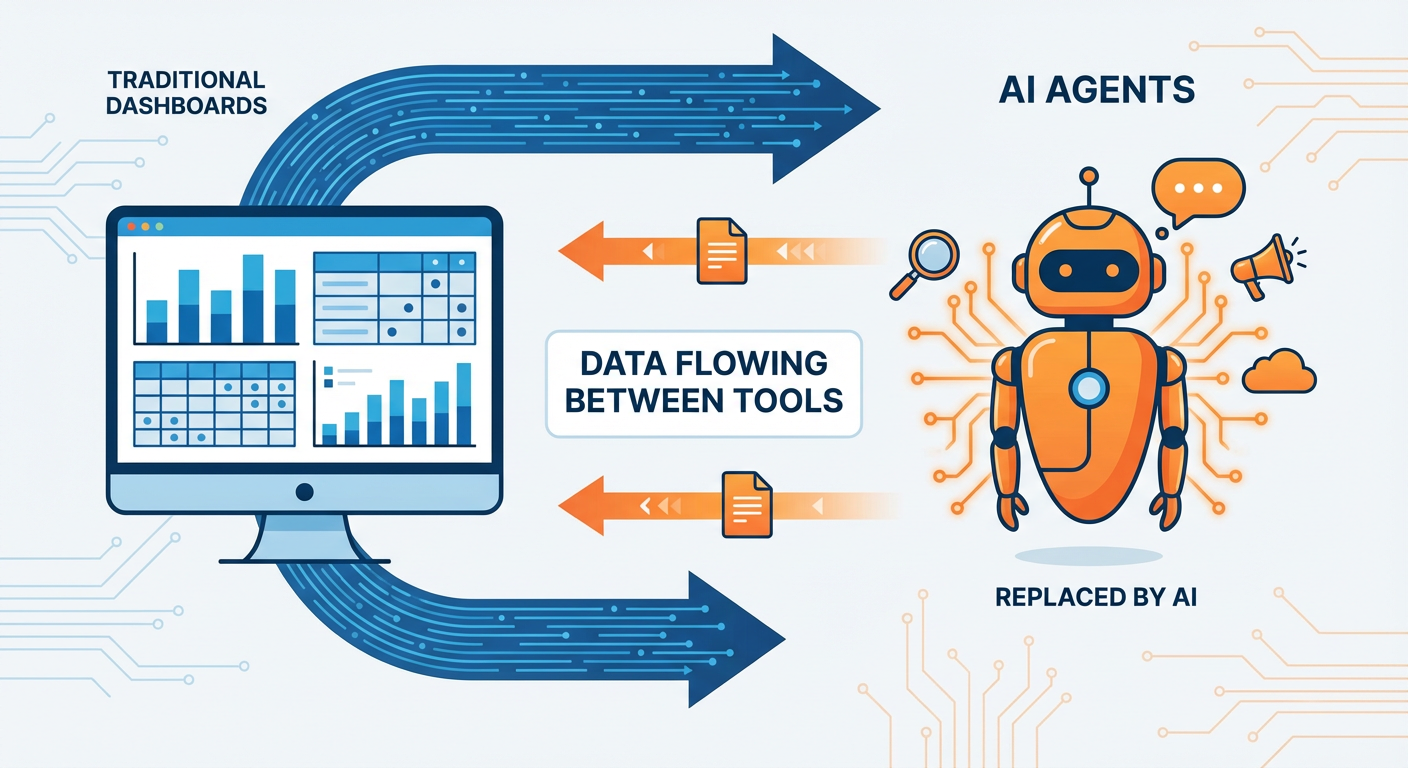
So I went looking. I tested a lot of competitive intelligence tools over the past year, trying to find the mix of monitoring depth, usable insights, and reasonable cost that Crayon promises but doesn't always deliver. The Competitor Pricing Analyzer on Cotera was the first thing that made me realize the whole dashboard-and-alerts model might be the wrong approach. Instead of a platform I had to manage, it was an agent that went and got answers.
Here are nine alternatives worth considering, whether you're leaving Crayon or trying to avoid signing up in the first place.
| # | Tool | Best For | Pricing |
|---|---|---|---|
| 1 | Cotera | AI agent platform for competitor intelligence | Free tier available |
| 2 | Klue | Sales battlecards & win/loss analysis | Custom pricing |
| 3 | Kompyte | Automated competitor website monitoring | Custom pricing |
| 4 | Semrush | SEO & paid search competitive data | From $130/mo |
| 5 | SimilarWeb | Website traffic intelligence | Custom pricing |
| 6 | Brandwatch | Social media & consumer intelligence | Custom pricing |
| 7 | G2 | B2B review & buyer intent data | Custom pricing |
| 8 | Contify | News & market intelligence curation | From $999/mo |
| 9 | Cipher | Strategic competitive intelligence | Custom pricing |
1. Cotera
Free tier available
- AI agents for pricing, traffic, review, and hiring intelligence
- Monitors competitors automatically — no manual checking
- Pulls from live web data, not a static database
- Custom agent builder for any competitive question
- Free tier covers most competitive monitoring needs
Crayon gives you a dashboard. Cotera gives you agents that go find answers. That distinction matters more than it sounds. With Crayon, you configure monitoring, wait for alerts, then sift through a feed to find what matters. With Cotera, you tell an agent what you need to know — "track how Competitor X prices their enterprise tier" or "show me what Competitor Y's customers complain about" — and it comes back with analysis, not raw alerts.
The Competitor Pricing Analyzer tracks how competitors position and price their products, flagging changes before your prospects mention them in a deal. That was the feature Crayon did well, but the Cotera agent gives you context alongside the data. It doesn't just say "pricing page changed." It tells you what changed, how it compares to your pricing, and what the shift might mean strategically.
The Competitor Traffic Analysis agent monitors competitor website traffic and channel mix, showing where they're investing in acquisition. The Competitor Review Analysis agent pulls reviews and identifies product gaps. The Competitor Hiring Tracker watches job postings to predict strategy shifts — if a competitor starts hiring a wave of enterprise sales reps, that tells you something before any press release does.
I started with the free tier and ran four agents against our top three competitors. Within a week I had more actionable intelligence than the previous quarter of Crayon alerts had produced. The limitation is that you need to know what questions to ask. Cotera doesn't pre-build a competitive dashboard for you — you build agents that answer specific questions. For teams that know their blind spots, that flexibility is a strength. For teams that want someone else to set up monitoring for them, Crayon's pre-built workflows might feel easier on day one.
How it compares to Crayon: Cotera replaces the dashboard-and-alert model with an agent model. Lower cost (free tier available vs. $25K+/year), deeper analysis per query, but requires more upfront thinking about what questions to ask.
2. Klue
Custom pricing
- AI-powered competitive battlecards for sales teams
- Win/loss analysis integration
- Salesforce and HubSpot native integrations
- Competitive revenue impact measurement
Klue attacks competitive intelligence from the sales enablement side. If your main reason for using Crayon is battlecards — those competitive comparison docs reps pull up during deals — Klue does that piece better. The AI-assisted battlecard creation drafts sections from your competitor data, product marketing edits and approves them, and the cards distribute through Salesforce or HubSpot. They show up contextually when a competitor is tagged on an opportunity.
What Klue does that Crayon doesn't is close the loop. It measures how often battlecards are viewed and correlates that with win rates. So you can actually see whether your competitive content helps close deals or just sits there. The win/loss analysis integration feeds deal outcomes back into the intelligence, so battlecards update based on what's actually happening in the field.
Where Klue falls short compared to Crayon is monitoring depth. Klue tracks competitors, but not as comprehensively. It's more of a complement to the enablement workflow than a standalone competitive research tool. If you want both strong monitoring and strong enablement, you might pair Klue with a monitoring-focused tool like Cotera or Contify.
How it compares to Crayon: Better battlecard system and win/loss tracking. Weaker raw monitoring. Similar price range for enterprise plans. Better if your main CI use case is arming reps; worse if your main use case is competitive research.
3. Kompyte
Custom pricing
- Automated website change detection and alerts
- SEO, content, and ad monitoring
- AI-summarized competitive updates
- Battlecard creation from tracked changes
Kompyte, acquired by Semrush in 2022, automates the specific thing Crayon does best: catching what changed. It monitors competitor websites, landing pages, blog posts, social media, and ad campaigns, then sends you alerts when something moves. Pricing page updated? Alert. New comparison page targeting you? Alert. Homepage headline rewritten? Alert.
The overlap with Crayon is obvious and intentional. Kompyte tends to be lighter-weight and more affordable, making it a better fit for teams that want Crayon's monitoring without the full enterprise enablement platform. The AI summarization helps with the noise problem that plagues both tools — instead of "this page changed," you get a summary of what changed and why it might matter.
The Semrush integration is a real advantage. You can pair Kompyte's change monitoring with Semrush's SEO and traffic data in a single ecosystem. If you're already a Semrush customer, adding Kompyte is a natural extension. The downside is that Kompyte's standalone identity is fading as it merges deeper into the Semrush product suite. Its roadmap and pricing may become less predictable as Semrush absorbs it.
How it compares to Crayon: Very similar monitoring, less polished enablement. Generally cheaper. If you use Crayon mostly for website change alerts and don't need the full battlecard platform, Kompyte covers the core use case for less.
4. Semrush
From $130/mo
- Traffic analytics with competitor benchmarking
- Keyword gap analysis across competitors
- Backlink analysis and link building opportunities
- Advertising research for PPC intelligence
Semrush is an SEO tool. I know. But the competitive analysis features are strong enough to replace a chunk of what people use Crayon for, especially if your competitive questions are about digital marketing. You can pull estimated traffic numbers for any competitor domain, see channel breakdowns, and watch trends over time. The keyword gap analysis shows exactly which search terms competitors rank for and you don't. That's intelligence you can act on the same week.
The advertising research feature lets you see competitor Google Ads history: which keywords they bid on, estimated ad spend, and ad copy. For teams running paid search, this is borderline unfair. You can reverse-engineer a competitor's PPC strategy from their history.
The limitation is obvious. Semrush views competitive intelligence through an SEO lens. It answers "what is this competitor doing in search?" but not "what is this competitor doing in their business?" You won't get pricing intelligence, product launch tracking, or hiring signals. If your competitive questions live in the digital marketing world, Semrush covers them well at $130/mo instead of $25K/year. If your questions are broader, Semrush is a complement, not a replacement.
How it compares to Crayon: Much cheaper. Much deeper on SEO and paid search data. Much weaker on general competitive monitoring (no website change tracking, no messaging analysis, no battlecards). A good partial replacement for marketing-focused teams.
5. SimilarWeb
Custom pricing (free tier available)
- Most accurate website traffic estimation available
- Audience overlap and referral source analysis
- Industry benchmarking with market share data
- App intelligence for mobile competitive analysis
When someone asks "how much traffic does this competitor get?" the answer usually comes from SimilarWeb. Its traffic estimation is the most accurate on the market — not perfect, but consistently closer to reality than other tools. The free tier gives you basic traffic numbers and top sources. The paid product breaks it down by geography, channel, referral source, and audience demographics.
The audience overlap feature is worth highlighting. It shows which websites share visitors with your competitors, which tells you where your target audience spends time online. If 40% of a competitor's visitors also visit a specific industry blog, that's a signal about where to spend your marketing budget. Crayon doesn't offer this kind of audience-level intelligence.
SimilarWeb's pricing is the drawback. The free tier is useful for quick checks but limited. The paid plans are enterprise-oriented and custom-quoted, which usually means expensive. For teams that need traffic intelligence as a regular part of their competitive process, SimilarWeb is the standard. For occasional lookups, the free tier plus Semrush covers most needs.
How it compares to Crayon: Completely different capabilities with almost no overlap. SimilarWeb gives you traffic and audience data. Crayon gives you monitoring and enablement. They complement each other rather than compete. If you leave Crayon, SimilarWeb fills the "competitor traffic" gap but not the monitoring gap.
6. Brandwatch
Custom pricing
- Social media monitoring across all platforms
- Consumer sentiment analysis with AI classification
- Trend detection and crisis alerting
- Historical social data going back years
Brandwatch monitors what people say about your competitors on social media, forums, news sites, and blogs. Crayon tracks competitor-owned content (their website, their blog, their pricing page). Brandwatch tracks what everyone else says about them. That's a different and sometimes more valuable layer of intelligence.
The AI-powered sentiment analysis classifies mentions as positive, negative, or neutral and tracks trends over time. If a competitor launches a product update and the social reaction is overwhelmingly negative, you'll see it in Brandwatch before it shows up in review scores or churn data. That early signal is worth something.
Brandwatch is enterprise software with enterprise pricing and enterprise complexity. It takes real setup time to configure queries, filters, and dashboards. For small teams, tools like Mention or even Google Alerts cover basic social monitoring. Brandwatch is for organizations that treat social intelligence as a standing function, not a side project.
How it compares to Crayon: Different data sources entirely. Crayon monitors competitor-owned channels. Brandwatch monitors third-party conversations about competitors. If social sentiment and brand perception are where your competitive gaps live, Brandwatch fills a hole that Crayon doesn't address. But it won't replace Crayon's website monitoring or battlecard features.
7. G2
Custom pricing
- Largest B2B software review database
- Competitive comparison grids and reports
- Buyer intent signals from in-market researchers
- Category-level market positioning data
People use G2 to pick software. I use it to study competitors. Every G2 review contains structured data: what the buyer liked, what annoyed them, what they switched from, what they wish was different. Read five reviews and you get anecdotes. Read five hundred and you get patterns. I found that over a third of one competitor's negative reviews mentioned slow support response times. That became a talk track for our sales team the same week. You can also identify what keeps their customers loyal by looking at what gets praised consistently.
The G2 Grid reports show category positioning based on customer satisfaction and market presence. Watching your position relative to competitors over time tells you whether you're gaining or losing ground. Crayon can pull in G2 data, but going to the source gives you more detail and context.
The limitation is that G2 intelligence is backward-looking. Reviews tell you what happened months ago. A competitor could launch a whole new product line and G2 won't reflect it until people start reviewing it. Use G2 alongside something that tracks real-time changes — that's where a tool like Cotera or Kompyte fills the gap.
How it compares to Crayon: G2 gives you customer perception data that Crayon doesn't collect natively. Crayon gives you real-time monitoring that G2 can't. They're complementary. If you're leaving Crayon and want to understand why competitors win and lose deals, G2's review data is more useful than Crayon's website change alerts.
8. Contify
From $999/mo
- AI-curated market and competitive news feeds
- Custom taxonomy and tagging for intelligence
- Newsletter and digest creation tools
- API for integrating intelligence into workflows
Contify is the closest thing to a direct Crayon replacement for the monitoring piece. It aggregates news, company updates, regulatory filings, and industry content into a curated intelligence feed. The AI tagging organizes everything by competitor, topic, and relevance — so instead of a firehose of alerts, you get a structured feed you can actually read.
The newsletter and digest tools are where Contify differentiates from Crayon. If part of your job is sending weekly competitive updates to leadership or the sales team, Contify makes that output clean and professional. You can build custom digests filtered by competitor, topic, or business unit and distribute them automatically.
The pricing starts at $999/mo, which is more accessible than Crayon's $25K+/year but still a meaningful investment. Contify's strengths are in breadth of news coverage and customization of intelligence delivery. Its weakness compared to Crayon is the lack of website change monitoring. Contify tracks what's published about competitors, not what competitors change on their own sites. For that, you'd need to pair it with Kompyte or a tool like Visualping.
How it compares to Crayon: Similar role (competitive intelligence curation), lower price, different data emphasis. Contify is stronger on news and market intelligence aggregation. Crayon is stronger on website monitoring and battlecard enablement. If you used Crayon primarily for its curated intelligence digests, Contify is the natural replacement.
9. Cipher
Custom pricing
- Strategic competitive intelligence analysis
- Market landscape and positioning reports
- Custom research and advisory services
- Knowledge management for CI teams
Cipher sits at the strategic end of competitive intelligence. Where Crayon focuses on operational monitoring (what changed this week?), Cipher focuses on strategic analysis (what does the competitive landscape look like over the next 12 months?). If your CI function reports to strategy or the executive team rather than product marketing, Cipher's approach aligns better with those conversations.
The platform includes knowledge management tools for organizing competitive research, market landscape analysis, and custom advisory services. That last part is unusual — Cipher blends software with consulting, which means you get human analysts alongside the platform. For complex markets where automated monitoring misses nuance, human analysis fills the gap.
The drawback is that Cipher is built for large enterprises with dedicated CI teams and budgets to match. The pricing is custom and on the high end. The platform is less intuitive than Crayon for day-to-day use. If you need quick operational intelligence (what did Competitor X change this week?), Cipher is over-engineered for that. If you need quarterly competitive landscape briefings for the board, it's purpose-built.
How it compares to Crayon: Different scope entirely. Crayon is operational and tactical (daily monitoring, battlecards). Cipher is strategic (market analysis, long-term positioning). If you're leaving Crayon because it didn't help with strategic planning, Cipher addresses that. If you're leaving Crayon because it was too expensive for what it does, Cipher will cost more.
How to Choose
Different reasons for leaving Crayon point to different alternatives.
Crayon was too expensive for what you got? Cotera's free tier covers pricing, traffic, review, and hiring intelligence through AI agents. Kompyte offers similar monitoring at a lower price. Semrush covers the digital marketing competitive angle for $130/mo.
Crayon's alerts were too noisy? Cotera's agent model eliminates the alert problem entirely — you ask for intelligence when you need it instead of filtering a firehose. Contify's AI-curated feeds are less noisy than Crayon's raw monitoring.
Crayon's battlecards weren't good enough? Klue is purpose-built for battlecard creation, distribution, and measurement. It does that one thing better than anyone.
Crayon didn't cover social or brand intelligence? Brandwatch monitors what people say about your competitors across social, forums, and news. G2 gives you structured review data for B2B competitors.
Crayon was too tactical — you needed strategic analysis? Cipher provides market landscape analysis and strategic advisory alongside its platform.
Most teams leaving Crayon end up with two or three tools instead of one platform. A common stack: Cotera for AI-powered competitive analysis, Semrush or SimilarWeb for traffic and SEO data, and G2 for review intelligence. Start with whichever gap Crayon left open and build from there.
Try These Agents
- Competitor Pricing Analyzer — Track competitor pricing changes and positioning shifts
- Competitor Traffic Analysis — Monitor competitor website traffic and channel mix
- Competitor Review Analysis — Analyze competitor reviews for product gaps and opportunities
- Competitor Hiring Tracker — Track competitor hiring patterns to predict strategy shifts