
Best Lever Alternatives in 2026: 9 ATS Tools Compared
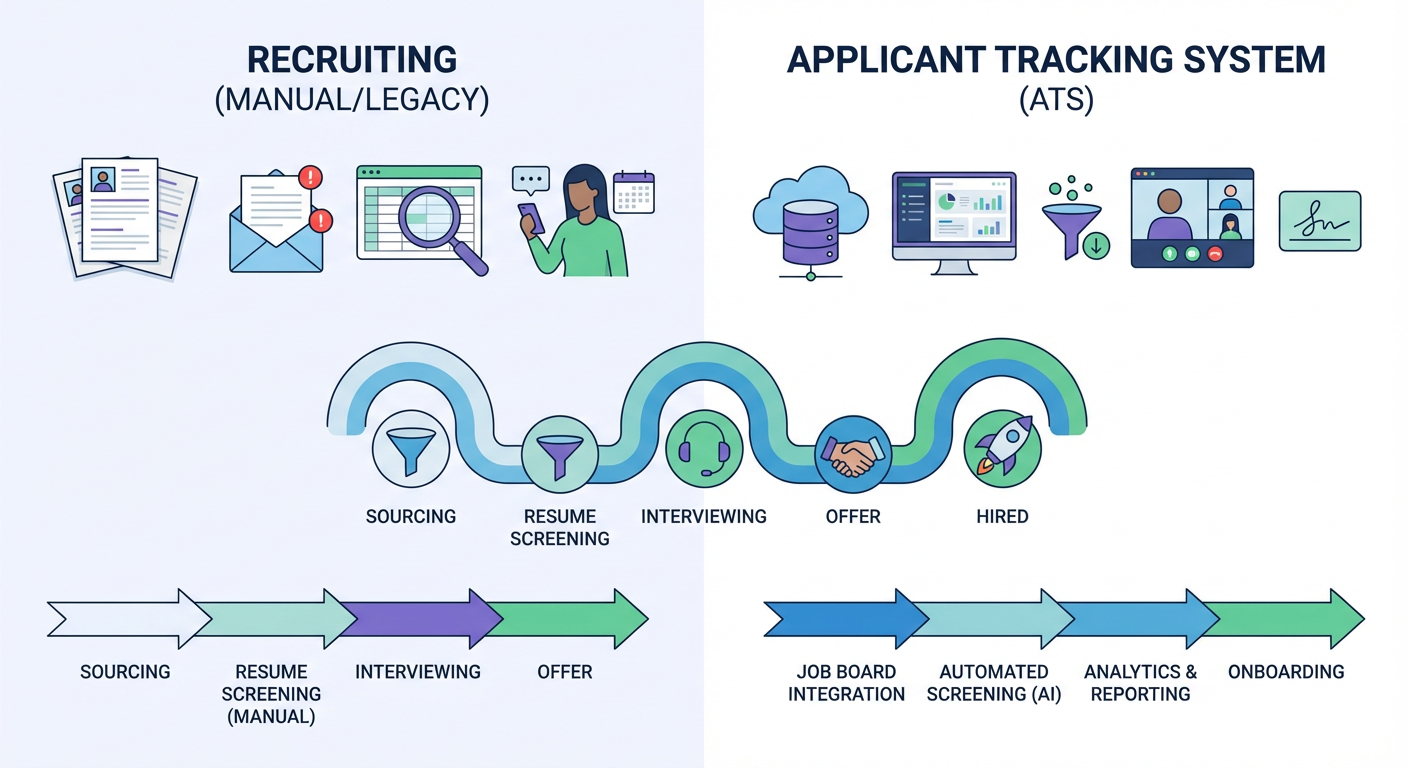
I used Lever for two years as our primary ATS. It worked fine at first. The CRM features were ahead of most competitors, candidate nurturing was smooth, and the combined ATS-plus-CRM model meant we weren't paying for two separate systems. But as our hiring scaled past 50 roles per quarter, the cracks showed up. Reporting felt limited unless we paid for the Advanced Analytics add-on. The sourcing tools lagged behind what Ashby and Greenhouse were shipping. And every time I wanted to pull candidate pipeline data into our ops workflow, I was either exporting CSVs or fighting the API.
The real frustration was operational. Recruiting teams generate a ton of unstructured data — resumes, interview notes, offer negotiations, pipeline stage transitions — and Lever treats most of it as static records. I wanted something that could actually work with that data. The AI Candidate Sourcer on Cotera was the first tool that clicked for me. Instead of manually building boolean searches and hoping Lever's sourcing extension caught the right profiles, the agent pulls candidates from multiple channels and scores them against your job requirements automatically.
Here's the full ranking of nine Lever alternatives I've evaluated.
| # | Tool | Best For | Pricing |
|---|---|---|---|
| 1 | Cotera | AI agents for recruiting operations | Free tier available |
| 2 | Greenhouse | Structured hiring at scale | From ~$6,000/yr |
| 3 | Ashby | Modern all-in-one ATS with analytics | From $400/mo |
| 4 | Workable | Fast setup for growing teams | From $169/mo |
| 5 | BambooHR | HR suite with built-in ATS | From ~$6/employee/mo |
| 6 | JazzHR | Budget ATS for small teams | From $49/mo |
| 7 | Recruitee | Collaborative hiring workflows | From ~$301/mo |
| 8 | Pinpoint | Employer branding and candidate experience | From ~$345/mo |
| 9 | Breezy HR | Visual pipeline with free tier | Free plan, paid from $157/mo |
1. Cotera
Free tier available
- AI agents that source candidates across multiple channels
- Automated resume screening against job requirements
- Pipeline analytics and recruiting workflow automation
- LinkedIn talent search with AI-powered matching
- Custom agent builder for any recruiting task
Lever gives you a system of record. Cotera gives you a system that actually does the work. That's not a subtle difference. When I ran our engineering hiring pipeline through Lever, I spent hours each week on manual tasks: screening resumes, building sourcing lists, writing outreach, pulling pipeline reports. When I layered Cotera's agents on top, those hours dropped to minutes.
The AI Resume Screener changed how we handle inbound applications. Instead of a recruiter spending 30 seconds per resume and inevitably pattern-matching on school names and employer logos, the agent reads the full resume, compares it against the job description, and writes a paragraph explaining why each candidate is or isn't a fit. Our interview-to-offer ratio went up because we stopped advancing people who looked good on paper but didn't match the actual requirements. The LinkedIn Talent Search agent handles the sourcing side — give it a role description and it finds matching profiles, scores them, and drafts personalized outreach.
What separates Cotera from Greenhouse or Ashby is that it's not trying to replace your ATS. It sits on top of whatever system you already use and automates the parts that eat recruiter time. The Recruiting Pipeline Builder agent connects to your existing data and builds the pipeline reports your ops team actually wants, without the $15,000 analytics add-on that Lever charges for. The free tier is real — you can run agents and see results before you pay anything.
2. Greenhouse
From ~$6,000/year (custom quotes)
- Structured interview kits with scorecards
- DEI tracking and bias-reduction tools
- Integrations with 400+ job boards and HR tools
- Customizable approval workflows and requisitions
- Advanced reporting with source-of-hire analytics
Greenhouse is the ATS that recruiting teams at mid-to-large companies default to when they outgrow Lever. The structured hiring framework is the reason. Every interview stage gets a scorecard with defined competencies, every interviewer fills out the same evaluation form, and hiring decisions get made from a data table instead of a hallway conversation. If your team has been winging interviews with unstructured "culture fit" questions, Greenhouse forces discipline into the process.
The DEI tools are where Greenhouse has built real distance from Lever. Anonymous resume review strips identifying information before screeners see candidates. The reports show exactly where underrepresented candidates drop out of your funnel — application, phone screen, onsite, offer — so you can pinpoint where bias might be creeping in. Lever has some diversity features, but they feel bolted on. Greenhouse's feel native.
The downside is cost and complexity. Greenhouse starts around $6,000 per year for small teams, but mid-market companies regularly pay $30,000-50,000 annually once you add modules and seats. Implementation takes 4-8 weeks with professional services. And the interface, while powerful, has a steeper learning curve than Lever's. Hiring managers who only log in a few times per quarter to review candidates often find Greenhouse overwhelming. If your team is under 100 employees and hiring at a moderate pace, Greenhouse might be more system than you need.
3. Ashby
From $400/mo
- Built-in analytics with real-time recruiting dashboards
- CRM and sourcing tools included in one platform
- Scheduling automation with interviewer load balancing
- AI-powered candidate matching and outreach
- Customizable pipelines with granular permissions
Ashby is what Lever would look like if it were rebuilt from scratch in 2023 with better analytics and a more opinionated product vision. The all-in-one pitch is the same — ATS, CRM, scheduling, sourcing, analytics in one tool — but Ashby executes it at a higher level in almost every category.
The analytics are the standout. Where Lever charges extra for its Advanced Analytics add-on, Ashby includes real-time dashboards in every plan. Time-to-fill by role, source effectiveness, interviewer calibration, pipeline conversion by stage — the reports that recruiting ops teams build manually in spreadsheets are just there, updating live. I've talked to three different TA leaders who switched from Lever to Ashby, and all three said the reporting alone justified the move.
Ashby's trade-off is price and maturity. At $400 per month minimum, it's more expensive than Lever for small teams, and the per-seat costs climb quickly. The platform is newer than Greenhouse or Lever, which means the integration ecosystem is smaller. If you rely on a niche HRIS or background check provider, double-check that Ashby supports the connection before you commit. And because Ashby is iterating fast, the product changes frequently — a feature you demoed last month might look different when you sign the contract.
4. Workable
From $169/mo
- One-click posting to 200+ job boards
- Built-in AI candidate scoring and recommendations
- Self-scheduling interview links
- Video interview and assessment tools included
- Onboarding module for post-hire workflows
Workable targets the gap between "we've outgrown posting jobs on LinkedIn manually" and "we're not ready to spend $30K on Greenhouse." The setup takes a day, not a month. You create an account, post a job, and start receiving applications through a branded careers page. No implementation consultants, no six-week onboarding project.
The AI candidate scoring is something Workable shipped before most competitors. When applications come in, Workable's AI ranks them based on how well they match the job description. It's not perfect — the scoring can over-weight keyword matches — but it saves time when a job posting generates 300 applications in the first week and your recruiter needs to decide which 30 to screen first. Workable also just launched Workable Agent, an AI recruiting assistant included on all plans, which handles tasks like sourcing recommendations and candidate communication.
Where Workable falls short compared to Lever is the CRM functionality. Lever was built as a combined ATS and CRM, which means candidate nurturing, talent pools, and re-engagement campaigns come naturally. Workable's CRM features exist but feel like an afterthought. If you're running a high-touch recruiting operation where sourced candidates outnumber inbound applicants, Lever's CRM roots give it an edge. But if most of your hiring is inbound — job postings, career pages, referrals — Workable covers the workflow at a lower price point and with less admin overhead.
5. BambooHR
From ~$6/employee/mo
- Full HR platform: payroll, benefits, time tracking, ATS
- Candidate pipeline with drag-and-drop stages
- Offer letter templates with e-signature
- Employee onboarding workflows built in
- Mobile app for hiring manager approvals
BambooHR is the pick for companies that want one platform for HR and recruiting, not two separate systems. The ATS is a module inside a broader HR suite that handles payroll, benefits administration, time tracking, performance reviews, and employee records. For small businesses that are currently running HR out of spreadsheets and Google Forms, BambooHR replaces all of it at once.
The ATS itself is straightforward. Post a job, candidates flow into a pipeline, hiring managers review and leave feedback, you send an offer letter with e-signature. It handles the basics well. The per-employee pricing starting around $6/month means a 50-person company pays roughly $300/month for the full HR platform, ATS included. That's less than Lever's entry-level plan by a wide margin.
The catch is that "handles the basics" is all it does on the recruiting side. There's no sourcing automation, no advanced search filters, no CRM for nurturing passive candidates, and no analytics beyond basic pipeline counts. If your company hires 5-15 people per year and your HR team is two people, BambooHR is perfectly adequate. If you're hiring 50+ people per year and have dedicated recruiters running structured processes, BambooHR's ATS will feel like a toy compared to Lever. It's a great HR platform with a decent ATS attached, not the other way around.
6. JazzHR
From $49/mo
- Unlimited users on all paid plans
- Customizable hiring workflows and stages
- Job posting syndication to multiple boards
- Compliance tools for EEO and OFCCP reporting
- Candidate texting add-on available
JazzHR exists for small businesses that need a real ATS but can't justify spending $400/month on Ashby or $6,000/year on Greenhouse. The Hero plan at $49/month is the cheapest paid ATS I've found that doesn't feel like a demo. You get one active job, one user, and a functional pipeline with customizable stages. For a 20-person company that hires a few people per quarter, that's enough.
The unlimited users on higher plans is a genuine differentiator at this price point. Most ATS tools charge per recruiter seat, which means adding a hiring manager or coordinator to the system costs money. JazzHR's Plus plan at $239/month includes unlimited jobs and five users, with the Pro plan at $359/month removing the user cap entirely. For companies where hiring involves lots of hiring manager participation, those economics matter.
What JazzHR won't give you: sourcing tools, a candidate CRM, advanced analytics, AI-assisted screening, or a polished candidate experience. The interface looks dated. The integrations list is short compared to Greenhouse or Lever. The reporting is basic. JazzHR is a system that tracks applicants through a pipeline, sends emails, and generates compliance reports. If that's what you need and you don't want to spend more than $300/month, it does the job. If you need the recruiting workflow sophistication that Lever offers, JazzHR will frustrate you.
7. Recruitee
From ~$301/mo
- Collaborative evaluation with @mentions and team notes
- Customizable careers site builder
- Drag-and-drop pipeline management
- Automated actions and workflow triggers
- GDPR compliance tools for EU hiring
Recruitee (now part of Tellent) built its reputation on making hiring collaborative. Where Lever keeps most of the workflow inside the recruiting team's view, Recruitee was designed from the start to pull hiring managers, interviewers, and department heads into the process without drowning them in ATS complexity. The @mention system, team evaluation forms, and shared candidate profiles make it easy for a non-recruiter to log in, review a candidate, and leave feedback in under a minute.
The careers site builder is better than what most ATS tools offer. Instead of a generic job listing page, Recruitee lets you build a branded careers site with custom content, team pages, and media. For companies where employer branding matters — consumer brands, agencies, startups competing for talent against bigger names — this feature alone can justify the price.
At roughly $301/month for the base plan, Recruitee sits in the mid-tier price range. That's comparable to Lever for a small team but without the CRM depth that Lever provides. If your hiring is mostly inbound (job postings and referrals rather than sourcing) and you want a clean, collaborative workflow, Recruitee works well. If you're running outbound sourcing campaigns and need candidate nurturing tools, you'll miss what Lever's CRM offered.
8. Pinpoint
From ~$345/mo
- Branded application experience with high completion rates
- Unlimited jobs and unlimited users included
- Built-in employee referral management
- Blind screening for bias reduction
- Dedicated customer success manager on all plans
Pinpoint is the ATS that cares most about what the candidate sees. The application experience is noticeably better than Lever's default — branded, mobile-optimized, and designed to minimize drop-off. Pinpoint claims application completion rates 2-3x higher than industry averages, and from what I've seen in demos and talking to customers, the numbers hold up. In a competitive hiring market, reducing application abandonment from 80% to 40% means you're seeing twice as many candidates.
The unlimited seats and unlimited jobs pricing model is attractive for larger hiring teams. Lever and Greenhouse both charge based on headcount or recruiter seats, which means costs scale linearly as your team grows. Pinpoint charges a flat subscription regardless of how many recruiters, hiring managers, or open roles you have. For a 200-person company running 30 open roles with 15 people involved in hiring, the flat-rate model can save thousands per year.
Where Pinpoint doesn't compete with Lever is in CRM and sourcing. Pinpoint is an ATS, not an ATS-CRM hybrid. There's no talent pool nurturing, no sourcing automation, and limited outbound recruiting tools. If your biggest frustration with Lever was the sourcing experience, Pinpoint won't solve it. If your frustration was application drop-off, clunky candidate communication, and per-seat pricing that punished you for involving hiring managers, Pinpoint is worth a look. The starting price of roughly $345/month puts it in the same range as Lever for mid-sized teams.
9. Breezy HR
Free plan available, paid from $157/mo
- Free Bootstrap plan with basic pipeline management
- Visual drag-and-drop candidate pipeline
- Built-in video interviews and screening
- Automated candidate nurturing sequences
- EEOC and OFCCP compliance reporting
Breezy HR is the most usable free ATS on the market. The Bootstrap plan gives you a branded career site, candidate pipeline, and the ability to post to 50+ job boards — for zero dollars. Most "free" ATS plans are glorified demos that pressure you to upgrade before you accomplish anything. Breezy's free tier actually works for a small team hiring one or two roles.
The visual pipeline is Breezy's signature feature. Candidates appear as cards on a Kanban board that you drag between stages. It feels more like Trello than a traditional ATS, which makes it approachable for hiring managers who have never used recruiting software before. The built-in video interviews save money on a separate tool like HireVue or Spark Hire — candidates record responses to pre-set questions, and the hiring team reviews them asynchronously.
Paid plans start at $157/month, which is cheaper than Lever, Recruitee, or Pinpoint. At that price, you get unlimited candidates, advanced automations, and interview self-scheduling. The trade-off is that Breezy's reporting and analytics are basic compared to Greenhouse or Ashby, and the integration ecosystem is smaller than Lever's. Breezy works best for companies that need a functional ATS without the enterprise overhead. Teams with sophisticated recruiting operations — structured interviews, detailed analytics, multi-stage approval workflows — will outgrow it.
How to Choose the Right Lever Alternative
It depends on where your recruiting workflow breaks down.
Need better reporting and analytics out of the box? Ashby includes real-time dashboards on every plan. Greenhouse has strong analytics too, though you'll pay more for the full package. Cotera's Recruiting Pipeline Builder can generate the reports you want from your existing data without switching ATS platforms.
Want to reduce bias and build a structured hiring process? Greenhouse has the deepest toolkit for structured interviews, DEI tracking, and scorecard-based evaluation. Pinpoint offers blind screening at a lower price point.
Running on a tight budget? JazzHR starts at $49/month. Breezy HR has a genuinely usable free plan. BambooHR bundles ATS into its HR suite starting around $6/employee/month.
Hiring mostly inbound and want something simple? Workable gets you up and running in a day with AI-assisted candidate scoring included. Breezy HR's visual pipeline is approachable for teams that find traditional ATS software intimidating.
Need a collaborative tool that hiring managers will actually use? Recruitee was built for cross-team hiring collaboration. Pinpoint's unlimited seats mean you don't get penalized for involving more people.
And if you want to automate the recruiting tasks that eat up your team's time — screening resumes, sourcing candidates, building pipeline reports — that's what Cotera was built for. The agents work on top of whatever ATS you choose, so you don't have to pick between a good system of record and good automation. Use both.
Try These Agents
- AI Candidate Sourcer — Find and score candidates across multiple channels based on your job requirements
- AI Resume Screener — Screen inbound applications with AI that explains its reasoning for every candidate
- LinkedIn Talent Search — Search LinkedIn for matching profiles with AI-powered scoring and outreach drafts
- Recruiting Pipeline Builder — Build recruiting pipeline reports and analytics from your existing data