
How to Do Win Loss Analysis Without Losing Your Mind
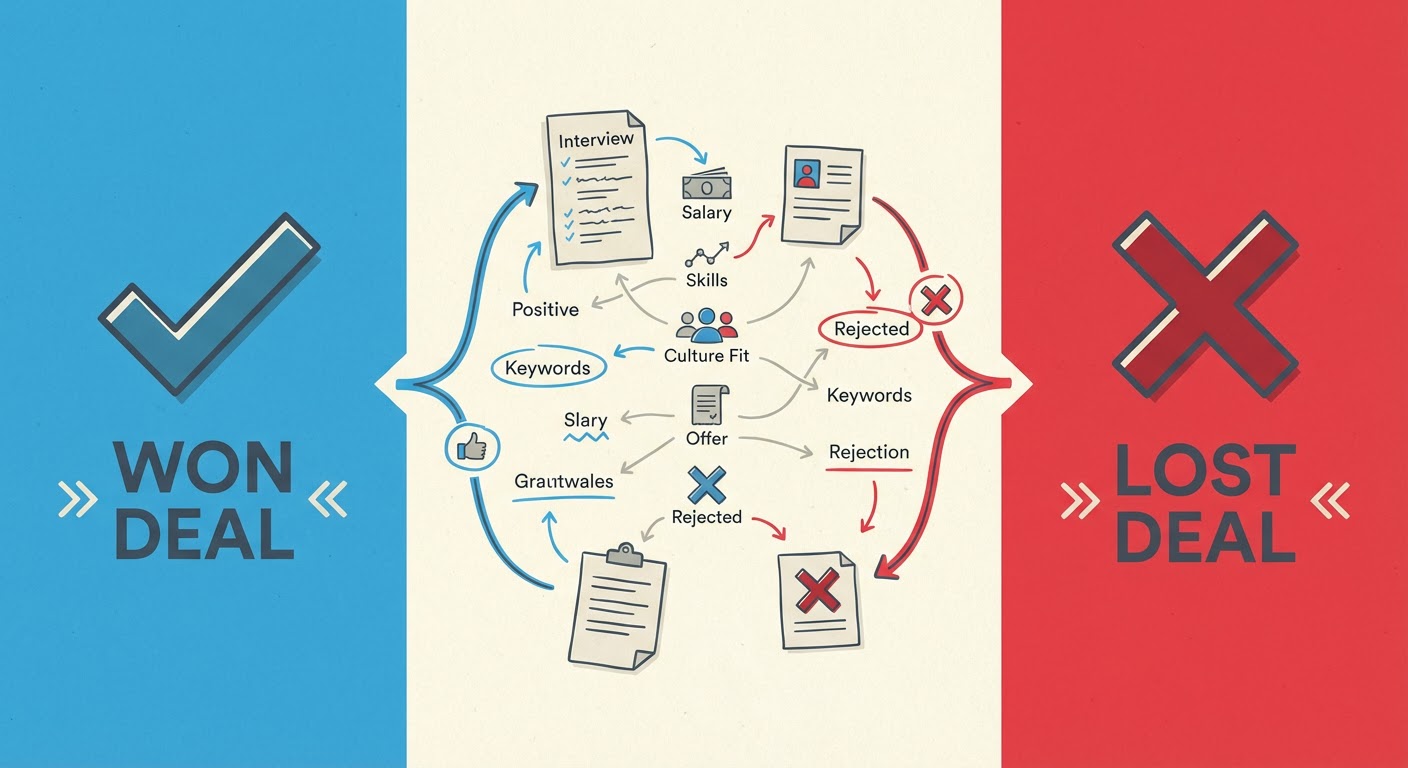
I've seen two extremes of win loss analysis. The first extreme is companies that hire a dedicated analyst, build custom survey tools, interview 50 buyers per quarter, produce a 40-page report, and present it to the executive team in a formal review. Thorough. Also wildly impractical for any company under 500 people.
The second extreme is companies that have a "loss reason" dropdown in their CRM that nobody takes seriously. Reps select "price" 70% of the time because it's the fastest click. Nobody reads the data because everyone knows it's garbage.
There's a middle ground. It takes about four hours per month. It produces usable insights within the first month. Here's how.
Month One: Set Up the Basics
Pick your sample. You don't need to interview every closed deal. Start with lost deals against your top two competitors and won deals where you beat those same competitors. That gives you the contrast you need — what's different about the deals you win versus lose against the same opponent.
Five to eight interviews per month is enough to start seeing patterns. That's about two per week. Each interview runs 15 minutes. Total time investment: about 2 hours of interviews plus 2 hours of analysis. Four hours a month. That's it.
Create a simple tracking sheet. One row per interview. Columns: date, company name, deal outcome (won/lost), competitor, top three decision factors cited by buyer, process feedback, and one-line summary. Don't overcomplicate this. You can always add columns later. You can never recover the momentum lost by starting with a 15-column spreadsheet nobody wants to fill out.
The Interview Script That Works
I've tested a lot of win loss interview formats. The one that consistently produces the best insights is a conversational structure, not a survey. You're not asking them to rate things on a scale. You're asking them to tell you a story.
Start here: "Can you walk me through how you evaluated solutions for this?" Let them talk. Don't interrupt. They'll naturally mention what mattered to them, which alternatives they looked at, and how the process unfolded. This single question usually fills half the interview.
Then: "What were the top two factors in your final decision?" Force them to prioritize. Buyers will want to list everything. Push gently for their top two. Those are the actual decision drivers.
For lost deals: "Where did we come up short?" Direct, respectful, and impossible to dodge. Let them answer completely before asking anything else. Whatever they say first is usually the real reason. The things they add afterward are secondary.
For won deals: "What almost made you go a different direction?" This is the question most people skip on wins. It reveals your vulnerabilities. If three won deals almost went sideways because of the same concern, that concern is going to cost you a deal eventually.
Wrap up: "Anything I didn't ask about that influenced the decision?" About 20% of the time, this question produces the most valuable answer in the entire interview. Some buyers are waiting for permission to say the awkward thing.
Tagging and Finding Patterns
After each interview, spend five minutes tagging it. Keep your tag system simple — you can always refine it later.
Loss reasons: product gap, pricing, sales experience, implementation concerns, incumbent loyalty, timing, internal politics. These seven cover about 95% of B2B losses.
Win reasons: product fit, sales experience, pricing advantage, ease of use, integration, reference/reputation. Six categories.
After your first month of interviews (call it six to eight), look at the distribution. If four out of five losses against Competitor A mention "implementation concerns," that's not an anecdote. That's a problem with a name.
A G2 review win loss analyzer can supplement your interview data with patterns from public reviews. It won't replace the nuance of direct conversations, but it adds sample size. If you see the same pattern in both your interviews and the review data, your confidence in the finding goes way up.
What Most Teams Get Wrong
Three common mistakes I see repeatedly.
Interviewing too late. A buyer who decided three months ago has forgotten most of the details. Their memory has been reconstructed into a cleaner narrative than what actually happened. Interview within two weeks of the decision, or don't bother.
Only interviewing losses. Win interviews matter because they tell you what's working. If you only study losses, you'll fixate on fixing weaknesses and neglect the strengths that are actually driving your business. Balance your sample — roughly equal wins and losses.
Treating findings as gospel from a tiny sample. Three interviews are a starting point, not a conclusion. I've seen teams restructure their entire pricing model because two lost buyers mentioned price. Two! That's not data. That's two people's opinions. Wait for patterns across 10-15 interviews before making structural changes. Tactical fixes (updating a talk track, fixing a demo flow) can happen faster.
Making It Stick
The programs that survive past month three share one trait: the insights reach the people who can act on them. Product people need to hear about product gaps. Sales managers need to hear about process issues. Marketing needs to hear about positioning misses.
A monthly one-pager works better than a quarterly report. Format: three bullets on what we learned, one bullet on what we're changing, one bullet on what we're investigating. Send it to the exec team and the sales org. Keep it short enough that people actually read it.
The call insights analyzer can help you cross-reference your win loss findings with actual sales call patterns. If buyers say "your demo was confusing," the call analyzer can show you which specific demo segments cause disengagement. That turns a vague complaint into a specific fix.
Why Use an Agent for This
The G2 review win loss analyzer creates a quantitative baseline before you even start interviewing. It pulls switching patterns, comparison data, and sentiment from hundreds of reviews and structures them by competitor. That baseline helps you know what to listen for in interviews.
The call insights analyzer connects interview findings to real deal behavior. Buyers say implementation speed matters? The call analyzer shows you which calls discussed implementation, how those deals progressed, and where they stalled. It closes the loop between what buyers say and what actually happens in your pipeline.
The competitor review analysis agent shows you the other side — how your competitors' customers feel about them. If buyers tell you Competitor B wins on "ease of use" but Competitor B's reviews complain about UX, the buyer perception and reality don't match. That gap is a positioning opportunity.
Don't overthink this. Five interviews a month, tagged and shared. That's the whole program.
Try These Agents
- G2 Review Win Loss Analyzer — Quantitative win/loss patterns from review data
- Call Insights Analyzer — Sales call pattern analysis for deal dynamics
- Competitor Review Analysis — Competitor sentiment and vulnerability data
- Gong Competitive Intel Tracker — Competitive mentions across recorded calls